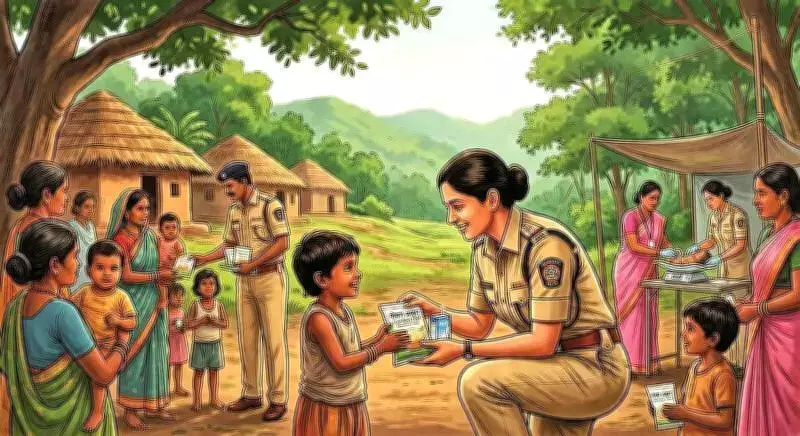
Nagpur: After eliminating Maoists, Gadchiroli police has now launched a mission to eradicate malnutrition among minors in the tribal district. Five constables from every police station have been appointed as 'malnutrition spotters' in the dense forests of Abujmarh, the erstwhile guerrilla headquarters.
Where commandos once navigated boobytraps, spike holes, and minefields, they are now scanning for signs of stunted growth and acute malnutrition among children. This initiative is described as unique and unprecedented in the hinterland of central India.
With training complete and malnutrition spotters already fanning out in tribal areas, Gadchiroli police is writing a new chapter: from counterinsurgency to community care. The transition comes at a time when the district continues to report alarming levels of child malnutrition.

According to government data, stunting affects 35% to 45% of children under five years of age in its tribal pockets, while acute malnutrition stands at around 11% (severe acute malnutrition at 1.4% and moderate acute malnutrition at 9.8%). This makes Gadchiroli the second worst-hit district in Maharashtra.
Police officials said their presence in remote forward operating bases (FOBs) and villages gives them a unique advantage to reach areas where health services have been disrupted by insurgency for five decades. Superintendent of Police Gadchiroli M Ramesh said constables will now work shoulder to shoulder with health workers.
"Our men have already been assisting in FOB-based health camps, gram bhets, and weekly bazaar health camps. Maternal health, child health, malnutrition, and geriatric care are being addressed through focused screening, counselling, and specialist intervention," Ramesh told TOI.
A key meeting was held with the Zilla Parishad CEO, who agreed to train five police constables from each station to aid implementation of malnutrition eradication projects.
On April 11, a video conference was organised for officers and five constables from each police station and area outposts. The session, held in the presence of Additional Superintendent of Police (Administration) Gokul Raj, was addressed by the Child Development Project Officer (CDPO), a medical officer, and the district malaria technical supervisor.
Police sources said the constables have been trained to identify symptoms such as low weight-for-height, oedema, and developmental delays. "Cops will flag cases during routine patrols, village visits, and community interactions, ensuring children are immediately referred to nutritional rehabilitation centres or anganwadis. The initiative also includes counselling sessions for mothers on breastfeeding, complementary feeding, and hygiene," said an official of Gadchiroli police.