

In the dense smog that blankets Delhi-NCR, two very different lives are being shaped and strained by the hazardous air. For a pregnant woman confined to her apartment and a young man training relentlessly for the army, the toxic winter has become an inescapable adversary, impacting their health, dreams, and daily reality.
Confinement and Anxiety for an Expectant Mother
Chandni, a 32-year-old software engineer based in Noida, is in her second trimester. Medical advice for this phase typically includes walks, sunlight, and a relaxed state of mind. However, for Chandni and her husband, planning for their baby's arrival in their Sector 76 2BHK flat has been overshadowed by growing anxiety over the region's dangerous air quality.
For over a month and a half, she has watched the smog-shrouded skyline from the 12th floor of her housing society. A lifelong resident, she notes that recent winters bear no resemblance to her childhood memories. "The gloom seems to be deepening," she observes.

The pollution triggered allergies, causing throat and chest congestion. Her pregnancy complicated treatment, as doctors advised against anti-allergic pills or antibiotics, suggesting her immune system handle it naturally. "Left with few options, I relied on home remedies such as warm water, ginger, pepper and herbal teas. They offered only mild relief," Chandni admits.
This has led to a profound sense of guilt. "Even a short walk outside my building feels wrong. It's like I'm forcing my child to breathe dirty air. Whatever toxins I'm breathing, my baby is breathing too," she says.
The Physical and Mental Toll of Indoor Life
The consequences of prolonged confinement are multifaceted. The natural loosening of pelvic joints during pregnancy, combined with a lack of regular movement, has resulted in joint pain severe enough to disturb her sleep.
Mentally, the absence of routine outdoor time has been draining. "You move between work, your phone and the television. It takes a toll mentally," she explains, adding that the persistently grey days are a constant mood downer. The lack of sunshine exacerbated her worries about her own mental well-being.
No Pause for Dreams: An Army Aspirant's Relentless Routine
While Chandni retreats indoors, 20-year-old Rudra Pratap Singh has no such luxury. He moved from Uttar Pradesh to Gurgaon with a single goal: to prepare for recruitment into the Indian Army. For him, training cannot pause for polluted air.
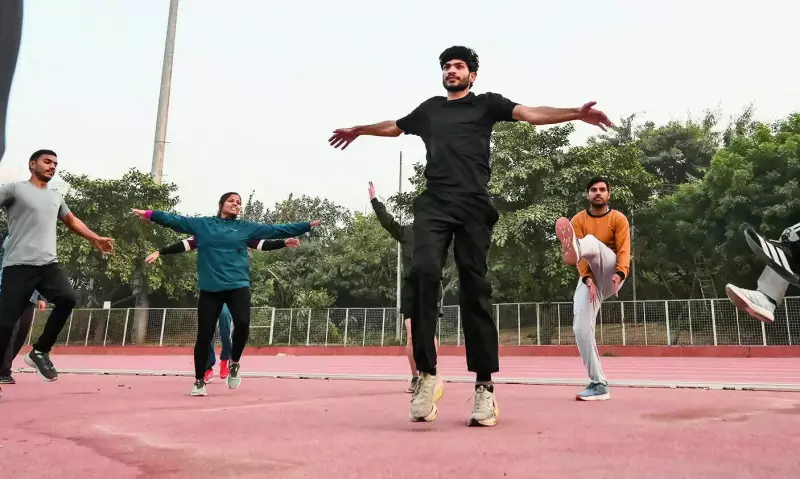
Living alone in a rented room in Khandsa on Gurgaon's outskirts, Rudra's day begins at 4:30 AM. By 5 AM, he is at Tau Devi Lal Stadium, commencing the first of two daily training sessions—a rigid schedule he has followed without break for nearly a year. "Back home, the air is much healthier. But if I go back, I lose training time. I can't afford that," he states.
His sessions at dawn and around 4:30 PM involve running, long jump, high jump, shot put, and speed drills, all measured against strict army benchmarks. "Army physicals are about discipline. You can't be casual even for one day," Rudra emphasizes.
Feeling the Strain on His Lungs
His commute on a motorcycle adds to his exposure. Until recently, pollution was not a concern, but now it's unavoidable. In recent weeks, he has felt the direct impact. His throat often hurts, and breathing sometimes feels tight during runs. Training is entirely outdoors, with no access to filtered air, and masks are impractical for high-intensity exercise.
Rudra, who has not returned home in months, is scheduled for his second attempt at the Army recruitment exam in Lucknow in February. He cleared the physical tests with full marks in his first attempt, completing the 1600-meter run in 5 minutes and 30 seconds. "Physically, I know I'm capable. What worries me now is the air and what it's doing to my lungs," he confesses.
Despite the health concerns, his resolve is unwavering. "This is my dream. I want to wear the uniform. Pollution is there every day, but my exam date won't change. I have to prepare in these conditions," says Rudra Pratap Singh. Their parallel struggles underscore a shared public health crisis affecting millions across the National Capital Region.






