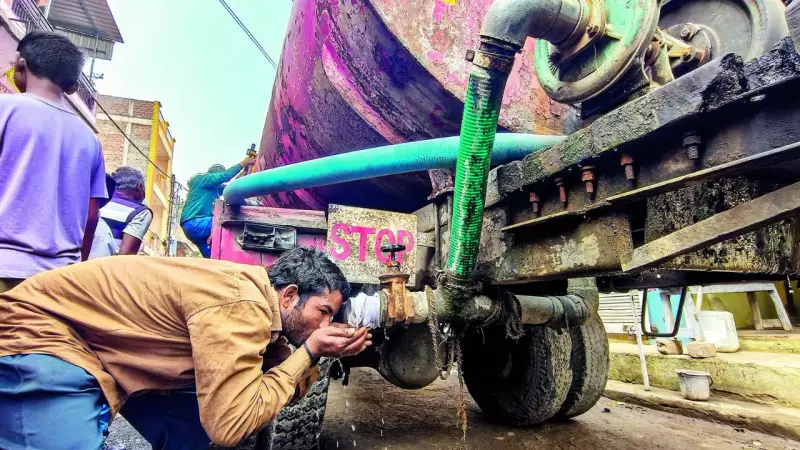
Health authorities in Indore took a grave step on Sunday, officially declaring the severe outbreak of waterborne diseases in the Bhagirathpura locality as an epidemic. This declaration comes in the wake of the contamination claiming 10 lives so far, prompting an urgent, large-scale response.
Central and State Experts Mobilised for Crisis
To combat the spread and identify the root cause, the administration has called in specialised teams from the Central and state governments. A high-level meeting was chaired by District Collector Shivam Verma at the Smart City office on Sunday morning to coordinate the efforts of these national experts.
The team includes scientists Dr Pramit Ghosh and Dr Gautam Chaudhary from ICMR-NIRBI in Kolkata, Dr Anubhav from the National Centre for Disease Control (NCDC), and experts in community medicine and epidemiology from the State Surveillance Team in Bhopal.

Pinpointing the Source of Contamination
The scientists from Kolkata have already begun their forensic work, collecting random water samples using advanced scientific methods. Their goal is to pinpoint the exact bacterial strains responsible and determine if the contamination originated from a single source or multiple points.
Chief Medical and Health Officer (CMHO) Dr Madhav Hasani explained the rationale behind the epidemic declaration, stating it is made when reported cases exceed the usual number for a specific area. "We are now treating the outbreak on that scale," he said.
Immediate Measures and Public Assurance
In response to the crisis, the administration has suspended the Narmada water supply to the affected zone. Collector Verma stated that supply would only be restored after experts certify the pipelines as fully decontaminated.
To manage the situation at a micro-level, the entire Bhagirathpura area has been divided into 32 beats. In each beat, dedicated teams are working with residents to ensure mandatory chlorination of all government and private borewells.
Key actions being implemented include:
- Continuous supply of clean drinking water via tankers.
- Door-to-door distribution of liquid chlorine drops by health workers.
- House-to-house surveys by multi-departmental teams, with random sampling extended to other city areas receiving complaints.
- Instructions for residents to drain and clean basement storage tanks (hoj), followed by professional chlorination before reuse.
- Free treatment for affected patients at various hospitals, including necessary injections and medications, under specialist supervision.
Dispelling Rumours on Health Complications
Addressing public anxiety and rampant rumours, Collector Shivam Verma provided a crucial clarification. He firmly stated, "I want to clarify that no cases of GBS (Guillain-Barre Syndrome) were found in the city," dismissing any link between the neurological disorder and the current waterborne outbreak.
The situation remains critical, with state and central agencies working in tandem to contain the epidemic and prevent further loss of life in Indore.