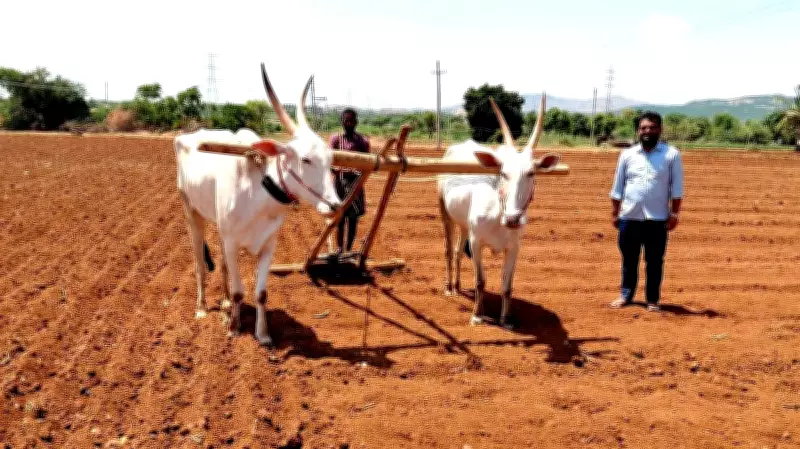
Monsoon sowing in Karnataka's Molakalmuru taluk has been severely hit as rainfall has failed since the beginning of June, despite adequate precipitation until the end of May, according to local officials. The taluk had experienced good rainfall until late May, and preparations for sowing had been completed. However, the prolonged dry spell has hampered sowing operations, leaving farmers in distress.
Rain Deficit Disrupts Agricultural Calendar
The lack of rain since June 1 has disrupted the agricultural calendar in Molakalmuru, a region heavily dependent on monsoon rains for kharif crops. Officials confirmed that the initial rains had encouraged farmers to prepare fields and arrange seeds, but the subsequent dry spell has prevented sowing. As of June 21, 2026, the taluk has received only 10% of its normal June rainfall, according to district agriculture department data.
Impact on Farmers and Crops
Farmers in Molakalmuru, who primarily grow groundnut, sunflower, and pulses, are facing uncertainty. Many have delayed sowing, hoping for rains, while others who sowed early are worried about germination failure. "We had prepared the land expecting good rains, but now the seeds are lying idle. If rain does not come soon, we will lose the entire season," said Ramesh, a local farmer, according to officials. The taluk's agriculture officer noted that delayed sowing could reduce yields by up to 30%.

Comparison with Previous Years
In 2025, Molakalmuru received normal monsoon rains, leading to a good harvest. This year, however, the southwest monsoon has been weak across parts of Karnataka, with the state as a whole recording a 22% deficit in June rainfall as of June 20, according to the India Meteorological Department. The situation in Molakalmuru is particularly acute due to its semi-arid climate.
Government Response and Relief Measures
District authorities are monitoring the situation and have advised farmers to wait for the next forecast before sowing. The Karnataka government has announced contingency plans, including distribution of drought-resistant seeds and provision of tanker water for drinking. However, officials admit that immediate relief for sowing failure depends on rainfall in the next two weeks. The taluk panchayat has also initiated a survey to assess the extent of damage.
Long-Term Concerns and Adaptation
Agricultural experts warn that recurring rain failures highlight the need for better water management and crop diversification in Molakalmuru. The region relies heavily on rain-fed agriculture, with limited irrigation facilities. Farmers are being encouraged to adopt micro-irrigation and shift to less water-intensive crops. However, adoption remains slow due to high costs and lack of awareness.