

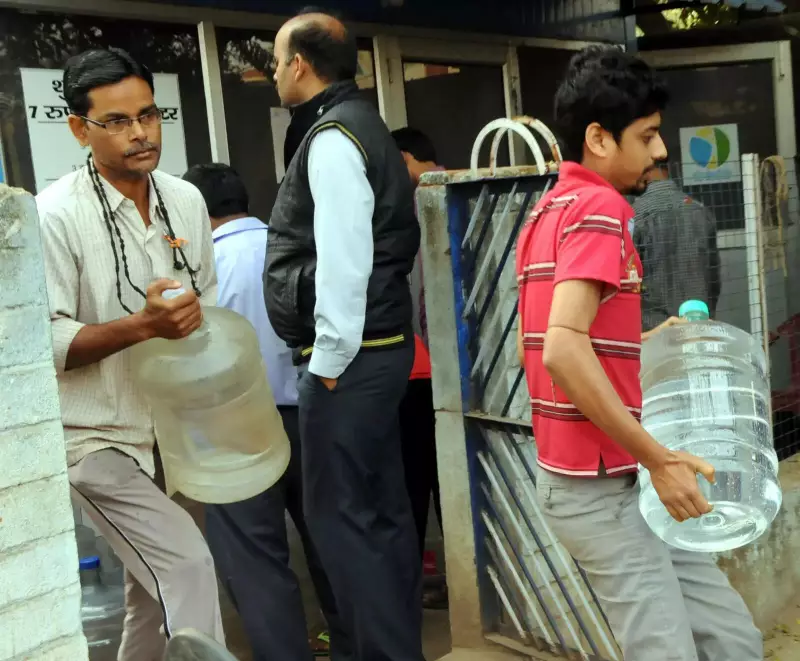
Faced with a failing municipal water pipeline system, a significant portion of Ranchi's population has turned to bottled water for their daily needs, a dependence that intensified following a deadly incident in Indore. However, this shift towards packaged water has opened a new Pandora's box of health concerns, as most of the city's mushrooming water bottling units operate without licenses and outside regulatory oversight.
A City Dependent on Doubtful Sources
The fear of contamination in the municipal supply has made bottled water the preferred choice for everything from household consumption to roadside food carts. This soaring demand has led to the rapid establishment of hundreds of water purification and bottling plants across Ranchi's 53 municipal wards. Many of these operations deliver directly to homes, capitalizing on the public's distrust of tap water.
Ranchi currently has approximately 3,000 small and large bottling plants operating within the Ranchi Municipal Corporation (RMC) area. Yet, the unchecked growth of these units has raised serious alarms about the quality and safety of the water they sell. Residents report that while these plants advertise "pure" or "RO-treated" water, there is no transparency regarding adherence to health standards or regular quality checks by authorities.

No Regulation, Mounting Risk
In the absence of clear regulations or guidelines governing these businesses, many plants are run with a blatant disregard for safety protocols. Acknowledging the grave concern, RMC Additional Administrator Sanjay Kumar stated that a large number of these bottling plants are functioning without the necessary municipal licenses. He cast doubt on their claims of providing pure water and announced that the RMC will soon formulate specific guidelines and launch a crackdown against illegal operations.
The situation highlights a tragic paradox for citizens. "We cannot drink the contaminated municipal water. Even the water we buy from these plants sometimes develops a foul smell if stored for more than a week, but we have no alternative," explained Arvind Kumar, a resident of Kokar. His sentiment echoes across a city trapped between a broken public system and an unregulated private market.
The Indore Incident: A Wake-Up Call
The reliance on these dubious sources became more severe after the recent incident in Indore, where contaminated water led to a public health disaster. At least 10 people died and hundreds were hospitalized in Indore, serving as a grim warning for other cities with similar vulnerabilities. This event has sharpened the focus on the potential dangers lurking in Ranchi's unregulated water supply chain.
As the RMC prepares its regulatory response, the health of thousands of residents hangs in the balance. The crisis underscores an urgent need for a two-pronged solution: restoring faith in the public water infrastructure while simultaneously bringing the chaotic private bottling industry under strict, enforceable health and safety norms.






