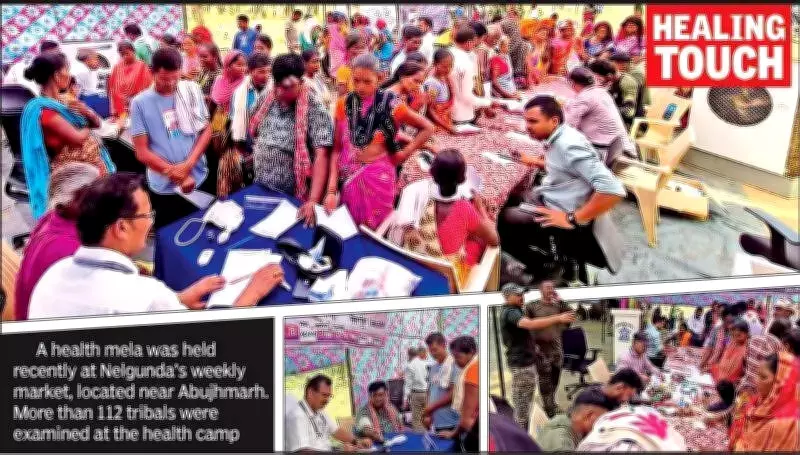
Nagpur: With the Maoist movement ending in Abujhmarh, security forces in remote tribal hamlets and adjoining areas — once the impregnable bastion of the Peoples' Liberation Guerrilla Army (PLGA) — have shifted their role from combating armed insurgents to addressing long-neglected public health issues such as sickle cell, cataract, and nutrient deficiencies among minors.
Earlier involved in intense combing across hostile terrain and neutralizing Maoists, security personnel are now supervising health drives, ensuring logistics for doctors and medical supplies in areas lacking basic roads or electricity. The police assistance centers are doubling up as 'suvidha kendras,' providing not only security but also access to government schemes like Ayushman Bharat.
After the national deadline of March 31 to eradicate Maoists, police personnel are now organizing 'health melas' (medical camps) to serve isolated tribal communities at newly opened police posts and camps like Beenagunda, Kawande, Bangadi, and others. In the last six months, more than 1,600 tribals have benefited from these health melas.

The latest medical camp was organized at Nelgunda's weekly market area on the fringes of the erstwhile PLGA fortress of Abujhmarh in Bhamragad taluka. Around 112 tribals were examined by doctors during the camp. In the past, Nelgunda witnessed many gunfights between C-60 commandos and PLGA.
Tribal residents, living under constant fear of Maoist threats and violence, were deprived of professional medical assistance as doctors and nurses barely frequented these places. Diseases like sickle cell, cataract, and bone-related ailments went unchecked and untreated, while children suffered from malnutrition. 'Quacks and witch doctors reigned supreme, spreading superstitions even as the rest of the nation embraced medical advancements,' said an official.
Experts note that addressing health gaps is crucial for sustainable peace in the region. Tribals, once caught between Maoists and state neglect, are now enjoying the fruits of various government schemes.
With the Maoist threat over, more locals are attending health camps, breaking cycles of superstition and quackery. Patients suffering from sickle cell are getting continuous screening and management, while cataract surgeries are restoring vision for elderly villagers.
'The cops are now fighting diseases in the hinterlands. We are now organizing health camps that bring specialist doctors and professionals to tribal doorsteps — services previously unavailable in these remote locations,' said Neelotpal, outgoing SP of Gadchiroli.
With Maoist influence waning, the focus has shifted to winning hearts through welfare initiatives, Neelotpal said. Around 250 tribal people participated in the camp held in Beenagunda on February 15. The Phulnar health camp saw 210 tribals being screened by doctors on February 21, while around 200 attended the Tumarkothi camps held on February 28. Officials say that over 1,662 citizens have benefited from these health camps so far.