

A flash of yellow and black in the garden often makes people step back. Yet most are unsure whether the insect near a flower bed is a bee, wasp, or hornet. These three are closely related and belong to the same insect group, which explains their similar appearance. However, closer observation reveals clear differences in body shape, behavior, diet, nesting habits, and interactions with humans. Some spend days moving pollen between flowers, others hunt insects, and a few do both depending on their life stage. Understanding these distinctions helps appreciate their roles in nature and avoids mistaking every striped insect for the same creature.
Bees vs Wasps vs Hornets: Key Differences
Scientific Relationship
Bees are pollinating insects within the bee group. Wasps are predatory insects within the wasp group. Hornets are a specialized type of wasp.
Body Shape
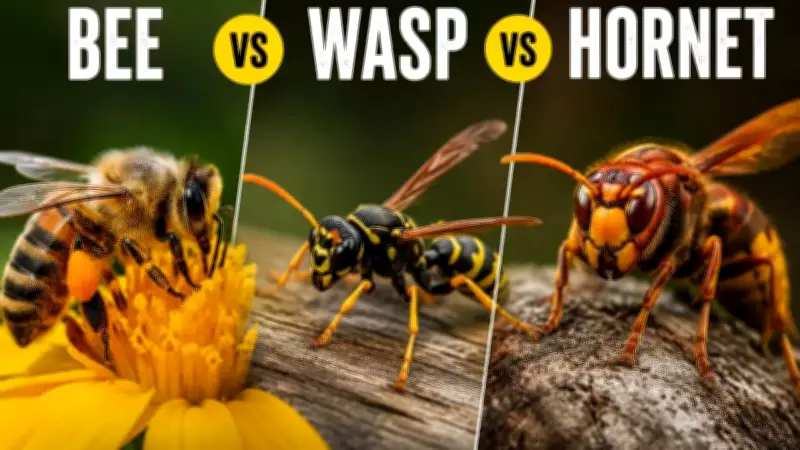
Bees have rounded and sturdy bodies. Wasps are slim with a narrow waist. Hornets are larger and heavier than most wasps.

Body Covering
Bees are usually hairy or fuzzy. Wasps are smooth and almost hairless. Hornets are smooth with little visible hair.
Main Food Source
Bees feed on nectar and pollen. Wasps eat insects, fruit, and sugary foods. Hornets consume insects, nectar, and fruit juices.
Role in Nature
Bees are vital for pollination. Wasps provide pest control and some pollination. Hornets act as predators of insects and pollinators.
Nest Material
Bees use wax honeycomb. Wasps create paper-like material from chewed wood. Hornets use similar papery material.
Typical Nesting Sites
Bees nest in hives, cavities, and ground nests. Wasps nest in trees, walls, roofs, and underground sites. Hornets nest in tree hollows, wall cavities, buildings, and underground depending on species.
Temperament
Bees are usually defensive rather than aggressive. Wasps are more likely to defend nests. Hornets are defensive near nests but often calmer than common wasps.
Sting Ability
Bees usually sting once and die. Wasps can sting repeatedly. Hornets can also sting repeatedly.
Appearance
Bees are golden, brown, or black, often fuzzy. Wasps are bright yellow and black with a defined waist. Hornets have brown, reddish, or orange-yellow markings.
Size
Bees are small to medium. Wasps are medium-sized. Hornets are the largest of the three.
Benefit to Humans
Bees provide pollination and honey production. Wasps offer natural control of pest insects. Hornets help control insect populations.
Inside the Lives of Nature's Most Feared Flyers
Body Shape and Appearance
The quickest way to separate these insects is by looking at their bodies. Bees generally appear rounded and slightly chunky. Most species carry fine hairs that help collect pollen while visiting flowers. That fuzzy look is often the giveaway. Wasps have a very different silhouette. Their bodies are streamlined with a sharply defined waist connecting the thorax and abdomen. They appear sleeker, almost built for speed. Hornets sit somewhere in between, although their size often gives them away immediately. They are wasps, but bigger and more robust. Many species show brown, reddish, or orange markings alongside yellow coloring rather than the bright yellow-and-black pattern commonly associated with ordinary wasps.
What They Eat
Diet shapes much of their behavior. Bees are largely vegetarians. They spend their lives gathering nectar and pollen, which provide energy and nourishment for the colony. Honeybees convert collected nectar into honey, storing it for future use. Wasps are hunters. Adult wasps may feed on sweet substances, but they also catch insects and other small prey. This makes them important natural controllers of pests that damage crops and gardens. Hornets follow a similar pattern. They actively hunt insects, including flies, caterpillars, and even other wasps. Their larvae depend heavily on protein-rich prey brought back to the nest by workers.

Nesting Habits
Bee nests vary widely. Honeybees construct intricate wax honeycombs inside hives or sheltered cavities. Many solitary bee species create nests underground or inside wood. Wasps use an entirely different building material. They scrape weathered wood, chew it into a pulp, and shape it into a papery substance. This creates the familiar grey nests often seen hanging from trees or hidden beneath roofs. Hornets use the same paper-making technique but usually build larger structures. Depending on the species, nests may be found inside hollow trees, wall spaces, buildings, or even underground chambers.
Social Lives and Colonies
Not every bee or wasp lives in a colony. Honeybees and bumblebees are highly social, with queens, workers, and drones performing different jobs. Colonies can contain thousands of individuals working together. Many bee species are solitary. A single female builds and provisions her own nest without assistance. Wasps also display both lifestyles. Some species form organized colonies with workers and queens, while others live independently. Hornets belong to the social category, building colonies that revolve around a queen and a workforce of workers caring for larvae and maintaining the nest.
Pollination and Ecological Importance
Bees are among the most effective pollinators on Earth. A huge proportion of flowering plants and many food crops depend on animals such as bees to transfer pollen. Without that service, agricultural production would look very different. Wasps receive less credit but contribute in their own way. While moving between flowers for nectar, they can transfer pollen. Their greater contribution often comes through controlling populations of insects that feed on crops. Hornets also play a balancing role. By preying on numerous insect species, they help regulate local ecosystems. Although they are often viewed solely through the lens of their sting, they remain part of healthy natural food webs.
Sting and Defense
This is where public perception tends to focus. When a honeybee stings a person, the barbed stinger often becomes lodged in the skin. The bee cannot pull it free and usually dies shortly afterwards. As a result, bees tend not to sting unless they feel seriously threatened. Wasps face no such limitation. Their stingers remain intact, allowing repeated stings if necessary. They mainly use this ability to defend their nests. Hornets can also sting multiple times. Their venom contains compounds that often make the experience more painful than a typical wasp sting. Even so, hornets generally reserve stinging for situations where they perceive danger to themselves or their colony.
Bee vs Wasp vs Hornet: Which Is the Strongest and Most Influential?
If power is measured by physical size, strength, and defensive capability, hornets sit at the top of the trio. They are larger than bees and most wasps, possess powerful jaws for hunting prey, and can deliver repeated stings when threatened. Some species, such as the Asian giant hornet, are among the largest social wasps in the world. That does not make them the most important. Bees remain unmatched when it comes to pollination, while wasps are highly effective predators that help keep insect populations under control. Each dominates differently. Hornets may be the strongest individual insects of the three, but bees and wasps exert an influence on ecosystems that is every bit as significant.
Get the latest movie news, reviews, and celebrity updates. Download the TOI App.
About the Author: The TOI Lifestyle Desk is a dynamic team of dedicated journalists who, with unwavering passion and commitment, sift through the pulse of the nation to curate a vibrant tapestry of lifestyle news for The Times of India readers. At the TOI Lifestyle Desk, we go beyond the obvious, delving into the extraordinary. Consider us your lifestyle companion, providing a daily dose of inspiration and information. Whether you're seeking the latest fashion trends, travel escapades, culinary delights, or wellness tips, the TOI Lifestyle Desk is your one-stop destination for an enriching lifestyle experience.





