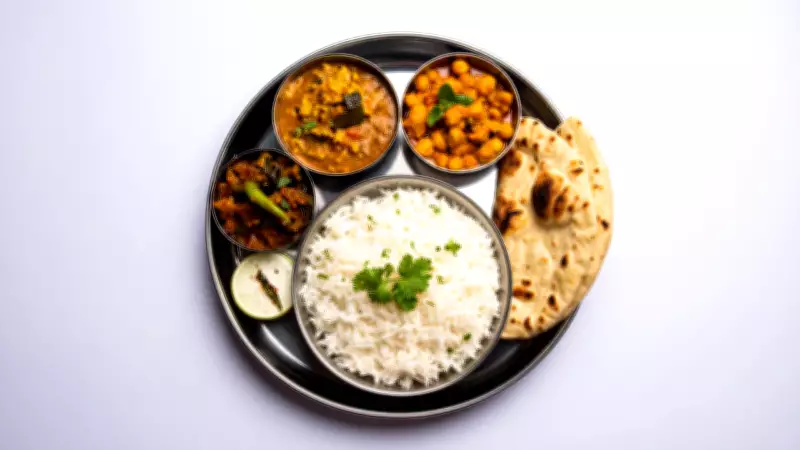
What Happens to Your Gut Bacteria If You Eat the Same Food Every Day
A fixed meal plan feels safe. The same breakfast, the same lunch, the same dinner. It cuts decisions, saves time, and keeps calories in check. But the gut does not thrive on routine alone. It thrives on variety.
As clinical nutritionist Charu Dua explains, “Eating the same thing everyday can feel disciplined and healthy. A lot of people eat repetitive diets because they’re easy to prepare, predictable and calorie-controlled. But in the gut, monotony is not always a virtue.”
That single line sums up the story. The gut is not a machine. It is a living ecosystem, and it reacts to what is fed to it every day.

A Gut That Expects Diversity, Not Repetition
Inside the digestive tract lives the gut microbiome, a vast community of bacteria, fungi and other microbes. Each type of microbe needs a different kind of fuel.
Charu Dua puts it simply, “The human gut microbiome, a complex ecosystem of trillions of bacteria, fungi and microorganisms, is heavily reliant on dietary variety.”
When meals repeat too often, the gut misses out on many nutrients. Fibre types change from one plant to another. So do natural compounds like polyphenols. When those are missing, certain beneficial bacteria shrink, while others dominate.
A large public research effort, the American Gut Project, found something striking. People who ate over 30 different plant foods a week had far more diverse gut bacteria than those who ate fewer than 10.
Diversity, in simple terms, means a stronger, more adaptable gut.
What Actually Changes When You Eat the Same Food Daily
The body adapts quickly. The gut does too. That sounds helpful, but it comes with a catch.
According to Charu Dua, “Eating the same foods over and over again can slowly wear down microbial resilience.”
Over time, this can show up in small but noticeable ways:
- Digestion feels slower
- Bloating becomes more frequent
- Constipation or irregular bowel movements appear
- Some foods suddenly feel harder to tolerate
Even a “clean” diet can fall short if it lacks range. A plate of grilled chicken, rice and boiled vegetables may tick boxes for protein and calories. But it may still miss the wide spectrum of fibres that feed different microbes.
Researchers publishing in Nature Microbiology have linked greater plant diversity with better gut activity and improved metabolic health.
The Hidden Upside of Routine Eating
Repetition is not entirely bad. In fact, it can help in certain ways.
- It makes calorie control easier
- It reduces decision fatigue
- It supports consistency in weight loss plans
- It can help identify food intolerances
For people with busy schedules, a stable meal pattern keeps things manageable. That is why diets like daily oats or regular dal-chawal remain popular.
But the key issue is not repetition in a day. It is repetition over months and years.
Why Managed Variety Works Better
The solution is not extreme change. It is thoughtful variation.
Charu Dua explains it clearly, “The answer isn’t eating disorder lunacy. It’s managed diversity.”
This means small, steady changes:
- Rotate grains: rice, millets, quinoa, whole wheat
- Switch vegetables with seasons
- Add pulses beyond just one or two staples
- Include fermented foods like curd or buttermilk
- Use herbs, seeds and nuts in small amounts
These shifts bring new fibres into the gut. When gut bacteria digest these fibres, they produce compounds called short-chain fatty acids. These help reduce inflammation and support the gut lining.
The Bigger Picture: Strict Is Not Always Better
A strict diet often looks impressive. But the healthiest diet is usually the most varied one.
The gut does not reward perfection. It rewards balance. It responds to colour on the plate, seasonal changes, and diversity in ingredients.
Medical Experts Consulted
This article includes expert inputs shared with TOI Health by:
Charu Dua, Clinical Nutritionist, Amrita Hospital, Faridabad.

Inputs were used to explain how eating the same foods every day can affect gut bacteria, why it may reduce microbial diversity, and how adding variety to the diet supports better digestion and overall health.