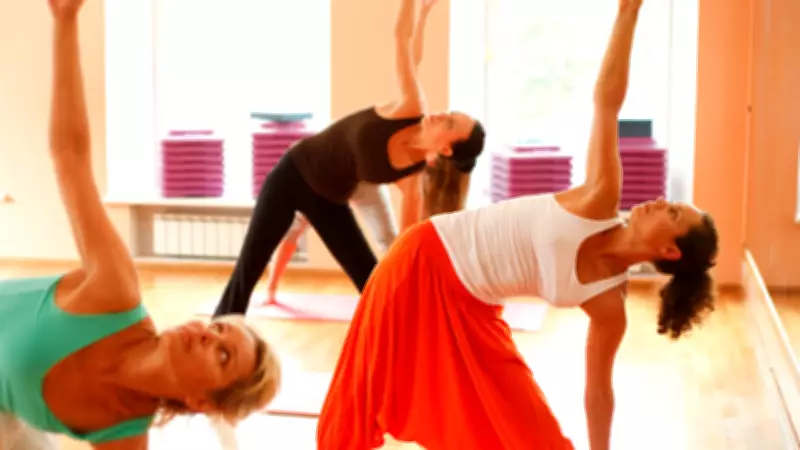
When we think of yoga, we often imagine flexibility as the goal: the ability to bend deeper, stretch further, or hold a posture with perfect form. Over time, this idea has quietly shaped how many people approach movement in general: as something to achieve, measure, and improve continuously. But after working closely with thousands of women across different walks of life, I've realised that the real value of yoga has very little to do with performance. It has more to do with how honestly the body is allowed to feel and respond.
Most women today are not struggling because they are inactive. In fact, they are constantly in motion balancing work, home, caregiving, relationships, and the invisible emotional labour that rarely gets acknowledged. In this constant state of giving, the body often becomes the first place where exhaustion settles. It shows up as tight hips, stiff shoulders, shallow breathing, and a persistent sense of fatigue that rest alone does not always fix. What is missing in most cases is not effort, but recovery that is active, mindful, and sustainable.
This is where gentle yoga becomes relevant, not as a lighter version of fitness, but as a more intelligent way of restoring balance to the body and mind. It does not demand intensity. It offers awareness, steadiness, and space to undo what daily life repeatedly builds up.

Utkata Konasana (Goddess Pose)
Goddess Pose (Utkata Konasana) is a good place to begin understanding this. With feet placed wide apart and knees bent, the posture activates the lower body in a grounded and stable way. While it may appear simple, it quietly builds endurance in the thighs and hips, areas that often weaken or stiffen due to prolonged sitting. More importantly, it helps create a sense of rootedness, something many women unconsciously lose while constantly adapting to external demands.
Ardha Chandrasana (Half Moon Pose)
Half Moon Pose (Ardha Chandrasana) introduces a different kind of awareness balance in the presence of instability. The body opens in multiple directions while relying on a single point of support. It is not about holding still perfectly, but about staying present through continuous adjustment. In many ways, this reflects the reality of daily life, where balance is rarely fixed and is instead something we constantly negotiate.
Anjaneyasana Variation (Low Lunge with Side Stretch)
Low Lunge with a side stretch (Anjaneyasana variation) works more quietly but deeply. It opens the hip flexors and lengthens the side body, addressing the physical compression that builds from long hours of sitting and forward-leaning postures. Unlike more intense stretches, this one does not force release; it allows it gradually, almost respectfully, as the body begins to let go of accumulated tension.
Setu Bandhasana (Bridge Pose)
Bridge Pose (Setu Bandhasana) shifts attention to the back body, strengthening the glutes, lower back, and core while gently opening the chest. In a lifestyle where most movement happens forward towards screens, tasks, and responsibilities this posture helps restore balance by encouraging the body to open in the opposite direction. It subtly reverses the effects of long-term postural strain without demanding strain in return.
Supta Baddha Konasana (Reclined Bound Angle Pose)
Reclined Bound Angle Pose (Supta Baddha Konasana) brings the practice into stillness. With the soles of the feet together and the knees relaxed outward, the body enters a position of ease where nothing needs to be achieved or corrected. This is often the most unfamiliar part of movement for many people, the permission to pause without justification. In this stillness, the nervous system begins to settle, and the body shifts from a state of constant alertness to one of quiet restoration.
What Should People Know?
What connects all these practices is not flexibility or strength in isolation, but sustainability. Gentle yoga does not aim to replace effort or ambition; it aims to make them more livable within the realities of everyday life. When movement becomes something that supports rather than depletes, it naturally stops feeling like another task and begins to function as a form of recalibration.

Perhaps the most important shift is not physical at all. It is the understanding that the body does not always need to be pushed to improve. Sometimes, it simply needs to be listened to so that it can recover. And in that listening, a different kind of strength begins to emerge, one that is steady, grounded, and far less dependent on exhaustion to prove its value.
(Saurabh Bothra, Co Founder at Habuild)