

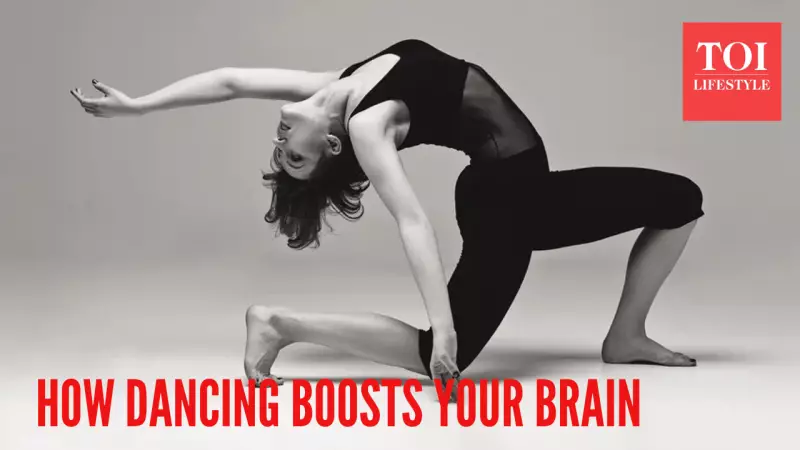
Forget the notion that dancing is just a hobby or a form of self-expression. Science now confirms that moving to your favourite tunes is a formidable workout for your brain, offering protection against cognitive decline as you age. Leading research highlights dance as a unique daily tool that supercharges brain health by merging physical exertion with music, memory, emotion, and social connection.
Why Dance is a Neurological Powerhouse
Dancing forces your brain into a state of high-performance learning. Unlike repetitive exercises, a dance session is a complex cognitive challenge. Your brain must simultaneously track rhythm, memorize steps, adjust posture, and coordinate with partners or a group. This multi-tasking activates motor functions, sensory perception, visual processing, emotional centres, and planning systems all at once.
Dr. Bing, MD MPH, a neurologist, explains, "Dance is not just movement. It combines coordination, memory, rhythm, learning, and social connection in one activity. This kind of cognitive load strengthens neuroplasticity, builds cognitive reserve, and supports long-term brain health in ways most workouts do not."

This fusion of music, timing, and physical coordination creates an activity that delivers both aerobic benefits and intense brain-game challenges. Studies indicate this combination drives stronger neuroplastic changes—the brain's ability to rewire itself—compared to simpler, repetitive exercises like walking on a treadmill.
Building a Brain Shield: Neuroplasticity and Cognitive Reserve
Dancing enhances neuroplasticity by compelling the brain to build new neural pathways as it learns patterns, practices, and adapts. Systematic reviews of dance training show that weekly practice can lead to expansion in brain areas, resulting in improved memory, movement control, attention, and the production of brain growth factors.
Perhaps its most significant benefit is the development of cognitive reserve—the brain's emergency backup system. This reserve helps maintain mental clarity during ageing and neurological disease. A key research project found that older adults who engaged in social dancing at least once a week had a lower risk of dementia compared to those doing other physical activities.
Meta-analyses support that dance programs help individuals with mild cognitive impairment improve global thinking, memory, visuospatial skills, and language abilities, thereby guarding against dementia progression. In essence, dance entertains while it fortifies the mind against decline.
Beyond Cognition: Mood, Stress, and Social Bonds
The benefits extend far beyond pure cognition. Dancing to music triggers a "neurochemical symphony," releasing feel-good hormones like dopamine, endorphins, and oxytocin. This cocktail improves mood, reduces pain, and strengthens social bonds.
Research with elderly participants proves dance therapy alleviates symptoms of depression and anxiety through group-based social activities. Social engagement, physical activity, and positive mood are all modifiable risk factors for dementia, and dance targets all three simultaneously.
This social-emotional component is key. The brain gains more protection from social dance classes than from solitary physical exercise, which lacks interaction and emotional involvement.
While traditional exercise requires steady-paced repetition, dance demands constant mental adaptation—memorizing new patterns, syncing with musical changes, partnering, and spatial awareness. This creates a high mental processing demand that standard fitness routines, matched for time and intensity, simply cannot replicate.
Evaluations comparing dance to other exercises show that structured dance activities deliver equal or superior results for boosting cognitive function, emotional health, and social skills. The brain thrives on learning, and dance uniquely combines learning with memory, balance, and social practice, creating a powerful, holistic brain health promotion effect.






