

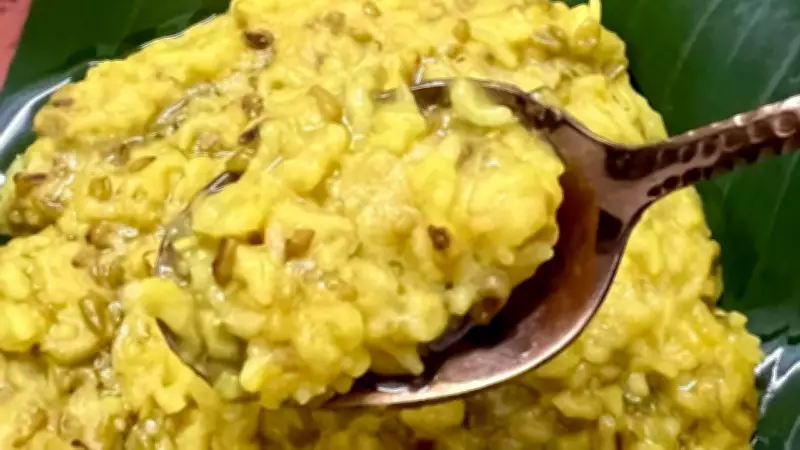
Khichdi: The Gentle, Healing Comfort Food Your Body Instinctively Craves
There is an inherent wisdom in the way our bodies communicate their needs, especially when it comes to nourishment. When digestion feels unsettled or energy levels dip, the craving rarely leans toward complex or heavy dishes. Instead, the mind and body seek something familiar, warm, and effortlessly soothing. For countless individuals across cultures, that quintessential comfort food is khichdi.
Lavleen Kaur, Chief Dietitian and Founder of Santushti Holistic Health & Healing, observes this phenomenon regularly. "I often witness khichdi becoming the first meal people gravitate toward when their system feels overburdened," she notes. "It is inherently light and does not demand excessive effort from the digestive system. That gentleness is crucial—it offers the body a restorative break, allowing digestion to settle rather than wrestle with another challenging meal."
The Simple Science Behind Khichdi's Effectiveness
At its foundation, khichdi is a humble one-pot dish combining rice and lentils. This simplicity is precisely what renders it so effective. The rice provides readily accessible carbohydrates for quick energy, while the lentils contribute essential proteins and supportive nutrients. When cooked until soft and consumed warm, the meal becomes exceptionally easy on the stomach. This explains its widespread use for children, the elderly, and anyone recovering from illness, stress, or digestive imbalances.

One of the reasons khichdi maintains its place in regular meal rotations is its innate adaptability. People intuitively adjust it based on how they feel. On days when the stomach is sensitive, many opt for a plain version—just moong dal, rice, turmeric, and salt. When digestion feels more robust, vegetables are incorporated almost unconsciously: a bit of lauki (bottle gourd), some pumpkin, carrots, or whatever is available in the kitchen. The meal evolves slightly but never becomes burdensome.
Instinctive Additions: Ghee and Spices
Even the addition of ghee is often driven by instinct. A small amount enhances flavor and imparts a satisfying richness. Most individuals are not consciously considering nutrient absorption; they are responding to how their body feels post-meal, gradually learning what works best for them through experience.
The same principle applies to spices. Cumin, ginger, and hing (asafoetida) are not selected from a textbook but are integral to generational cooking practices in Indian kitchens. "People include these spices because they know the meal feels lighter and digests more comfortably with these subtle enhancements, particularly on days when the stomach feels sluggish or uneasy," Lavleen explains.
The Emotional Resonance of Khichdi
Khichdi is deeply intertwined with memory and emotion. For many, it is the food served during fevers, upset stomachs, or times when rest was needed. This association endures, transforming khichdi from mere nourishment into a signal that it is acceptable to slow down and heal. That emotional layer significantly contributes to its profoundly settling effect.
Despite evolving food habits and hectic schedules, khichdi has not faded into obscurity. It consistently reappears in routines, not due to trends, but because it quietly fulfills its purpose. It continues to resonate because it addresses a fundamental need: nourishment that comforts without overwhelming. Whether enjoyed as a light dinner, a brief reset meal, or a simple lunch, it seamlessly integrates into daily life without imposing demands on the body.
Elevating Khichdi: A Flavorful Recipe Without Compromise
However, not everyone appreciates bland khichdi. Is there a way to enhance its taste to rival vibrant rice dishes like biryani, without sacrificing nutritional integrity? Chef Gautam Kumar offers insight: "Biryani relies heavily on spices and oil, but khichdi can be made delicious through proper technique. Good food is not always about an overload of spices and oil but about retaining the subtle flavors of basic ingredients. It can be prepared beautifully without altering its core utility—providing light and comforting nourishment to the body."
Here is a detailed recipe to create a flavorful khichdi that maintains its gentle essence:

Ingredients:
- 1/2 cup rice
- 1/2 cup yellow moong dal
- 1 fist arhar dal (toor dal)
- 1 inch cinnamon stick
- 2 each cardamom and clove pods
- 1 tsp jaggery powder
- Salt to taste
- 1 tsp turmeric powder
- 1 tsp coriander powder
- 1 tsp cumin powder
- 1 tsp black pepper powder
- 1 green chilli
- 1/4 cup peas
- 1/4 cup cauliflower florets
- 1/2 cup chopped spinach
- 1 inch grated ginger
- 3 tbsp ghee
- 1 tsp heeng (asafoetida) powder
- 1 tsp cumin seeds
- 1 large onion, very thinly sliced
Method:
- Mix a few drops of ghee with the sliced onions and dry roast them in a non-stick pan or air fryer until crisp. Set aside.
- Add one tablespoon of ghee to a pan and roast the dals and rice briefly. Remove from heat.
- Add another tablespoon of ghee and roast the vegetables until slightly tender. Cover and cook until soft, then set aside.
- In a pressure cooker, combine the rice and dal mixture with cinnamon, cardamom, cloves, salt, and turmeric. Add four times the amount of water and pressure cook for four whistles. Allow to cool naturally.
- In a separate pan, heat the remaining tablespoon of ghee. Add heeng and whole cumin seeds, allowing them to splutter.
- Add grated ginger, green chillies, the remaining spices (coriander powder, cumin powder, black pepper powder), and jaggery. Cook on low flame for one minute.
- Incorporate the cooked rice-dal mixture and the roasted vegetables into the pan. Mix thoroughly.
- Adjust seasoning as needed, then top with ghee and the crisp onions before serving.
About the Author: Smita Mishra is the Editor of Times of India Lifestyle, Times Food, and Times Travel. Renowned for crafting in-depth and compelling features that blend storytelling with analysis, her passion lies in exploring culinary arts, travel, style, relationships, health, and literature. She leads TOI Books and oversees editorial aspects of Times of India's literary initiatives, including Times Literature Festivals and AutHer Awards. With extensive digital expertise from previous roles at Zee News, Dainik Jagran, and India Today, her contributions have been pivotal in launching numerous online properties and implementing meaningful editorial enhancements.





