Optical Illusion Personality Test: What You See First Reveals Your Hidden Nature
Have you ever encountered those strange images on the internet that seem to play tricks on your eyes? One moment you perceive a specific image, while a friend might see something completely different in the exact same picture. For those unfamiliar, these fascinating images are known as optical illusion personality tests, and they frequently operate based on established psychological principles.
Such visual puzzles can unveil a person's concealed nature and subconscious thoughts within mere seconds, offering a glimpse into the inner workings of the mind. A particular test that has gained significant traction online, originally shared by Dasha Takisho on social media, serves as a perfect example. This intriguing optical illusion presents viewers with a seemingly ambiguous image that can be interpreted in two distinct ways.
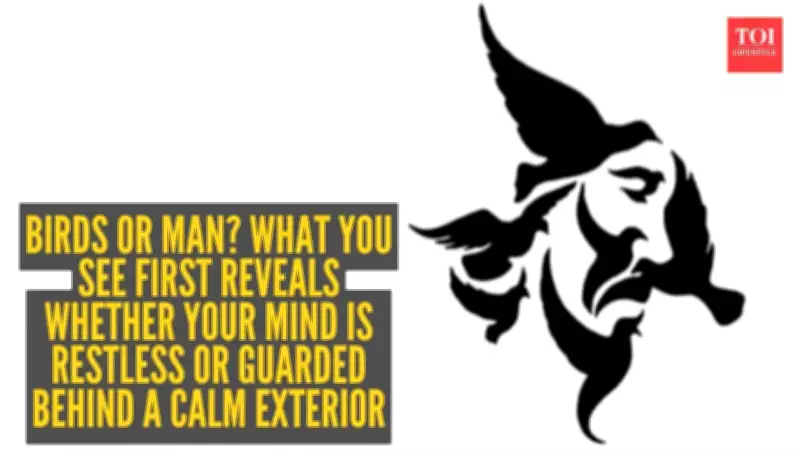
The Viral Optical Illusion: Birds or a Man's Face?
At first glance, observers will typically perceive one of two primary images: either a flock of birds in flight or the distinct side profile of a man's face. The initial image your brain processes is not random; it is believed to reflect underlying psychological traits and mental states. According to the test's interpretation, what you notice first can reveal whether your mind is characterized by restlessness or if you maintain a guarded demeanor behind a calm exterior.

To participate in this revealing test, simply relax your gaze and observe the image carefully. Take note of which element captures your attention immediately, then read the corresponding interpretation below. It is crucial to remember that there are no correct or incorrect answers in this psychological exploration—only insights into your cognitive patterns.
Interpretation 1: Seeing the Birds First
If your eyes were drawn to the flock of birds initially, the interpretation suggests: "Your mind refuses to rest. It consistently races ahead of you, perpetually focused on future scenarios and potential outcomes. Thoughts like 'What if something goes wrong?' or 'What if I'm not prepared?' emerge without invitation—swift, sharp, and pulling you into hypothetical situations that have not yet materialized.
While your physical presence remains in the current moment, your mind is already elsewhere, engaged in constant thinking, predicting, and attempting to control events that have not occurred. The underlying truth, as explained by Dasha Takisho, is that this anxiety does not stem from weakness. Rather, it originates from an excessively active mind that lacks a stable anchor.
With too many thoughts circulating without resolution, you find yourself perpetually flying within your own mental landscape, never truly landing to fully experience your actual life."
Interpretation 2: Seeing the Man's Face First
If you first noticed the man's side profile, the analysis indicates: "You have mastered the art of appearing composed even when internal turmoil prevails. To outsiders, you project an image of calmness, composure, and control. However, beneath this carefully maintained surface lies significant tension, noise, and pressure to keep everything together.
You constantly monitor yourself—your reactions, facial expressions, and how you are perceived by others. This goes beyond merely experiencing emotions; it involves managing how those emotions are displayed while simultaneously feeling them, which proves profoundly exhausting. You are essentially holding two realities simultaneously: the internal experience and the external persona that must conceal it.
Over time, this duality creates a subtle but persistent distance. You remain physically present in interactions, yet no one truly reaches you completely, as they only encounter the controlled surface you deliberately present."

The Science and Popularity of Personality Tests
Optical illusion personality tests like this one tap into fundamental psychological concepts, including perception, cognitive bias, and subconscious processing. While not scientifically validated diagnostic tools, they offer entertaining and often surprisingly accurate reflections of personality traits and mental habits. The viral nature of such tests demonstrates widespread public fascination with self-discovery and understanding hidden aspects of human psychology.
These visual puzzles continue to captivate social media users worldwide, sparking discussions about perception, personality, and the complex relationship between what we see and who we are. Whether you found the results remarkably accurate or merely amusing, such tests provide valuable opportunities for introspection and conversation about the human mind's fascinating workings.