

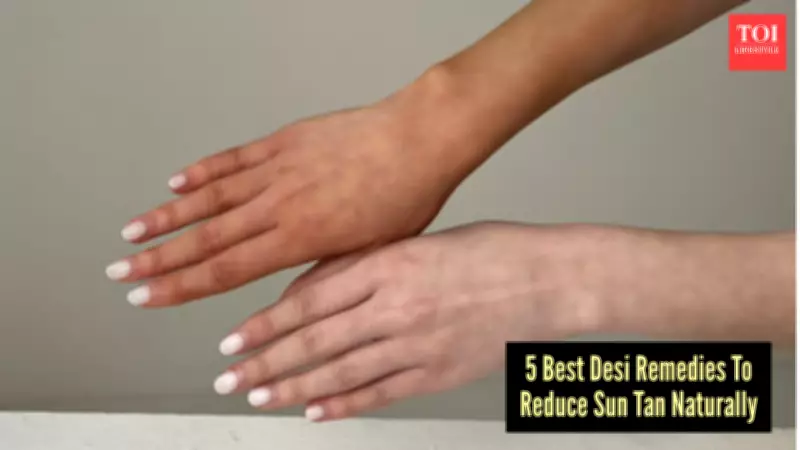
Summer weekends are great until you look in the mirror and realize your skin looks like a human Neapolitan ice cream. We have all been there. You forget to reapply your sunscreen during a quick day out, and suddenly you are dealing with a fiery red sunburn that slowly morphs into a stubborn, uneven tan. While the initial sting goes away, that dark tan loves to overstay its welcome. Before you rush to a clinic for heavy chemical treatments, take a breath. Your kitchen is already packed with natural ingredients that can gently fix the damage. But first, let us establish one golden rule. Never, under any circumstance, apply these remedies to an active, hot, or peeling sunburn. If your skin is still red and stinging, step away. Wait until the heat completely clears and only the tan remains before you try these five research-backed steps.
The Overnight Healer: Fresh Aloe Vera Gel
If you have an aloe vera plant sitting on your balcony, it is time to put it to work. Aloe vera is the absolute king of sun care. Scoop out the fresh, gooey gel from a leaf, or grab a bottle of 100 percent pure store-bought gel, and slather a thick layer over the tanned parts right before bed. Leave it on overnight. Why does it work? Aloe contains a natural compound called aloin. Research shows that aloin actively targets hyperpigmentation by putting the brakes on melanin synthesis. By leaving it on while you sleep, you give your skin the perfect window to rebuild its broken barrier and drink up lost moisture.
The Kitchen Classic: Yogurt and Turmeric
When your skin looks dull and uneven, head straight to the fridge. Mix two tablespoons of plain, unflavored yogurt with just a tiny pinch of turmeric. Apply this smooth paste to your skin, let it sit for about 15 to 20 minutes, and wash it off with lukewarm water. This works beautifully because yogurt is rich in lactic acid. This mild alpha-hydroxy acid gently dissolves the cellular glue holding dead, tanned skin cells together. Combine that with turmeric's proven anti-inflammatory properties and its ability to inhibit melanin production, and you get a bright, refreshed complexion without any harsh irritation.

The Antioxidant Punch: Tomato Pulp
Got 15 minutes to spare? Mash or blend half a ripe tomato and apply the juicy pulp directly onto your face or arms. Tomatoes are basically nature's own shield against the after-effects of UV rays. They are loaded with lycopene, a heavyweight antioxidant that neutralizes the free radical damage caused by sun exposure. On top of that, the mild natural acids present in tomatoes act as a gentle skin lightener. It is quick, incredibly cost-effective, and surprisingly powerful at bringing back your original skin tone.
The Gentle Scrub: Besan and Milk Ubtan
Once your skin has fully healed and does not feel sensitive at all, you can introduce a bit of physical exfoliation. Mix two tablespoons of besan (gram flour) with enough raw milk or curd to create a thick paste. Put it on, wait 15 minutes for it to semi-dry, and then gently scrub it off in circular motions using wet hands. Unlike store-bought scrubs that can cause microscopic tears on fragile, post-sun skin, besan offers a soft, non-abrasive mechanical exfoliation. Meanwhile, the natural fats and lactic acid in the milk deeply nourish the fresh skin cells underneath.
The Heavy Hitter: Lemon and Honey
This final remedy is highly effective but demands strict discipline. Mix equal parts fresh lemon juice and raw honey, leave it on the skin for 15 minutes, and rinse thoroughly. The citric acid in lemon operates like a natural bleaching agent to lift heavy pigment, while honey acts as a soothing humectant to lock in moisture. However, be incredibly careful. Lemon juice drastically spikes your skin's photosensitivity. Only use this mix at night, and absolutely do not step outside the next day without a solid broad-spectrum sunscreen of SPF 30 or higher. Fading a sun tan takes a little time and consistency. Pick a remedy that fits your routine, keep your skin hydrated, and let nature do the heavy lifting!

