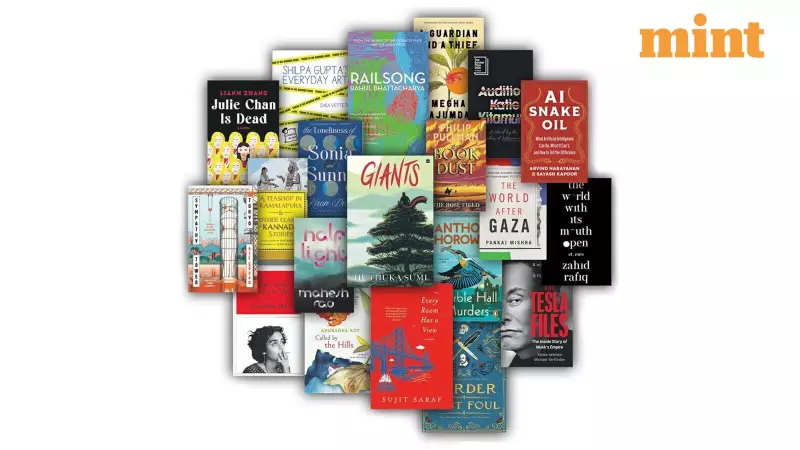
The literary landscape of 2025 has been remarkably rich, offering readers a diverse array of voices and stories that grapple with contemporary crises, personal identities, and historical legacies. From powerful non-fiction examining global conflicts to immersive fiction exploring the human condition, this year's standout publications provide both escape and essential commentary. Compiled from recommendations by critics Somak Ghoshal, Shalini Umachandran, Avantika Bhuyan, and Shrabonti Bagchi, here is a definitive guide to the books that defined the year.
Fiction That Captured Our World
Kiran Desai made a triumphant return after nearly two decades with The Loneliness of Sonia and Sunny. This sprawling 700-page novel masterfully intertwines themes of love, class, politics, art, and identity, delivering an epic that kept readers turning pages in feverish anticipation.
In Every Room Has a View, Sujit Saraf presents a compelling narrative about the Indian diaspora. The story follows Naveen Gupta, who dies in Silicon Valley after three decades, leaving behind a peculiar last wish that throws his family and friends into disarray.

Mahesh Rao delivers a poignant and nuanced exploration of queer relationships in Half Light. The novel follows two men who meet in 2014, have an affair, and reconnect in 2018, weaving in the impact of societal stigma, class, caste, and privilege on love and identity.
For readers of dark, suspenseful tales, Julie Chan is Dead by Liann Zhang is a standout. Set in the glamorous yet cutthroat world of influencer marketing, it follows a twin who assumes her sibling's identity, leading to a chilling series of events.
Philip Pullman concluded his beloved alternate universe saga with The Rose Field, bringing Lyra's journey to a close. The novel, which reflects on the loss of imagination, left fans with profound questions, cementing its unique place in modern fiction.
Non-Fiction: Truth, Power, and Technology
In a year marked by global turmoil, Pankaj Mishra's The World After Gaza served as a crucial scholarly yet accessible beacon. The book connects historical and contemporary threads with clarity and complexity to explain the ongoing crisis in West Asia, cutting through hate-mongering and misinformation.
Arundhati Roy released her first memoir, Mother Mary Comes to Me, which readers described as a mind-blowing, heady cocktail of emotion. Blending the funny, sad, and intimate, the book offers unforgettable insights into writing, living, friendship, and the core mother-daughter relationship.
A shocking expose, The Tesla Files by investigative reporters Sonke Iwersen and Michael Verfurden, details extensive misgovernance within one of the world's most influential companies. Based on whistleblower accounts, the book reads like a thriller, painting a disturbing picture of corporate greed and perfidy.
As AI continues to reshape society, AI Snake Oil by Arvind Narayanan and Sayash Kapoor provides a vital layperson's guide. Published in India in 2025, it demystifies generative and predictive AI, helping readers navigate the hype and demand accountability.
Celebrating Regional Voices and Debuts
Zahid Rafiq's debut short story collection, The World With Its Mouth Wide Open, offers a powerful, quiet portrayal of life in Kashmir. Without depicting overt violence, the eleven stories capture the generational trauma, fear, and resilience of its people through precise and controlled prose.
Honouring Naga storytelling traditions, Huthuka Sumi's Giants delves into the life of Kato, a mute boy in Nagaland. Filled with fantastical imagery, the novel uses folklore to connect past and present as Kato longs for the protection of the mythical giant, timi-la.
The anthology A Teashop in Kamalapura and Other Classic Kannada Stories, edited by Mini Krishnan and translated by Susheela Punitha, spans a century of Kannada writing. This collection is a superb introduction to the region's literary heritage, exploring themes from language politics to community and love.

In Called by the Hills, Anuradha Roy writes lyrically about leaving Delhi for a life in the Himalayas. She reflects honestly on the personal and environmental challenges, including climate change's impact on the mountain landscape, accompanied by beautiful watercolour illustrations.
Megha Majumdar followed her acclaimed debut with A Guardian and a Thief, a gripping blend of apocalyptic climate-fiction and dark fantasy. The novel is noted for its propulsive plot and poignant exploration of loss, mirroring our own dystopic realities.
Notable Mentions and Genre Standouts
Anthony Horowitz delivered what many consider the best instalment in his literary murder series with Marble Hall Murders. Editor Susan Ryeland solves a contemporary murder using clues from an unfinished book, unraveling secrets within a dysfunctional family reminiscent of Enid Blyton's world.
Rahul Bhattacharya's Railsong is a beautifully analogue novel set between 1961 and 1992. Through the life of protagonist Charu, it shows how broad policy decisions like the Green Revolution and liberalization tangibly affected everyday Indian life, with the Railways as its vibrant backdrop.
Translated from Japanese, Rie Qudan's Sympathy Tower Tokyo sparked controversy for its partial use of ChatGPT. The novel, which won the Akutagawa Prize, follows an architect in 2026 tasked with building a luxury block for convicted criminals, posing deep ethical dilemmas.
For art enthusiasts, Shilpa Gupta's Everyday Art, a collaboration with educator Sara Vetteth, offers an interactive journey through the artist's work. It includes activities and reflections, such as on a poem by Palestinian writer Dareen Tatour, encouraging reader engagement.
Finally, Murder Most Foul by Guy Jenkin offers a fresh take on historical crime, with Shakespeare teaming up with Christopher Marlowe's sister to investigate the playwright's mysterious death in 1593, a welcome departure from conventional cozy mysteries.
This year's selection proves that literature remains a powerful tool for understanding complexity, fostering empathy, and imagining new futures, offering something profound for every kind of reader.