Archaeologists Uncover Ancient Mass Grave of Infants in Repurposed Water Cistern
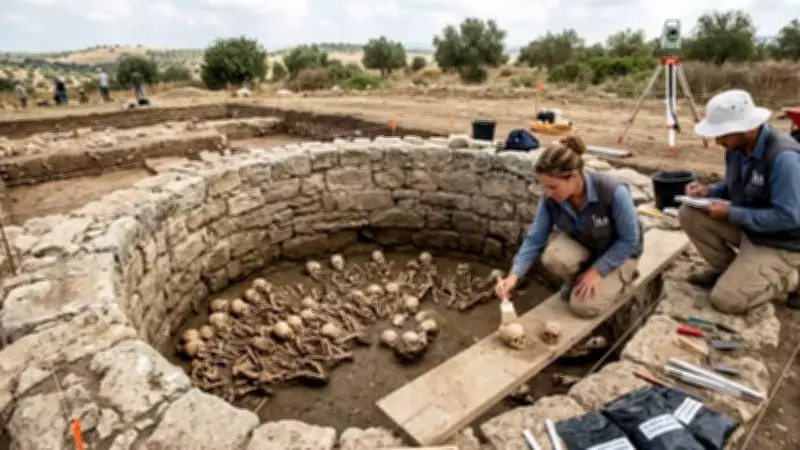
Archaeologists conducting excavations at the ancient biblical city of Tel Azekah in the Judean foothills have made a startling discovery: a water cistern that was repurposed as a mass grave for infants and young children approximately 2,500 years ago. This extraordinary find, detailed in a research paper published in the Palestine Exploration Quarterly in March 2026, provides a rare window into mortuary practices and social attitudes during the early Persian Empire.
Discovery at Tel Azekah: From Water Source to Burial Site
Located about 30 kilometers southwest of Jerusalem, Tel Azekah is an ancient city with a rich historical legacy. A collaborative team from Tel Aviv University and Heidelberg University identified the remains within a previously reused water system, known as Cistern 12 or F518, situated on the lower plateau of the tell. Originally, this site served as a vital water source during the Middle Bronze and Iron Ages before being abandoned and later transformed into a burial repository during the Persian period, specifically in the 5th century BCE.
Demographics of the Grave: A Focus on the Very Young
Osteological examinations led by researchers such as Hila May from Tel Aviv University have revealed that the cistern contained the remains of between 68 and 89 individuals, with a striking demographic profile. Approximately 90 percent of the children were younger than five years old at the time of death, and about 70 percent were less than two years old. The presence of articulated remains, where bones are still in their anatomical positions, confirms that these were primary burials. Disarticulated remains suggest natural movement over time, likely due to water infiltration within the cistern.

A Century-Long Funerary Practice
Unlike mass graves resulting from sudden events like war or disease outbreaks, evidence indicates that this site was used continuously over many years as a communal burial repository for weaning children. This points to an established, ongoing funerary practice throughout the early Persian period, reflecting a specific cultural or social tradition in the Province of Judah.
Sociological Insights: Exclusion from Formal Cemeteries
The research proposes a sociological theory to explain why these infants were buried separately from formal adult graves. According to this perspective, infants who died before weaning were not considered independent beings in ancient society. As a result, they did not qualify for burial in family tombs, which were typically reserved for individuals who had achieved certain social milestones. This site thus offers profound insights into ancient concepts of personhood and the rite of passage associated with weaning.
Evidence of Care in a Communal Setting
Despite being classified as a mass grave, the treatment of the children's burials shows signs of care and respect. Excavators recovered small finds from the site, including ceramic vessels from the Persian Period, as well as personal items such as beaded jewellery, metal rings, pierced ear ornaments, and ceremonial bracelets. These artefacts not only help date the burial site to the 5th century BCE but also indicate that the children were buried with personal belongings and burial offerings, even though they were not interred in separate graves.
Implications for Understanding Ancient Judah
This discovery at Tel Azekah challenges previous assumptions about burial practices in ancient Judah and highlights the complexity of social structures during the Persian period. By providing tangible evidence of how societies dealt with the death of the very young, it enriches our understanding of historical demographics, cultural norms, and the emotional landscapes of past civilizations. The ongoing analysis of the remains and artefacts promises to yield further insights into the lives and deaths of these ancient children.