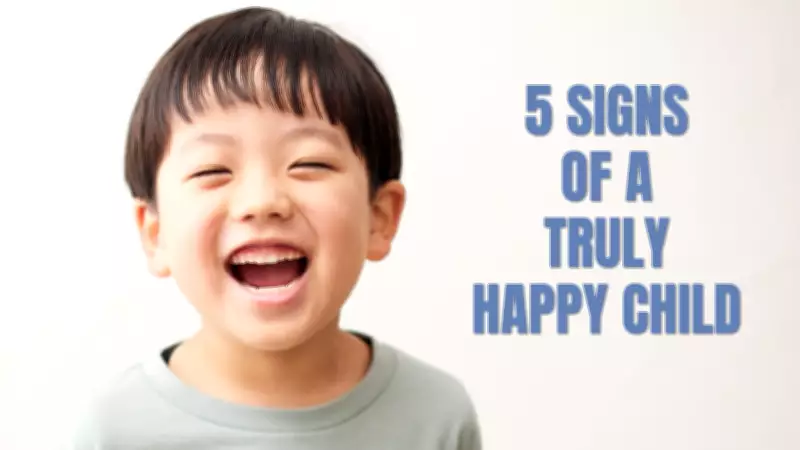
Many parents look for their child's happiness in big moments such as birthday celebrations or achieving good grades. However, a child's real happiness is often hidden in behaviors that seem ordinary. A truly happy child is not one who smiles all the time. True happiness comes when a child is emotionally secure. A child who makes mistakes, gets frustrated sometimes, and even makes mistakes is a child who is truly content with being himself. This is why a child's true happiness shows through small everyday behaviors. Here are five hidden signs that your child is genuinely happy, emotionally safe, and deeply connected with you.
They Talk to Themselves While Playing
A powerful sign of emotional comfort in children is their imaginative ability to create stories and think about an imaginary world. A child who is mentally free and emotionally secure often uses self-talk. Such children explore ideas and express creativity openly. A child's habit of talking to toys is not strange; instead, it shows they are comfortable being alone with their thoughts and do not need constant stimulation to feel something.
They Correct You Without Hesitation
Children who respectfully correct their parents show one of the greatest human qualities: emotional security. If a child confidently says to their parents, "No, that is not what happened," it shows that he feels secure and is not hesitant to express his feelings or opinions. Such confidence is not disrespect; instead, it is an emotional bond where a child knows they will be loved even after speaking honestly.

They Cry in Front of You Without Covering Their Face
Many children suppress their emotions because they fear being judged or told, "You are too sensitive." However, if a child feels safe enough to not hide their tears, it can be a quiet but powerful sign of emotional safety. Instead of hiding their emotions, children who feel loved choose to show them. It depicts that they feel comforted instead of feeling judged.
They Say 'I Don't Know' Easily, and Don't Shrink After
If an "I don't know" phrase comes from a child's mouth respectfully, it is a sign that they do not fear making mistakes. Children who feel constant pressure to appear smart and capable often hide their confusion and avoid answers to escape what they feel is embarrassing. On the other hand, emotionally secure children usually feel safe admitting uncertainty. They do not see confusion as failure; they see it as part of learning.