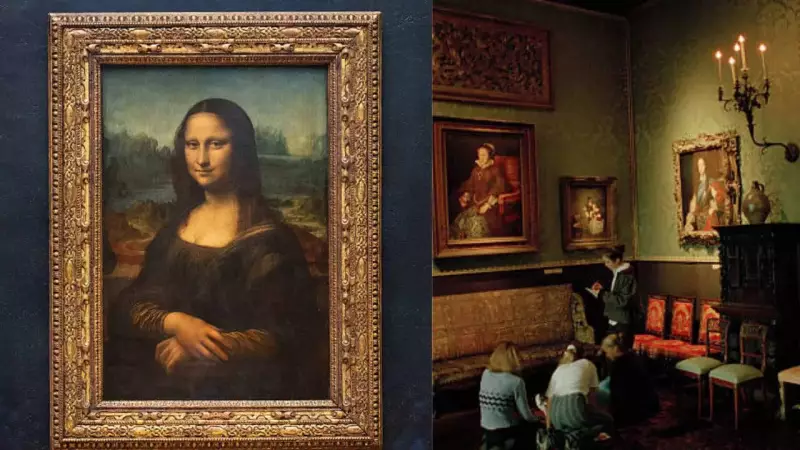
Art transcends its physical form to become a vessel of human history, culture, and collective memory. When a priceless masterpiece is stolen, the loss is not merely financial; it is a profound cultural and emotional blow. Throughout history, several audacious art thefts have exposed the vulnerabilities of even the most prestigious institutions, leaving behind tales of boldness and mystery. Here are five of the most infamous art heists that shocked the world.
The Daring Theft That Made the Mona Lisa a Legend
In what is arguably the most famous art heist of all time, Leonardo da Vinci's Mona Lisa was stolen from the Louvre in Paris on August 21, 1911. The perpetrator was Vincenzo Peruggia, an Italian handyman and former employee of the museum. Exploiting his knowledge of the museum, he simply hid the iconic painting under his coat and walked out. The masterpiece was missing for over two years, a period during which its fame skyrocketed into a global sensation. It was finally recovered in 1913. This brazen act not only cemented the painting's legendary status but also served as a stark wake-up call about museum security worldwide.
The Unsolved Mystery of the Gardner Museum Heist
On March 18, 1990, two men disguised as police officers executed a meticulously planned robbery at Boston's Isabella Stewart Gardner Museum. They subdued the security guards and, in just 81 minutesRembrandt and Vermeer. To this day, it remains the largest unsolved art theft in United States history. The museum continues to display the empty frames as a poignant memorial to the loss. Despite extensive investigations and a multi-million dollar reward, none of the stolen artworks have ever been recovered.

A Bold Burglary at the Van Gogh Museum
In December 2002, thieves targeted the Van Gogh Museum in Amsterdam, demonstrating that even modern, high-security facilities are not impervious. The criminals scaled the museum's walls, smashed a window, and stole two early paintings by Vincent van Gogh: View of the Sea at Scheveningen and Congregation Leaving the Reformed Church in Nuenen. The theft sent shockwaves through the art world. Fortunately, after a 14-year international search, both paintings were recovered in Italy in 2016. The incident remains a critical case study in the protection of cultural heritage.
Another stunning breach occurred in November 2019 at the Grünes Gewölbe (Green Vault) museum in Dresden, Germany. Thieves broke into one of Europe's oldest treasure chambers and stole 21 pieces of exquisite 18th-century jewellery, including diamond-encrusted royal artefacts. Museum officials described the items as having "immeasurable worth." The early-morning heist, which exploited serious security flaws, was a devastating blow to Germany's cultural patrimony.
Perhaps no single artwork has been more coveted by thieves than the Ghent Altarpiece, also known as The Adoration of the Mystic Lamb. Created in the 15th century by Hubert and Jan van Eyck, this Northern Renaissance masterpiece holds the dubious record of being the most frequently stolen major artwork in history. It has been looted at least seven times by various forces, including Calvinists, Napoleon's army, and the Nazis during World War II. Tragically, one of its panels is still missing today, a silent testament to art's vulnerability in the face of conflict and greed.
These notorious crimes are more than just tales of theft; they reflect humanity's deep attachment to its cultural legacy. Each stolen masterpiece represents a fragment of our shared history. In response to these high-profile heists, museums globally have been forced to radically overhaul their security protocols, governments have strengthened international cooperation for art recovery, and the public has become more aware of the fragility of our collective treasures. While some works, like the Van Gogh paintings, have found their way home, others remain lost, perpetuating a legacy of mystery and a enduring hope for their return.