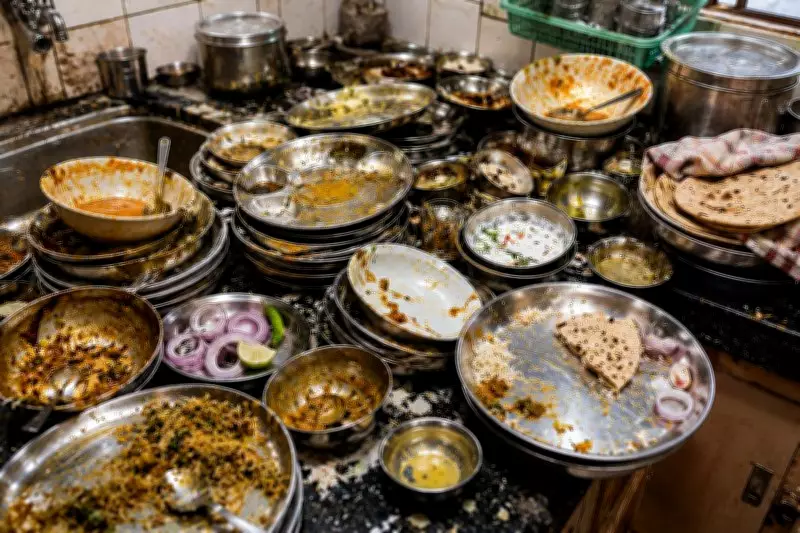
In a humorous and heartfelt essay published in The Tribune, Professor Santosh Jatrana reflects on the uniquely Indian approach to leftovers, which she calls a 'celebration of culinary chaos.' The piece opens with a personal anecdote: her son questioned what was on her plate, which contained six different leftovers—rajma, aloo gobi, pulao, sambar, raita, and bhindi—mixed, reheated, and eaten with pickle. She declares this 'the true spirit of the Indian kitchen.'
Leftovers as Opportunity
Jatrana argues that Indians view leftovers not as waste but as raw material for future meals. 'We look at leftovers with ambition, possibility and renewal,' she writes. Last night's dal becomes paratha stuffing; steamed rice is reborn as lemon rice, curd rice, or fried rice; dry sabzi finds new life in sandwiches, rolls, or cutlets; and a lonely roti, with onions and green chilies, returns as a respectable dish. The refrigerator is not a storage chamber but a 'coalition government' of containers, each with its own agenda—paneer curry vying for leadership, chhole claiming numbers, rice neutral but willing to support whoever provides ghee, and a small bowl of chutney holding strategic power to bring down the whole arrangement.
The Amalgamated Culinary Chaos
From these 'tense democratic conditions' emerges what Jatrana, with her son's suggestion, calls 'amalgamated culinary chaos.' This is not random cooking but Indian household economics with tadka—a little of this, a little of that, cooked together with onions, green chilies, and enough masala to silence objections. The cook tastes it, nods, and says, 'Actually, this is quite nice.' And very often, it is. The beauty of the leftover meal is that it answers to no authority, cares not for purity, tradition, or regional boundaries. Upma may meet pav bhaji; idlis may be sliced, fried, and tossed into North Indian-style masala.

Moral and Economic Forces
Jatrana identifies a moral force behind this practice: most Indians are raised not to waste food. One abandoned chapati can invite a full lecture on gratitude, farmers, hunger, and declining values. So, Indians learn to repurpose, recycle, and reinvent. Leftovers are not neglected; they are celebrated. Her own six-leftover meal was a 'masterpiece,' proving that disorder can happen anywhere, even on a plate. But in the Indian kitchen, chaos is rarely a failure. The essay concludes that this 'culinary jugaad' is a testament to resourcefulness and creativity.