Ahmedabad's Traditional Art Form Gains Global Spotlight in Spain
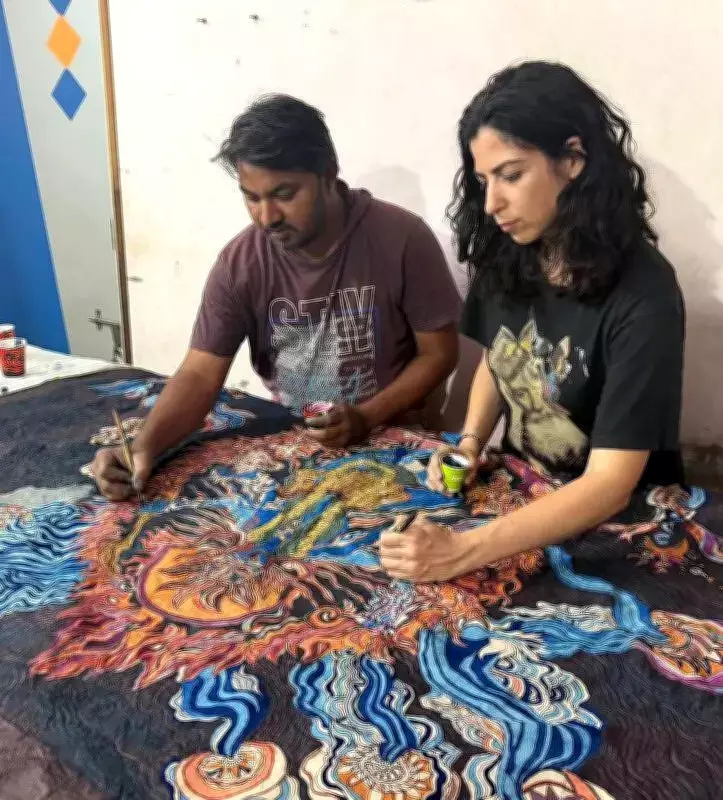
In a remarkable fusion of cultural heritage, Mata ni Pachedi, a Geographical Indication (GI)-tagged art form from Ahmedabad, has inspired a stunning piece of textile art. This collaborative creation, measuring 6 feet by 5 feet, is set to be displayed at the prestigious Xtant Art Festival in Mallorca, Spain, next month. The artwork vividly portrays Goddess Kali alongside other traditional motifs, all crafted entirely with natural dyes in Ahmedabad.
Cross-Cultural Collaboration Brings Art to Life
The primary artist, Kirit Chitara, teamed up with Istanbul-based artist Jennifer Ipekel for this project. Their partnership blossomed following a prior visit to Turkiye with Mata ni Pachedi artworks. Chitara emphasized the significance of this opportunity, stating, "The Xtant Art Festival is a prestigious event. We aimed to highlight the rich culture and tradition of Mata ni Pachedi and kalamkari through our piece." The duo dedicated approximately two months to completing the artwork, ensuring every detail reflected their shared vision.
Ipekel expressed her fascination with the themes embedded in Mata ni Pachedi, noting its deep roots in goddess worship. She explained, "This art form is one of the world's oldest practices, with evidence spanning various regions. Goddesses are revered as mothers who give birth to all life, and in India, the divine feminine continues to be worshipped in diverse forms. This became a profound inspiration for our collaboration."

Art as a Symbol of Unity and Heritage
The artists envision their creation as a creative source of life, designed to inspire viewers to connect with sacred powers and unity. In addition to Goddess Kali, the piece features a 'dream tree', adding layers of symbolism and depth. Chitara highlighted contributions from other artists, including Rohan Chitara and next-generation talents, who helped bring this vision to fruition.
Reflecting on the project's broader impact, Chitara added, "For us, this artwork extends the ethos of Mata ni Pachedi, translating it into a more universal language. It represents a new experience and an effort to introduce this ancient art to global audiences, sparking conversations about its legacy and importance."
This initiative not only showcases Ahmedabad's artistic legacy but also bridges cultural gaps, promoting international appreciation for traditional Indian crafts. As the Xtant Art Festival approaches, anticipation builds for this unique blend of heritage and innovation.