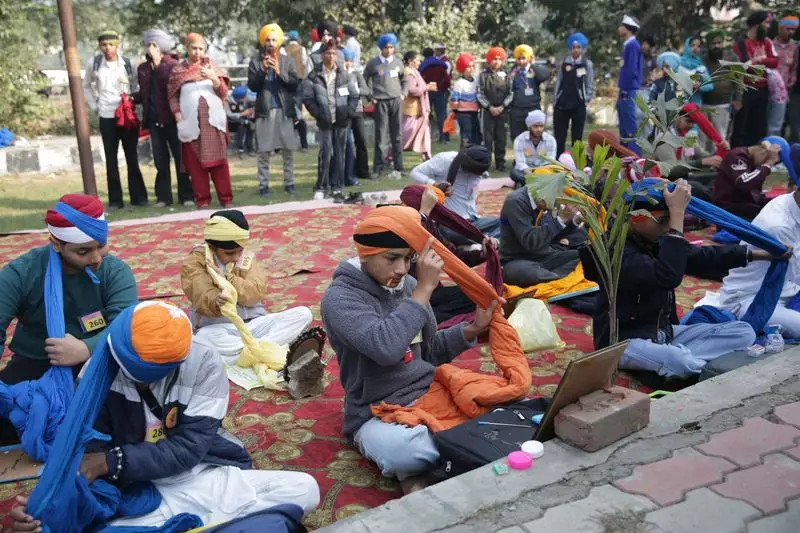
The historic city of Amritsar paid solemn and heartfelt tributes on Sunday, December 24, to mark Veer Bal Diwas. This significant day commemorates the supreme sacrifice of the four Sahibzadas—the sons of the tenth Sikh Guru, Guru Gobind Singh Ji. The city's remembrance was a powerful echo of a national observance, reflecting on a pivotal chapter in Sikh history that continues to inspire generations.
City-Wide Observances and Solemn Tributes
Across Amritsar, various events and ceremonies were organized to honor the young martyrs. The main function was held at the Gurdwara Shaheed Ganj Singh Singhania, located near the historic Ram Bagh. This gathering saw participation from a cross-section of society, including religious leaders, members of the Sikh community, and local citizens. The atmosphere was one of profound reverence as attendees reflected on the courage of the Sahibzadas—Baba Ajit Singh, Baba Jujhar Singh, Baba Zorawar Singh, and Baba Fateh Singh.
Speakers at the event illuminated the historical context of their sacrifice. They recounted how the younger sons, Baba Zorawar Singh and Baba Fateh Singh, aged just 9 and 7 years old respectively, were bricked alive in a wall in Sirhind on the orders of the Mughal governor Wazir Khan for refusing to abandon their faith. The elder sons, Baba Ajit Singh and Baba Jujhar Singh, aged 18 and 14, had earlier attained martyrdom fighting valiantly in the Battle of Chamkaur Sahib. The narratives served as a stark reminder of the price paid for religious freedom and conviction.

Educational Initiatives and Youth Engagement
A key focus of the observance in Amritsar was on educating the younger generation about this legacy. Special programs were arranged in several schools and colleges where students presented poems, speeches, and plays depicting the lives and sacrifices of the Sahibzadas. The aim was to instill the values of bravery, righteousness, and unwavering faith in the youth. Organizers emphasized that Veer Bal Diwas is not merely a day of remembrance but a lesson in moral fortitude and the defense of one's principles against all odds.
The discourse highlighted that the observance of this day across India, following the announcement by Prime Minister Narendra Modi in 2022, helps bring a crucial page of Indian history to a national audience. It fosters a deeper understanding of Sikh history and its contribution to the nation's narrative of resistance and sacrifice.
Enduring Legacy and Contemporary Relevance
The commemorations in Amritsar underscored the timeless relevance of the Sahibzadas' sacrifice. Religious scholars spoke about how their story transcends religious boundaries, offering a universal message of courage in the face of tyranny and the power of steadfast belief. The city, which houses the holiest shrine of Sikhism, the Golden Temple, naturally becomes a central point for such reflections on Sikh heritage and valor.
The day concluded with prayers (Ardas) for the well-being of all humanity, in keeping with the Sikh spirit of Sarbat da Bhala. The collective sentiment in Amritsar was that remembering the supreme sacrifice of the four Sahibzadas reinforces the collective resolve to uphold truth, justice, and freedom. Their martyrdom, over three centuries ago, continues to be a beacon of inspiration, reminding society of the strength found in conviction and the eternal nature of a sacrifice made for one's faith and ideals.