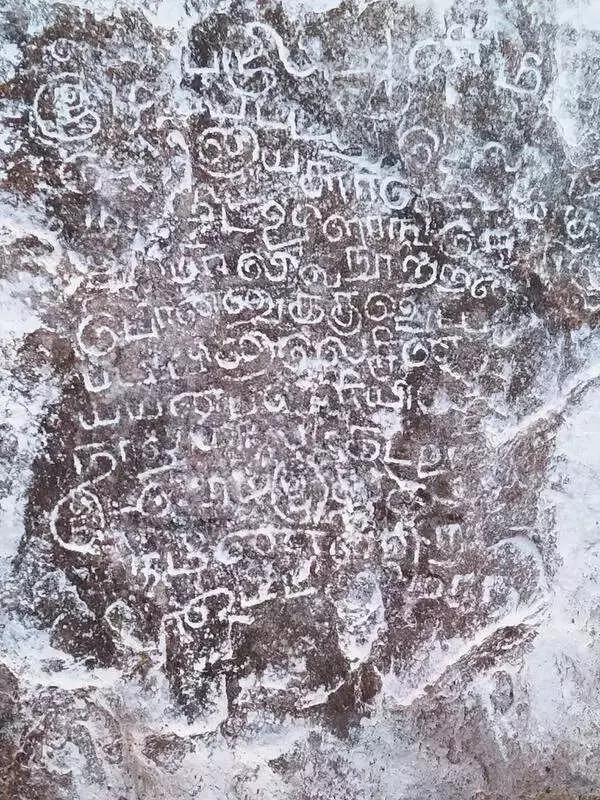
In a significant archaeological find, a damaged rock inscription dating back to the 17th century CE has been unearthed at the foothills of the Western Ghats near Palani in Dindigul district, Tamil Nadu. Archaeologist V Narayanamoorthy confirmed the discovery, highlighting its historical importance for understanding the region's past.
Discovery and Investigation
The discovery was initiated following a tip-off from Professor V Tamilnayagan, who alerted authorities to the presence of an ancient inscription in the area. Narayanamoorthy, along with Professors C Sriraja and R Manoharan from the department of Indian culture at Arulmigu Palaniandavar College of Arts and Culture in Palani, conducted a site visit to study the inscription in detail.
Condition and Content of the Inscription
The inscription is engraved on a rock locally known as Chekkadumparai. It consists of 12 lines but is in a severely damaged condition, with several portions broken or eroded. This deterioration has made it challenging to read the text fully, resulting in the loss of crucial historical details that could have provided more context.

According to Narayanamoorthy, the inscription records a significant donation: four ma of land in the Chinna Ayyampulli area. The grant was ordered by Velayudha Chinnoba Naicker, who served as the Palani–Balasamudram polygar during that era. The land was gifted to a local village deity named Vilangodiyan, which is believed to have been worshipped by polygars throughout their rule, shedding light on the religious customs of the time.
Key Details and Challenges
One heavily damaged line in the inscription refers to 150 gold coins, though the exact purpose of this amount remains undetermined due to the poor state of preservation. Additionally, the inscription notes that the polygar's order was executed and engraved by a sculptor named Thammannan, who was the son of Oddan, adding a personal touch to the historical record.
Historical Significance
Narayanamoorthy emphasized that this inscription is particularly significant as it offers valuable insights into the administrative system and religious practices of the polygar period in the Palani region. It serves as a tangible link to the past, helping historians and archaeologists piece together the socio-political and cultural landscape of 17th-century Tamil Nadu.
The discovery underscores the importance of ongoing archaeological efforts in India, especially in regions rich with historical artifacts. It also highlights the need for preservation and further study to unlock more secrets from such ancient inscriptions, which are often vulnerable to environmental damage and neglect.