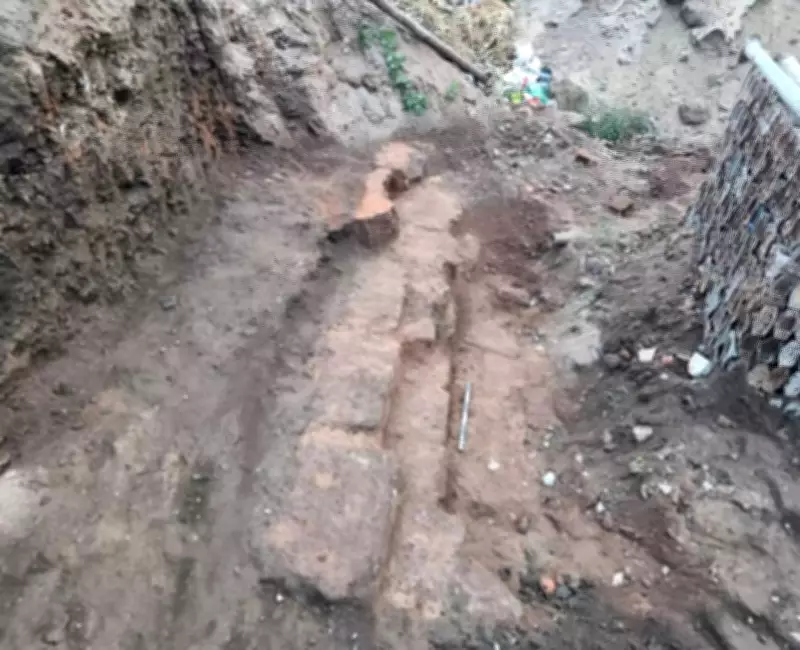
Ancient Tunnel-Like Structure Unearthed Near Jagannath Temple in Puri
A groundbreaking geophysical survey conducted around the historic Jagannath Temple in Puri, Odisha, has revealed compelling evidence of significant buried archaeological remains, including what appears to be a massive tunnel-like structure. This discovery suggests the potential existence of monuments that may either predate the construction of the main 12th-century shrine and its associated religious structures or be contemporary with them.
Ground-Penetrating Radar Survey Uncovers Subsurface Anomalies
According to a draft report from a ground-penetrating radar (GPR) survey carried out by IIT Gandhinagar in 2022, subsurface anomalies indicative of structural remains have been detected in the area surrounding the temple. The findings, recently accessed by an RTI activist, point to the presence of buried architectural features within a 75-meter radius of the outer wall of the temple complex. Surveyors scanned up to a depth of 5 meters to detect variations in subsurface composition, revealing intriguing patterns.
Details of the Discovered Structure
The report specifically highlights a significant feature in the south-east corner of the Jagannath Temple. "In the south-east corner of the Jagannath Temple, alignment of a huge feature indicates some kind of tunnel or waterway infrastructure as it is originating/ending to/from the temple and sea beach," the report stated. This area includes parts of the Emar mutt, Nurshingha temple, Budhi Maa temple, and Jagannath Temple road.

The anomalies indicate a colossal feature with a maximum width of 6.0 meters and a length of almost 90 meters. It seems to be an underground network, potentially an ancient drainage system or a tunnel-like feature. The report emphasizes that further probing is required to determine any connection with the temple complex, raising questions about its historical purpose and significance.
Context and Background of the Survey
The survey was commissioned by the Odisha Bridge Construction Corporation (OBCC) as part of the Jagannath Heritage Corridor project. This initiative was undertaken after the Archaeological Survey of India (ASI) discovered a broken lion sculpture from the spot where the entire structure of Emar mutt once stood. This discovery occurred during work on the heritage corridor project in April 2022, prompting the need for a more thorough investigation.
Expert Insights on the Findings
An archaeologist, who requested anonymity, provided context to the findings, noting that such tunnels in ancient times were typically used either as secret passages or as drainage channels. "There are more tunnels in the area around the temple, the remains of which could be seen during the corridor work," the archaeologist revealed. This suggests that the discovered structure might be part of a larger network, adding to the historical and archaeological value of the site.
Implications for Heritage and Archaeology
The discovery of this tunnel-like structure near the Jagannath Temple opens up new avenues for research into the region's rich cultural and religious history. It underscores the importance of continued archaeological efforts in preserving and understanding India's heritage. As further investigations are planned, this finding could reshape our understanding of the temple's origins and its surrounding landscape, highlighting the need for careful preservation and study.