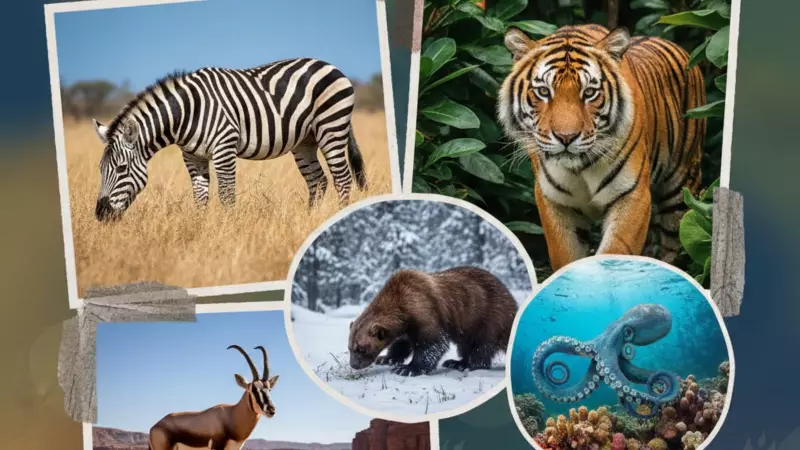
From Antelopes to Tigers: Animal Species That Defy Domestication
Not every animal is destined to coexist with humans. Some species inherently resist domestication due to their nature, instincts, and evolutionary history. While many animals can be temporarily tamed or trained, true domestication remains an elusive goal for most.
The Complex Process of Domestication
Domestication extends far beyond mere taming or captivity. It involves a prolonged, multi-generational process of selective breeding, focusing on traits such as friendliness towards humans, reduced aggression, and adaptability to managed environments. Despite centuries of effort, only a handful of animals have successfully undergone this transformation.
Zebras: The Unpredictable Relatives of Horses
Although closely related to horses and donkeys, zebras have never been domesticated. Their unpredictable behavior, potential for aggression, and powerful bite make them challenging to control. Evolving in predator-rich habitats, zebras are perpetually vigilant and prone to flight or fight responses, rather than submission.

Tigers: Captive but Never Domesticated
Large felines like tigers may be raised in captivity, but they are never truly domesticated. Tigers retain strong territorial instincts, unpredictable hunting behaviors, and immense physical strength. Even those reared by humans from birth can revert to instinctive aggression as they mature, lacking the behavioral consistency required for domestication.
Octopuses: Intelligent yet Incompatible
Exceptionally intelligent but entirely unsuited to domestication, octopuses are solitary, short-lived, and highly sensitive to stress. They thrive in complex, dynamic environments and often exhibit escape behaviors or self-harm in controlled settings, highlighting their incompatibility with domestic life.
Antelopes: Prone to Panic and Stress
Many antelope species have been experimented with for domestication due to their grazing habits. However, most are susceptible to panic, injury, and extreme stress when confined. Unlike cattle or sheep, antelopes lack the herd structures and behavioral traits necessary for viable domestication, with nervous systems fine-tuned for escape.
Wolverines: Ferocious and Independent
Known for their ferocity and independence, wolverines are solitary animals with vast territorial ranges. They do not form social bonds conducive to domestication and react aggressively to confinement. Their strength, sharp claws, and low tolerance for human presence render them unsuitable for controlled breeding or handling.
In summary, the domestication of animals is a complex endeavor limited by evolutionary and instinctual barriers. Species like zebras, tigers, octopuses, antelopes, and wolverines exemplify the challenges, reminding us that some creatures are meant to remain wild.