Jagannath Panda's Homecoming Exhibition Reimagines Time and Memory in Bhubaneswar
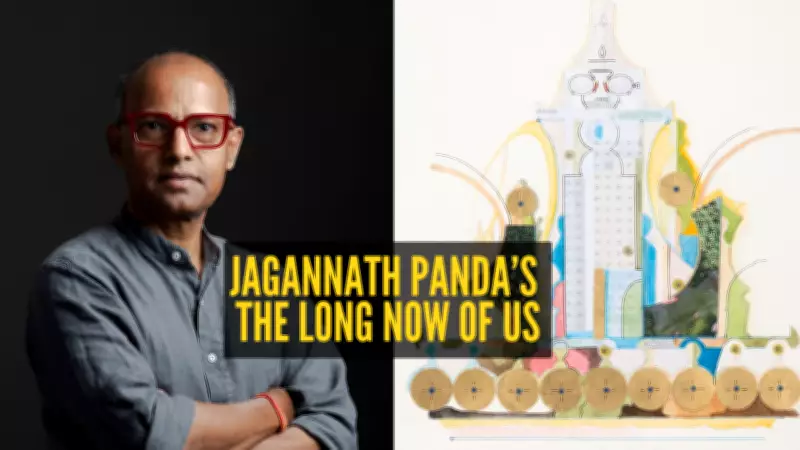
Giving back to one's homeland is far more than a simple gesture of gratitude; it serves as a powerful inspiration for future generations. This principle is vividly embodied by internationally acclaimed contemporary artist Jagannath Panda, who has returned to his hometown of Bhubaneswar after a remarkable three-decade artistic journey. His deeply reflective solo exhibition, titled The Long Now of Us, re-examines profound themes of time, memory, and cultural symbolism, offering a transformative experience for visitors and the local community alike.
Exhibition Details and Philosophical Roots
The exhibition is firmly rooted in the concept of cyclical returns and draws inspiration from regional sensibilities, investigating how artistic meanings evolve when works are presented in their place of origin. Running until 27 February 2026 at the Lalit Kala Akademi, Regional Centre in Bhubaneswar, the show is curated by Sibdas Senguptam. It features a diverse array of mediums, including collage, sculptural interventions, and philosophical inquiries. The practice engages critically with pressing issues such as ecology, community dynamics, and the hyper-circulated image world characteristic of late capitalism. In a recent conversation, Panda reflected on his homecoming, the evolution of his material languages, and the role of art as a potent disruptor of contemporary reality.
Artist's Reflections on Homecoming and Cultural Perception
This exhibition marks Panda's first solo presentation in Bhubaneswar, his hometown. When asked how this homecoming reshapes his understanding of his three-decade career, especially within the cultural landscape that initially shaped his sensibilities, he shared insightful perspectives. I have wanted to exhibit in my hometown for a long time, but finding the right space and building the necessary infrastructure took nearly a decade, Panda explained. What I find most compelling in this process is how the work is perceived within the region. The meaning of my subjects shifts significantly when viewed inside Odisha versus outside. Cultural symbols, like the Odissi dancer or the chariot, transcend their traditional roles here, offering new ways to imagine these subjects in a contemporary context. This has allowed me to witness my own practice through a fresh, transformative lens.

Cyclical Time and Collective Experience
The Long Now of Us is framed around the idea of cyclical returns, inspired by Gopinath Mohanty's temporal logic. Panda elaborated on how this concept influences his revisiting of memory, history, and personal evolution in the exhibited works. Cyclical time has always been central to my artistic imagination, he stated. For this exhibition, I drew specific inspiration from Gopinath Mohanty's understanding of temporal logic. This notion of time returns through rituals, repetitions, seasons, and festivals, but it is most deeply rooted in the community. The central idea of this show is a concept of time shaped by collective experience rather than an external utopia; this philosophy guided the production of the various bodies of work presented here.
Collage as a Counter to Circulationism
Panda approaches collage not merely as a technique but as an epistemic framework, decontextualizing materials from encyclopedic cut-outs to brocade fabrics. He elaborated on how this process resists or responds to what he describes as the circulationism of late capitalism. For me, collage is a playful act, Panda noted. I don't seek an absolute meaning during the process; instead, I engage with different materials and their unique historicities to produce a third meaning—one that is simultaneously personal and universal. As I deepen my understanding of my practice, I see it as a counter-site to the over-rationalized world surrounding us. We are constantly inundated with images and information; the world has changed completely in just the last five years. My practice is a direct response to that shift, an attempt to find a foothold amidst the circulationism of late capitalism.

The Chariot as a Mobile Archive
The chariot emerges as a powerful heterotopic structure in this exhibition, simultaneously collapsing and reassembling. Panda discussed what drew him to this symbol and how it functions as a mobile archive of social, political, and ecological memory. I was interested in a singular question: Can the chariot move beyond its status as a cultural symbol to become an ecological imagination of our times? he pondered. I found myself haunted by what this chariot would carry, whose histories it would tell, and where it would move. This large-scale sculptural installation functions as an archive of an alternative history. It speaks to our ethical responsibilities to the community and the collective power of humanity in shaping a sustainable future.
Art as Disruption in a Mediated Age
Works like Alchemist of the Earth III introduce the metaphor of the spectacle as an epistemic filter. In an age shaped by ecological precarity and mediated vision, Panda shared his views on how his practice intervenes in the way we perceive and interpret reality. I believe we inhabit multiple realities simultaneously, he asserted. This exhibition is a response to the prolonged present my practice has occupied over the last three decades. While my urgencies and techniques have evolved, the core remains constant. Issues like ecological precarity and class diversity have become exponentially more complex in recent years. I see the artist's role as that of a disruptor. My aim is to create ruptures in reality that destabilize our preconceived notions of normalcy. I believe that is the fundamental task of an artist, to respond effectively to the changing times that surround us.
About the Author: Rishabh Raj is a fashion, food, art, culture, and travel writer who enjoys exploring and weaving experiences into words with a personal touch. His passion for fashion and food drives him to write regularly, offering readers engaging insights into diverse creative fields.