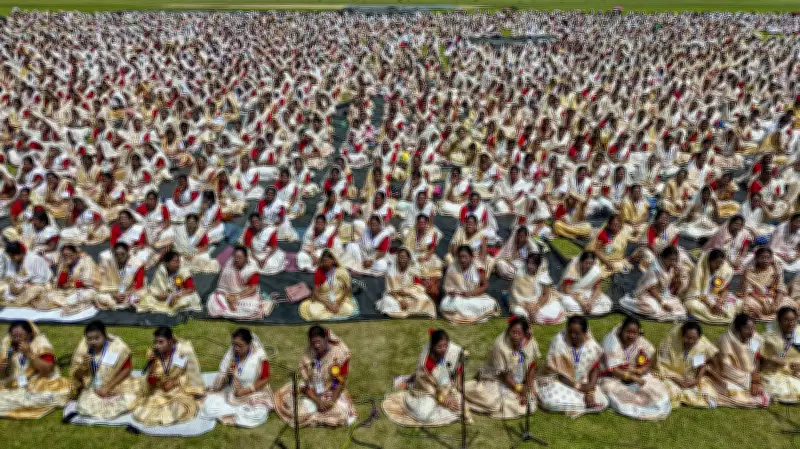
Historic Gathering of 15,999 Women Revives Assamese Wedding Songs in Duliajan
In an awe-inspiring celebration of cultural identity, a remarkable assembly of 15,999 women converged at the iconic Nehru Maidan in Duliajan, Assam, on Sunday. They united their voices to perform Biya Naam, the traditional wedding songs of Assam, creating a powerful symphony that resonated with pride and tradition.
A Visual and Auditory Spectacle of Golden Hues
Adorned in the resplendent golden attire of Muga mekhela sador, the participants transformed the venue into a breathtaking panorama. This visual magnificence was matched only by the stirring musical performance, which lasted for an impressive 35 minutes. The event, meticulously organized by the Duliajan Sanmilita Ayotee Cultural Group and Sivasagar District Sanmilita Surujmukhi Shilpi Samaj, drew participants from across the state, underscoring its significance as a cultural milestone.
Preserving a Fading Heritage for Future Generations
The initiative was born from a deep-seated concern among cultural custodians about the gradual decline of Biya Naam in contemporary society. Historically integral to Assamese weddings, these songs are traditionally sung during rituals like Pani Tola, where women collect sacred water in procession. However, modern wedding trends have led to their diminishing presence. Organizer Ranu Bhuyan emphasized the event's mission, stating, "This programme was organised with the goal of ensuring Biya Naam moves forward. We hope that from Duliajan, these traditions will gain renewed momentum." The gathering aimed to inject new vitality into this cherished art form and ensure its transmission to upcoming generations.

Inspiration for Ethnic Communities and Broader Impact
Veteran actress Chetana Das, who attended the event, lauded the participants for their collective effort. She remarked, "Such an event serves as an inspiration for all ethnic communities and tribes in the region," encouraging others to take pride in their cultural roots and actively work towards preservation. The performance not only showcased the living vitality of Assamese folk heritage but also highlighted the role of women, known as Ayotis, in sustaining these traditions. This historic event stands as a testament to community-driven efforts to globalize and safeguard intangible cultural assets, fostering a renewed appreciation for regional customs amid evolving social landscapes.