

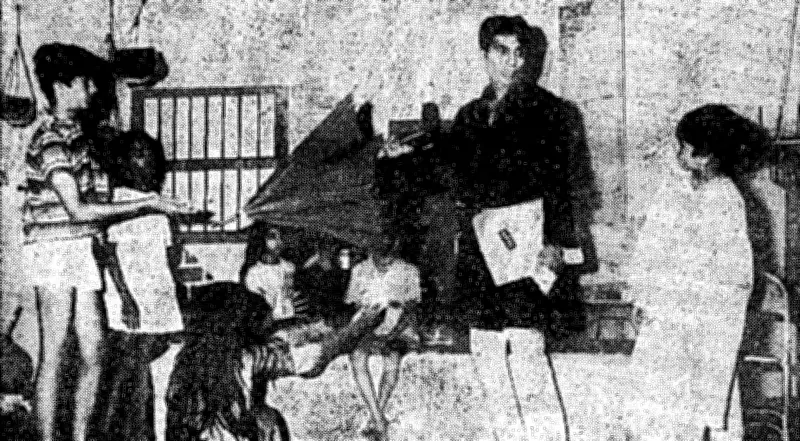
The Enduring Legacy of Babban Khan and His Iconic Play 'Adrak Ke Panje'
In August 1965, as India and Pakistan were locked in intense conflict along their northern borders, a remarkable cultural phenomenon was being born under the dim streetlights of Hyderabad's old city. A 22-year-old penniless young man, Babban Khan, wrote a complete play in just over three hours. This play, titled 'Adrak Ke Panje' (The Claws of Ginger), would go on to become one of the most successful theatrical productions in Indian history.
A Record-Breaking Theatrical Journey
When the final curtain fell on this iconic comedy more than three and a half decades later in 2001, 'Adrak Ke Panje' had been performed more than 10,000 times across over 60 countries and in dozens of languages. The play frequently played to packed houses, with crowds sometimes requiring police intervention to maintain order. Babban Khan, who wrote, produced, directed, and performed the central role of a bank clerk named Ramtoo, passed away after a brief illness at a Hyderabad hospital on Friday night at the age of 83.
Addressing Social Issues Through Comedy
The 1960s and 1970s saw family planning as a central focus of the Indian government's health policy. Official slogans like 'Do ya teen bacche...bas' (Two or three children...enough) and later the stricter 'Ek ya do' (One or two) were ubiquitous on billboards and radio jingles. 'Adrak Ke Panje' tackled this provocative issue with wit and humor, using its title as a metaphor for uncontrolled birth. The protagonist Ramtoo, despite having eight children and numerous debtors ranging from milkmen to schoolmasters, maintained his snappy humor and carefree zest for life.

From Humble Beginnings to International Acclaim
The production's origins were remarkably modest. Babban Khan, who had no formal theatre training and had dropped out of college, financed the play by selling his mother's only piece of wedding jewelry for 275 rupees. He allocated 200 rupees for theatre rent, 30 rupees for printing tickets, 2.50 rupees for an umbrella, and 18 rupees for material to make a sherwani, which a tailor agreed to stitch in exchange for a pass to the show.
Despite the first performance in September 1965 being a commercial failure, the second show began an unprecedented run of success that would continue for decades. The play's simple set and minimal production costs belied its enormous popularity, with audiences booking tickets in advance much like for hit Hindi films.
Global Recognition and Critical Praise
The play's fame extended far beyond India's borders. It earned a place in the Guinness Book of Records and attracted international attention from notable figures including film director Francis Ford Coppola, actor Rex Harrison, and thriller writer Frederick Forsythe. Even legendary Hindi film comedian Johnny Walker reportedly remarked that while he had been making film audiences laugh for 15 years, 'Adrak Ke Panje' was the first play that made him laugh.
In a 1970 article in The Illustrated Weekly of India, critic Bilkiz Alladin noted that while the play lacked conventional plot structure, dramatic tension, or conflict, it succeeded as 'a string of jokes from beginning to end' that captivated audiences with its authentic Hyderabadi essence, flavor, and distinctive Urdu dialects.
Personal Tragedy and Theatrical Inspiration
Babban Khan's life experiences deeply influenced his work. His father, who worked in the fire department, died when he was just six years old. 'All my siblings died young...I somehow survived to tell the tale,' the playwright told The Times of India in 2001. 'Adrak Ke Panje' was born from real-life characters and situations that Khan had observed and experienced firsthand.
Success and Later Contributions
The phenomenal success of 'Adrak Ke Panje' transformed Babban Khan into a wealthy man during an era when beggars were content with five paisa donations. By 1979, he owned three homes in Hyderabad's upscale Banjara Hills and had written another play titled 'Gumbad Ke Kabutar' (Pigeons Of The Dome) addressing corruption.

In his later years, Khan's home in Shantinagar served as a training center for aspiring drama artists and film actors, with the playwright personally mentoring students. Hundreds of stage enthusiasts and admirers attended his funeral on Saturday, with cricket commentator Harsha Bhogle recalling on social media how the play was 'a big hit' during his childhood in Hyderabad.
Babban Khan's legacy extends beyond his record-breaking play to his contributions in nurturing theatrical talent and preserving the distinctive cultural voice of Hyderabad through his work. His journey from writing under streetlights to international acclaim represents one of the most remarkable success stories in Indian theatre history.





