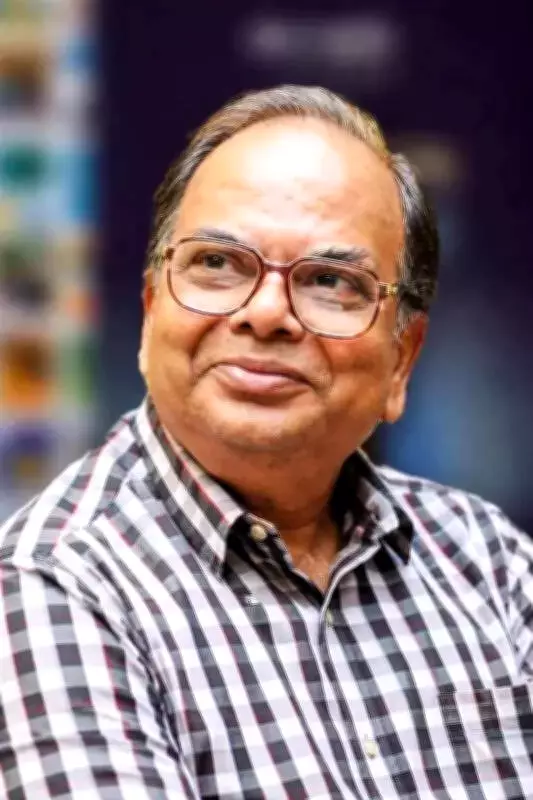
Bengali Literary Giant Shankar Passes Away at 93 in Kolkata Hospital
Mani Shankar Mukherjee, universally celebrated by his pen name Shankar, the top-selling Bengali author whose career spanned over seven decades since the 1960s, passed away on Friday in a hospital located off EM Bypass in Kolkata. He was 93 years old and is survived by his two daughters, Mausumi and Tanaya.
A Prolific Writer Who Defined the Bengali Bhadralok Psyche
The author was renowned not only for his extraordinary output but also for the profound insight into the minds of multiple generations of the Bengali bhadralok class that permeated his prose. Shankar stood as one of the foremost literary figures of his era, with his writings serving as the foundation for cinematic masterpieces. Most notably, his works inspired Satyajit Ray's acclaimed films 'Seemabaddha', which critically examined the intellectual emptiness behind corporate success, and 'Jana Aranya', a poignant narrative of urban youth navigating a harsh and competitive job market in search of self-identity.
From Humble Beginnings to Literary Stardom
Shankar's writing appeared effortless, yet it masked significant personal struggles. As the second of eleven siblings, he and his family faced severe poverty following their father's death in 1947. Eight years later, in 1955, he authored his first book 'Kato Ajanare' under the light of a hurricane lamp. "We resided in a rented home on Beharilal Chakraborty Lane in Howrah's Shibpur. The house had electricity, but the supply was cut off when we couldn't pay the bill," he recalled during a 2021 interview. Seven years later, Shankar penned 'Chowringhee', conceived on a rainy day at the waterlogged intersection of Central Avenue and Dalhousie in Kolkata. This novel has since achieved cult classic status and has been translated into 18 languages, including English and French.

A Seven-Decade Association with Kolkata's Heart
The author maintained a deep, seven-decade-long connection with Chowringhee, Kolkata's bustling downtown area, where he worked in various professional roles until 2020. His novels are credited with partially sustaining the iconic College Street boipara (book market) trade for decades, making him a rare figure who garnered both critical acclaim and immense popular adoration. A recipient of the prestigious Sahitya Akademi Award, Shankar also possessed a philosophical depth that led him to write biographies of Bengali saints such as Swami Vivekananda and Sri Aurobindo.
Master of Multiple Genres and Languages
Shankar was a multifaceted author, equally celebrated as a travel writer and rightfully considered the primary travelogue writer in Bengali. His explorations of destinations in the United States, United Kingdom, France, Germany, and Switzerland, often serialized in Bengali magazines, offered the financially constrained Bengali middle-class—typically limited to trips to Digha, Puri, and occasionally Darjeeling and Kalimpong—a window to the world beyond India's borders. His ability to discuss European vintage wines and Cheddar cheese with the same ease as he wrote about his upbringing in Howrah's bylanes added to his widespread appeal.
A Distinguished Corporate Career Alongside Literary Fame
In his early career, Shankar served as a clerk to Noel Frederick Barwell, the last British barrister at the Calcutta High Court. Following Barwell's death, he transitioned into public relations, with brief tenures at Philips and Eastern Railway before joining Dunlop and ultimately the RPG Group, where he dedicated three and a half decades. "Very few individuals could write with equal proficiency in both English and Bengali. He achieved fame as an author but was also a respected veteran in the corporate sphere," noted Biswarup Mukherjee, a former colleague who worked with Shankar for a decade at Victoria House, the CESC headquarters.

Remembered as a Mentor and Storyteller
Industrialist and RPSG Group Chairman Sanjiv Goenka shared, "Collaborating with him for many years was a rewarding experience. When I began, he would mentor me, offer constructive criticism, and advise on professional attire. His passing is a personal loss." In his personal life, Shankar embodied the image of a friendly neighborhood 'galpa dadu' (storytelling grandfather). Visitors could spend hours at his south Kolkata home or central Kolkata office, enjoying fish fries he ordered while absorbing his always-truthful tales and sharp wit.
Shankar's legacy endures through his vast body of work, which not only enriched Bengali literature but also provided a global perspective to his readers. His humility was evident as he often remarked that his greatest challenge remained ahead, noting that all ten of the best-selling Bengali authors were deceased. Bengal, without Shankar's narratives, would have experienced less of the world and would have been diminished in its cultural essence.