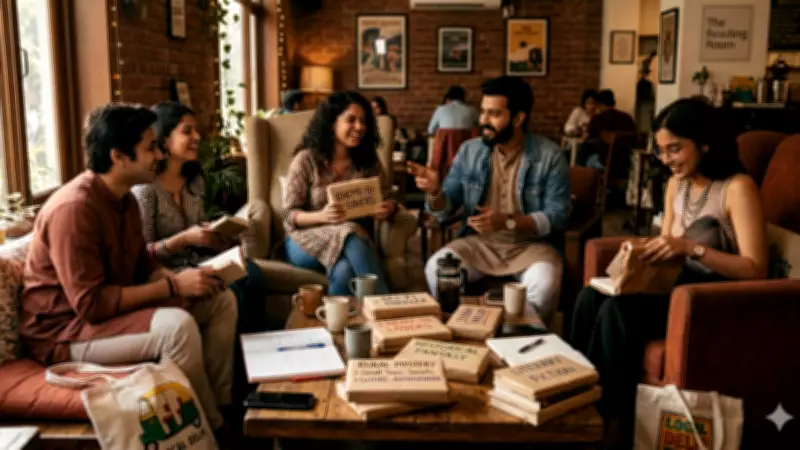
Imagine diving head-first into a book without any knowledge of its author, cover, or title. On National Reading Day, we explore the growing trend of Blind Book Dates. These books are wrapped in brown paper, accompanied by a brief description, a review, or a hint about their genre. It is a blind date, but better, because there are no people involved – only you and your book. Bookstores and book clubs are increasingly adopting this format to make book swaps more enjoyable or to help readers choose a book with an open, unbiased perspective.
A Great Way to Meet Like-Minded People
Turning the book swap into a more personal experience, literary communities pair participants by completing quotes and encourage connections before the books take center stage. Vesmir, founder of a literary group, shares, “We let people talk to each other and provide prompts to keep the conversations flowing.” Reflecting on his observations at these gatherings, he adds, “I’ve seen many participants continue conversations over coffee, which is really nice.” Modern readers are not necessarily literary snobs, nor are they governed by dating apps. “Readers naturally bond with other readers, so it becomes a great way to meet like-minded people as well. I also believe readers are generally the kind of people who avoid dating apps because they find them mentally draining. They’d much rather be in spaces like these and meet people organically,” he notes.
Choose Books Based on Instinct Rather Than Familiarity
Nidhi Gupta, director of a bookstore chain, explains, “The idea behind the ‘Blind Book Date’ was to reintroduce a sense of surprise, curiosity, and emotional discovery into the reading experience. In an age where readers are constantly influenced by algorithms, reviews, and social media recommendations, we wanted to encourage people to choose books based on instinct rather than familiarity.” While blind book dates have been around globally and in India since the 2010s, their growing popularity today may reflect a desire to step away from BookTok trends and algorithm-driven recommendations. “By wrapping the books and offering only a few thematic clues, the concept creates a more intimate and exciting interaction between the reader and the book. It transforms buying a book into an experience, one that feels personal, immersive, and rooted in discovery rather than just a transaction,” she adds.

This Allows Books to Be Experienced for Their Emotional Value Rather Than Their Popularity
Driven by page counts and rigid goals, reading can often feel like a task on a to-do list. Blind book dates help preserve some of the spark. “It allows books to be experienced for their emotional and literary value rather than their popularity. That element of trust, surprise, and discovery often creates a far more memorable reading experience and reminds people why falling into a good book can still feel magical,” adds Nidhi. By wrapping the books and offering only a few thematic clues, the concept creates a more intimate and exciting interaction between the reader and the book, she emphasizes.
People Love Blind Book Dates Primarily Because of Decision Fatigue
Beyond the social aspect, organizers say the format also helps hesitant readers ease into reading. A Delhi-based reading community hosted its first blind book swap for Christmas last year. Anushree from the reading community shares, “Blind book dates are a great way to entice people to start reading. I understand that picking a book can be exhausting when there’s a lot to choose from, and one may not be sure where to start.” Speaking about new and returning readers, she says, “If you’re picking up a book after a long time or are not a reader, it can be a nice way to gauge what to read.” Subir Dey, curator at a bookstore, shares, “People love blind book dates primarily because of decision fatigue. If you trust your bookseller, you know that whatever is hidden in the wrapper is a good book, and probably something you have overlooked.” On another benefit of the format, he notes, “I have been told that this also helps readers when they are in a reading slump and can’t find their next book, which is also a form of decision fatigue.”