Exhibition 'Typecasting' Showcases Colonial Ethnographic Photos of India 1855-1920
New Delhi, February 11, 2026 – A significant exhibition titled 'Typecasting: Photographing the Peoples of India 1855–1920' is currently on display at DAG in Bikaner House, offering a profound visual journey through colonial-era ethnographic photography. This showcase, running until February 15, features a wide array of photographic materials that document the inhabitants of India across various geographies and cultures, from the northeastern Lepcha and Bhutia tribes to the Afridis of Sind in the northwest and the Todas of the Nilgiris in the south.
Historical Context and Colonial Documentation
The Revolt of 1857 marked a pivotal shift in India's governance, transferring power from the East India Company to the British crown and reshaping colonial strategies for knowledge and control. This period saw systematic efforts to document and classify the subcontinent and its people, exemplified by the eight-volume work 'The People of India: A Series of Photographic Illustrations with Descriptive Letterpress, The Races and Tribes of India' (1868–75). Published by the India Museum in London, this collection includes contributions from pioneering field photographers such as Benjamin Simpson, James Waterhouse, and John Burke. Select folios from this work form a highlight of the exhibition, providing insight into colonial ethnographic endeavors.
Photographic Highlights and Curatorial Insights
The exhibition presents numerous colonial ethnographic photographs, including silver-gelatin prints by eminent photographers like Samuel Bourne, Charles Shepherd, Darogha Abbas Ali, Lala Lala Deen Dayal, Edward Taurines, and Hurrychand Chintamon. These images cover a broad time span from 1855 to 1920, capturing a diverse spectrum of Indian society—from rulers and affluent Parsi and Gujarati communities to lower-income groups such as dancing girls, coolies, barbers, and snake charmers.

Curator Sudeshna Guha emphasizes the exhibition's critical approach, stating, "Through photographs of the colonial endeavours of typecasting the people of India, the exhibition draws attention to the construct that is a typology, or a class. It shows the uncertainties in type-making and encourages seeking a visual history of early photography and anthropology beyond the colonial gaze, to reckon with the inherent mutability of photographs." Guha notes that photographs can mean different things to different viewers, depending on the circumstances of viewing, thus urging critical reflection on visual records with ethnographic intent.
Critical Scrutiny of Typecasting
The exhibition is organized into different sections that encourage visitors to critically examine the histories and errors of typecasting. Ashish Anand, CEO and Managing Director of DAG, comments, "It could be said that the camera swiftly became the primary instrument for investigation in modern anthropology, used to 'capture' images of India's diverse communities for analysis and classification. Looking back, this process was problematic on various levels, driven by British perceptions and purposes."
Specific photographic examples illustrate this diversity:

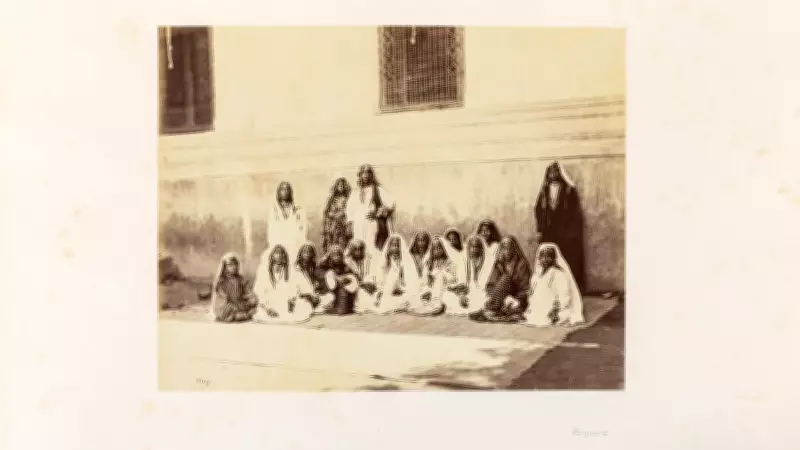
- A 1864 Samuel Bourne silver albumen photograph depicts a group of Kashmiri women seated together.
- A 1862 Charles Shepherd photograph shows a group of 'Afredees' at the Khyber Pass in Peshawar.
- A 1880 Scowen & Co print features Sinhalese devil dancers in elaborate costumes.
- A colored halftone from Moorli Dhur & Sons portrays a turbaned dhobi in Ambala.
Accompanying Publication and Broader Implications
Beyond the visual display, an accompanying publication edited by Guha delves deeper into the historical, technical, and ideological conditions under which these images were produced. Essays by professors Ranu Roychoudhuri (Ahmedabad University), Suryanandini Narain (Jawaharlal Nehru University), and independent researcher Omar Khan explore themes such as the role of photography in shaping social typologies in colonial India. The exhibition note reads, "Critically examining the role of photography in shaping—and questioning—social typologies in colonial India, this material reveals how unstable social categories can be, despite their role in creating them in the first place."
This exhibition not only provides a carefully framed overview of colonial ethnographic photography but also prompts important discussions about representation, classification, and the legacy of colonial documentation in India's cultural history.