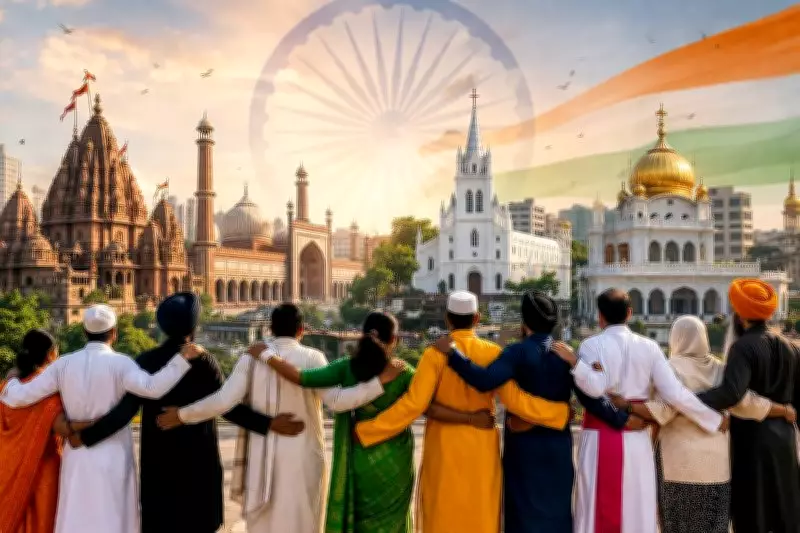
The Great Indian Conundrum: Can Cultural Nationalism Coexist with Pluralism?
India, a land of immense diversity, stands at a crossroads where the ideals of cultural nationalism and pluralism often appear to clash. This debate is not merely academic; it shapes the nation's social fabric, political discourse, and future trajectory. The question of whether India can be both culturally nationalist and pluralistic is one of the most pressing issues of our time.
Understanding the Core Concepts
Cultural nationalism in the Indian context typically emphasizes a unifying national identity rooted in shared cultural, historical, and often religious traditions. Proponents argue it fosters unity and pride, drawing from ancient civilizations and values. Conversely, pluralism celebrates India's mosaic of languages, religions, ethnicities, and customs, viewing diversity as a strength rather than a weakness. This pluralistic ethos is enshrined in the Constitution, which guarantees equality and freedom to all citizens.
Historical Roots and Modern Manifestations
The tension between these ideals has deep historical roots. From the freedom struggle, which saw both inclusive and exclusivist strands, to post-independence policies like secularism and linguistic reorganization, India has grappled with this balance. In recent decades, the rise of political movements advocating for a more homogenized cultural identity has intensified debates. Issues such as language policies, religious symbols in public spaces, and educational curricula often become battlegrounds where nationalism and pluralism collide.

For instance, the promotion of Hindi as a national language sparks concerns among non-Hindi speakers, while events like religious festivals being declared national holidays raise questions about inclusivity. These examples highlight the practical challenges of maintaining a pluralistic society while nurturing a cohesive national culture.
The Constitutional and Social Framework
India's Constitution attempts to bridge this divide by embedding pluralism into its core principles. Articles 25 to 30 guarantee religious and cultural freedoms, ensuring minority rights are protected. However, the interpretation and implementation of these provisions are often contested. Socially, India's pluralism is evident in its festivals, cuisines, and art forms, which thrive across regions. Yet, incidents of communal violence or discrimination remind us of the fragility of this harmony.
Potential Paths Forward
Finding a middle ground requires nuanced approaches. Scholars and policymakers suggest several strategies:
- Inclusive nationalism: Fostering a national identity that embraces diversity rather than suppresses it, drawing on India's syncretic traditions.
- Dialogue and education: Promoting inter-community exchanges and revising educational materials to reflect pluralistic values.
- Policy reforms: Ensuring laws and governance practices uphold both unity and diversity, such as through federalism and local autonomy.
Ultimately, the answer to whether India can be both culturally nationalist and pluralistic lies in its ability to evolve a model that honors its heritage while celebrating its differences. This balance is not just possible but essential for the nation's progress and stability.