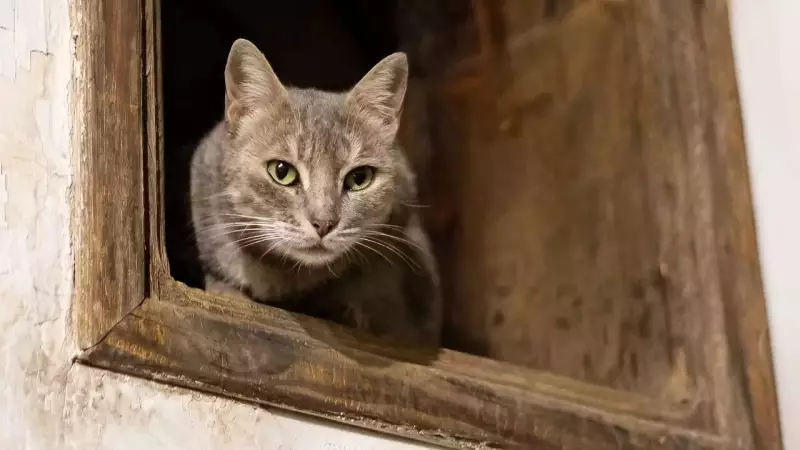
For generations, the story seemed settled. Historians believed the domestic cats purring in European homes today arrived alongside the continent's first farmers, a journey spanning thousands of years. However, a revolutionary genetic investigation has completely rewritten this feline history, revealing a timeline far more recent and intimately tied to the rise of ancient superpowers.
Genetic Clock Rewinds Cat Migration Timeline
A landmark study published in the prestigious journal Science has turned previous assumptions on their head. By analysing 87 ancient and modern cat genomes from regions including Europe, Anatolia, and North Africa, scientists have constructed a new family tree. The evidence is clear: domestic cats established themselves on the European mainland only around 2,000 years ago.
This finding directly challenges the long-accepted narrative that cats accompanied Neolithic farmers into Europe some 6,000 to 7,000 years in the past. The research indicates that earlier feline remains found at European archaeological sites, once thought to be domestic, likely belonged to native wildcats. This prior misidentification had obscured the true, much later, arrival date of our familiar companions.

The Roman Highway for Feline Travel
So, what changed 2,000 years ago? The answer lies in the sweeping tides of history and commerce. The cat's introduction to Europe aligns perfectly with the zenith of Mediterranean trade networks and the expansion of the Roman Empire.
Merchants, soldiers, and travellers crisscrossing the Mediterranean Sea became inadvertent pet transporters. Cats were highly valued passengers on ships for their unparalleled skill in controlling rodent populations, protecting vital food supplies in granaries and during long voyages. They proved indispensable in bustling port cities, military camps, and settlements where safeguarding grain was a matter of survival.
The genetic data suggests a two-phase dispersal. First, North African wildcats reached Mediterranean islands like Sardinia. Later, a more significant wave brought the direct ancestors of today's European house cats to the mainland. Once their paws touched European soil, they spread rapidly along the continent's extensive Roman roads and trade routes, seamlessly integrating into both urban and rural life.
North Africa: The True Cradle of Domestication
This research also settles a long-standing debate about the primary origin of modern domestic cats. It shifts the focus away from the Near East and firmly onto North Africa. The study confirms that modern European domestic cats primarily descend from North African wildcat populations.
Early domestication processes likely unfolded in Egypt and surrounding regions, where a mutually beneficial relationship blossomed. Wildcats gradually entered human settlements, drawn by pests, and humans appreciated their pest-control services. This was not a single, deliberate event but a complex, regionally diverse phenomenon shaped by ecological opportunity and practical necessity over centuries.
What Cats Tell Us About Ancient Human Societies
The late arrival of cats is more than a trivia fact; it's a window into ancient societal dynamics. Their rapid incorporation into European households shows how quickly a useful species can be adopted when the infrastructure for movement exists. It forces a re-examination of archaeological evidence and our understanding of pre-Roman human-animal relationships in Europe.
The story of the domestic cat is ultimately a story about us. It demonstrates how human trade, travel, and settlement patterns directly orchestrated the distribution of animal species. Their journey from North African ports to European hearths is a tangible link to the vast, interconnected world of antiquity, revealing how our ancestors' lives shaped the creatures we share our homes with today.