

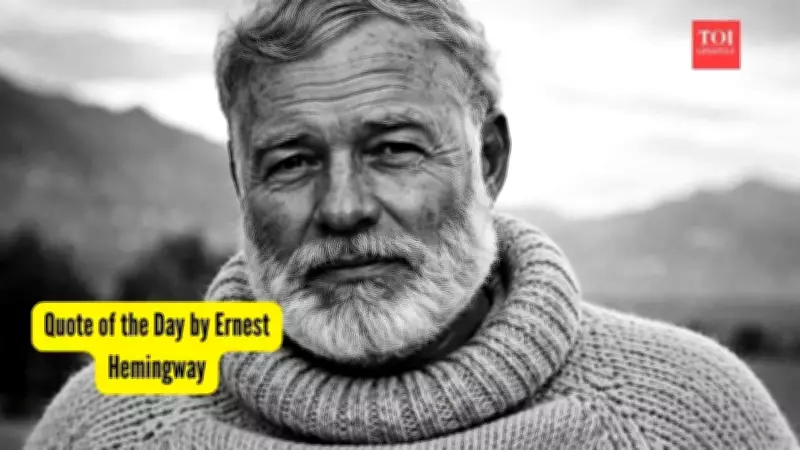
The Enduring Legacy of Ernest Hemingway: A Literary Revolutionary
Ernest Hemingway stands as one of the most significant and influential writers of the 20th century, whose distinctive literary voice, adventurous life experiences, and profound impact on modern literature continue to resonate across generations. His unique approach to storytelling, characterized by stark simplicity and emotional depth, revolutionized narrative techniques and established new standards for literary expression.
Early Life and Formative Experiences
Ernest Miller Hemingway was born on July 21, 1899, in Oak Park, Illinois, into a middle-class family where his father practiced medicine and his mother pursued music. From his earliest years, Hemingway developed a deep connection with the outdoors, cultivating passions for fishing, hunting, and wilderness exploration that would later become central themes throughout his literary career. Rather than pursuing traditional higher education after high school, Hemingway embarked on a journalistic career with The Kansas City Star, where he honed the concise, direct writing style that would become his trademark.
War Experiences and Literary Transformation
Hemingway's service as an ambulance driver during World War I proved transformative, both physically and psychologically. Severely wounded on the Italian front, these traumatic experiences fundamentally shaped his worldview and provided the raw material for much of his subsequent writing. His 1929 novel A Farewell to Arms masterfully explores themes of love, loss, and disillusionment against the backdrop of war, drawing directly from his personal experiences and establishing him as a major literary voice.

Literary Breakthrough and Signature Style
The publication of The Sun Also Rises in 1926 catapulted Hemingway to international fame, capturing the disillusionment and existential searching of the post-war generation. His protagonists, often described as "Hemingway heroes," confront adversity with stoic dignity and quiet resilience, embodying values that resonated deeply with readers worldwide. Hemingway's revolutionary "Iceberg Theory" of writing emphasized surface simplicity while suggesting profound emotional and thematic depths beneath, creating powerful, resonant narratives that invited readers to discover their own meanings.
Lasting Influence and Personal Struggles
Hemingway's minimalist prose style has exerted an enduring influence on contemporary writing, encouraging clarity, precision, and emotional restraint across multiple literary genres. Despite his professional success and international recognition, Hemingway's later years were marked by significant personal challenges, including physical injuries, declining health, and profound depression. These struggles culminated in his death by suicide on July 2, 1961, in Ketchum, Idaho, leaving behind a complex legacy that continues to fascinate scholars and readers alike.
The Hemingway Paradox: Virtue and Vulnerability
One of Hemingway's most memorable observations captures the essential paradox of human excellence: "The best people possess a feeling for beauty, the courage to take risks, the discipline to tell the truth, and the capacity for sacrifice. Ironically, their virtues make them vulnerable; they are often wounded, sometimes destroyed." This profound insight reveals how the very qualities that define moral and artistic greatness—sensitivity to beauty, bravery in action, commitment to truth, and willingness for self-sacrifice—simultaneously expose individuals to greater emotional, psychological, and social risks.
The sensitivity that allows appreciation of life's beauty also opens individuals to deeper pain and disappointment. The courage to pursue convictions inevitably involves facing potential failure and opposition. The discipline to maintain honesty, even when inconvenient or dangerous, often leads to conflict and isolation. The capacity for self-sacrifice, while noble, frequently results in personal loss and exhaustion. Hemingway's observation suggests that true excellence cannot exist without vulnerability, and that the most meaningful lives embrace this inherent tension between virtue and risk.

Enduring Cultural Significance
Today, Ernest Hemingway remains a towering figure in world literature, celebrated not only for his groundbreaking literary contributions but also as a symbol of artistic integrity and human resilience. His adventurous life directly informed his writing, creating works of remarkable authenticity and emotional power. The honesty, bravery, and depth that characterized both his life and writing continue to inspire new generations of readers and writers, ensuring his place among the most important literary figures of the modern era. Hemingway's legacy demonstrates how personal experience, artistic innovation, and moral courage can combine to create enduring cultural impact that transcends time and geographical boundaries.





