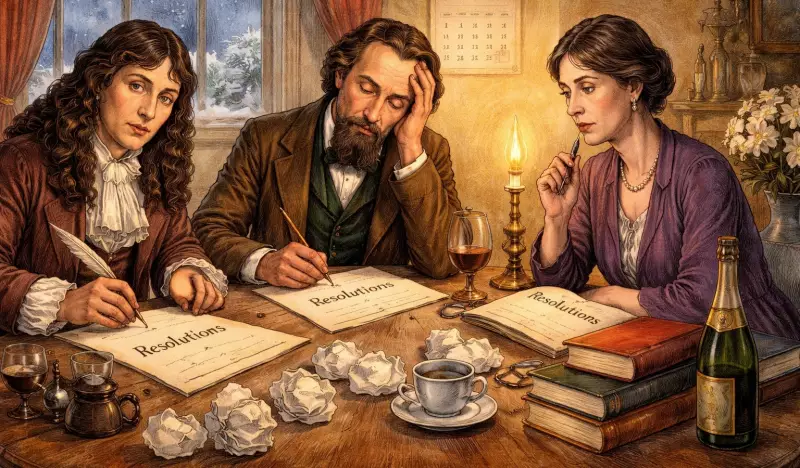
As the calendar flips to a new year, the familiar ritual of making resolutions begins anew. This practice, often dismissed as a modern obsession fueled by gym memberships and app notifications, has deep historical roots. Long before the concept of 'Dry January' existed, celebrated writers and thinkers were already drafting lists of personal reforms, grappling with the same mix of hope and inevitable human frailty that defines our annual pledges today.
The Pragmatic Diarist: Samuel Pepys and His Oath
In the 17th century, the famous diarist Samuel Pepys approached the new year with solemn determination. On December 31, 1661, he recorded a vow to abstain from plays and wine. His motivation was a blend of seeking virtue and managing his finances, a concern that resonates deeply with modern resolvers. Remarkably, Pepys largely adhered to his oath, only allowing himself a brief relapse after its official expiry on September 29, 1662. His year-end reflection was not of moral triumph but of satisfactory self-administration—a 17th-century productivity hack celebrating less indulgence and more contentment.
The Literary Optimists and Skeptics
Not all literary figures met January with austerity. In 1836, Charles Dickens offered a more generous philosophy. He argued that the new year should be presumed innocent until proven guilty, shifting the blame for potential disappointment away from oneself. This externalized outlook provides a refreshing contrast to today's culture of self-blame.

In stark contrast, Virginia Woolf embodied a gentle skepticism. On January 2, 1931, she began to list her resolutions only to immediately undercut the exercise. Her intentions leaned towards modern self-care: to be kinder to herself, to avoid social goading, and to allow herself the freedom of inconsistency. Yet, her professional drive quickly surfaced with a resolution to “make a good job of The Waves,” proving that the line between rest and ambition is perpetually blurred.
Negotiating with Ourselves: A Timeless Habit
The critic James Agate demonstrated in 1942 that resolutions are often negotiations. He resolved to refrain from saying unkind things, but only unless they were “really witty and irreparably damaging.” This built-in escape clause highlights how our promises are frequently tempered by self-knowledge.
These historical accounts reveal universal themes. The desire to drink less, echoed by Pepys who noted improved focus and savings, is the direct ancestor of today's Dry January movement. The struggle to wake earlier, framed by Samuel Johnson as a moral act granting “the consciousness of being,” remains a perennial goal. Meanwhile, poet William Cowper focused resolutions outward, wishing for a better year for others rather than just himself.
Ultimately, these fragments from literary history show that the New Year's resolution is a timeless ritual of human ambition. It is a cycle of promising, failing, adjusting, and documenting—a process that authors from Pepys to Twain have observed with a blend of irony and empathy. Their experiences remind us that the quest for self-improvement is an ancient, shared, and wonderfully human comedy.