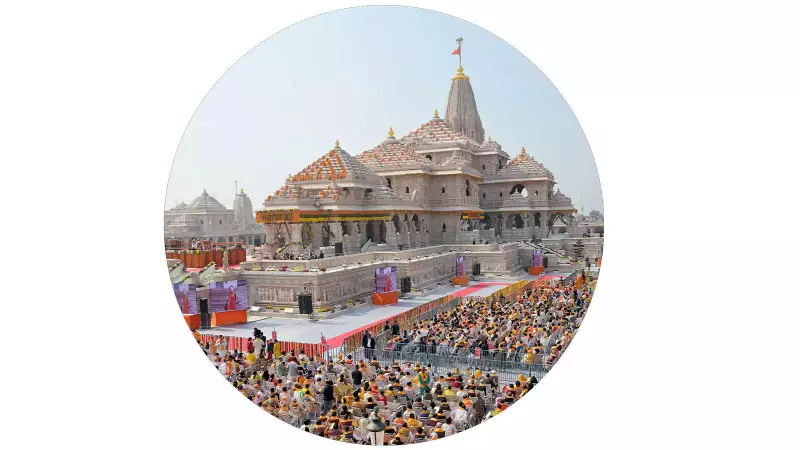
The grand inauguration of the Ram Temple in Ayodhya on January 22, 2024, marked the culmination of a journey spanning over five centuries. This momentous event, led by Prime Minister Narendra Modi, was not merely the opening of a religious structure but the closing of a profound historical chapter. The path to this day was labyrinthine, filled with legal battles, political negotiations, and societal upheavals. Yet, a compelling narrative has emerged from the faithful: every apparent delay, every hurdle, was not an obstacle but a deliberate part of a divine design.
The Weight of History: From Demolition to Determination
The story of the site is etched deep into India's modern history. For generations, the belief that the 16th-century Babri Masjid was built upon the birthplace of Lord Ram fueled a movement. This long-simmering dispute reached a violent crescendo on December 6, 1992, when the mosque was demolished by kar sevaks, triggering nationwide riots. The site then became a heavily secured, contested plot, its fate locked in the halls of justice.
The legal battle was epic in its duration and complexity. The title suit wound its way through the Indian judicial system for decades. The decisive turn came on November 9, 2019, when the Supreme Court of India delivered a historic verdict. The court awarded the disputed land for the construction of a Ram Temple, while also directing the government to allocate an alternative five-acre plot in Ayodhya for a mosque. This judgment provided a legal resolution, paving the way for the tangible realization of a dream held by millions.

The Divine Blueprint: Reinterpreting Delay as Destiny
In the wake of the temple's completion, a powerful spiritual interpretation has taken root among devotees and seers. The interminable waits, the legal impasses, and the political complexities are now being reframed. They are seen not as mere historical contingencies but as necessary intervals in a sacred timeline. The belief is that the deity, Ram Lalla, had his own plans and the temple could only manifest at the moment of his choosing, when the stars aligned spiritually and nationally.
This perspective transforms the narrative from one of conflict and struggle to one of destined unfolding. The years of waiting are viewed as a period of collective tapasya (austerity), making the final fulfillment sweeter and more profound. The Bhoomi Pujan in August 2020, performed by PM Modi amidst the COVID-19 pandemic, is seen as the true beginning of this final divine phase. The subsequent, rapid construction of the magnificent temple complex is presented as evidence that when the divine will is ready, execution is swift.
A New Dawn for Ayodhya and India
The consequences of the temple's inauguration extend far beyond the religious sphere. For the ancient city of Ayodhya, it heralds a massive transformation. The city is undergoing a multi-billion rupee infrastructural revolution, with new airports, expanded railway stations, renovated roads, and improved civic amenities. It is being redeveloped as a world-class spiritual and cultural tourism destination, poised to welcome millions of pilgrims from across India and the globe.
On a national level, the event carries immense socio-political significance. It closes a defining, often painful, chapter in India's post-independence history. For the ruling dispensation and its ideological mentors, it represents the fulfillment of a core promise that shaped decades of political discourse. The inauguration day itself was styled as a national festival, with the government declaring a half-day holiday and temples across the country holding celebrations, underscoring the event's deep cultural resonance.
Ultimately, the story of the Ayodhya Ram Temple is a tapestry woven with threads of faith, history, law, and politics. The emerging narrative of a 'divine design' offers devotees a meaningful framework to understand the long and tortuous path. It suggests that the temple was always destined to be, not in spite of the delays, but precisely because of them—each one a calculated stroke in a larger, sacred blueprint that culminated on a winter day in January 2024, changing Ayodhya's skyline and India's cultural landscape forever.