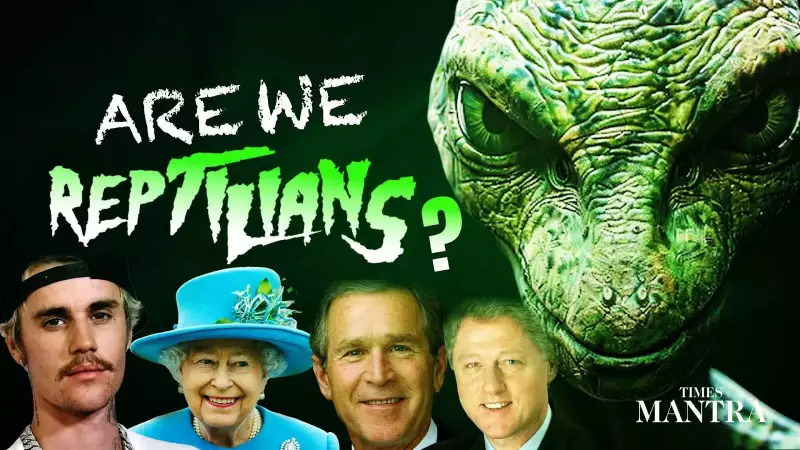
The question of whether humans possess a hidden reptilian heritage has captivated thinkers across disciplines for generations. This enduring fascination bridges ancient scriptures, modern scientific inquiry, and esoteric knowledge, prompting a profound re-examination of our origins. A new exploration delves into this mystery, weaving together threads from biology, psychology, and ancient wisdom to investigate what this so-called "reptilian connection" might truly signify.
From Serpent Gods to Biological Clues
The concept is far from new. Cultures worldwide, including those in ancient India, have long revered serpentine or reptilian deities, embedding them deeply into mythology and spiritual narratives. These figures often symbolize primal wisdom, transformation, or cosmic power. Parallel to these ancient stories, some modern theorists propose examining human biology for subtle, overlooked patterns. They speculate about potential genetic markers or latent DNA sequences that might hint at an evolutionary path shared with, or influenced by, reptilian ancestors. This line of thinking blurs the traditional boundaries of the human evolutionary tree.
Symbolic Instincts or Forgotten History?
Interpretations of this connection vary dramatically. One school of thought views the reptilian motif as purely symbolic. It represents humanity's deep-seated, primal instincts—the base layers of the brain concerned with survival, aggression, and territoriality. From this psychological perspective, myths of serpent gods are metaphors for mastering these inner forces. Conversely, a more literal interpretation suggests these widespread myths could be fragmented memories of a forgotten chapter in human history. Proponents argue that these stories might point to an alternative understanding of our development, one that conventional science has yet to fully acknowledge or discover.

A Convergence of Science and Ancient Wisdom
The investigation into this topic does not dismiss science but seeks a confluence with ancient insight. It questions whether there is a middle ground where empirical study and mystic tradition might inform each other. The discussion forces a challenging inquiry: are we solely products of known evolutionary processes, or could our story be more complex, intertwined with cosmic designs or ancient, overlooked truths? This journey is not about providing definitive answers but about expanding the conversation around human identity. It invites skepticism and open-mindedness in equal measure, urging a look beyond established paradigms to consider possibilities that lie at the intersection of fact, legend, and profound mystery.
Ultimately, the reptilian hypothesis, whether taken literally or symbolically, serves as a powerful catalyst for questioning. It challenges us to re-evaluate the sources of human knowledge, from archaeological finds and genetic codes to the enduring myths passed down through millennia. The dialogue between science and spirituality continues to evolve, offering fresh perspectives on the perennial question: where do we truly come from?