India's Hidden Fossil Heritage: A Journey Through Deep Time
India is globally celebrated for its magnificent monuments, rich biodiversity, and vibrant living cultures. However, beneath its diverse landscapes lies an extraordinary and often overlooked heritage: fossils that chronicle life from hundreds of millions of years ago. From expansive dinosaur nesting grounds in Gujarat to marine fossils discovered high in the Himalayan peaks, the country offers a rare portal to explore deep time through ancient environments that once hosted forests, oceans, and prehistoric creatures.
For the scientific community, these sites are invaluable research hubs. For travelers, students, and curious minds, they present a unique form of "treasure hunt," unveiling the profound evolutionary journey of Earth and its inhabitants long before human history began.
The Geological Journey of the Indian Landmass
Millions of years ago, the Indian subcontinent was an integral part of the ancient supercontinent Gondwanaland. Over immense geological timescales, it embarked on a remarkable northward drift across the ocean, eventually colliding with the Eurasian plate. This monumental convergence gave rise to the mighty Himalayan mountain range.

This epic journey ensured the Indian landmass traversed vastly different climatic zones and environments—from deep oceans and river valleys to lush wetlands and dense forests. Consequently, the fossil record across India is exceptionally diverse, preserving evidence of sea creatures, dinosaurs, petrified forests, early mammals, and more. These fossils serve as crucial archives, providing invaluable insights into evolutionary processes and the shifting climatic conditions over eons.
Dinosaur Fossil National Park, Balasinor, Gujarat
One of India's most renowned fossil sites is the Dinosaur Fossil National Park, situated near Balasinor in Gujarat. Often hailed as the "dinosaur capital of India," this location boasts one of the world's largest known dinosaur nesting sites.
The park preserves a wealth of fossils from the late Cretaceous period, approximately 65 to 70 million years ago. This includes dinosaur eggs, bones, and extensive nesting grounds. A significant discovery here is Rajasaurus narmadensis, a formidable carnivorous dinosaur unearthed in western India. Notably, the dinosaur eggs are found in clusters, indicating the site was a dedicated nesting area, offering paleontologists critical clues about dinosaur reproductive behavior and social herd patterns. Today, guided tours and interpretive centers help visitors understand the science behind these finds while ensuring the protection of these fragile fossil beds.
Ghughua Fossil National Park, Madhya Pradesh
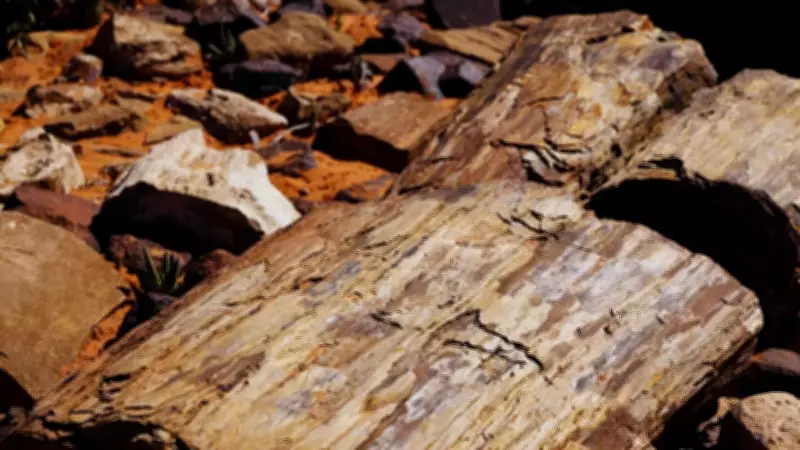
While dinosaur remains capture much attention, the Ghughua Fossil National Park in Madhya Pradesh offers a different glimpse into the past with its spectacular petrified wood. This site is dominated by fossils of ancient plants, where trees have undergone petrification—a process where minerals gradually replace the original organic material while perfectly preserving the woody structure.
These fossils are estimated to be between 40 and 150 million years old, representing remnants of ancient tropical forests that once thrived in the region. Scientists have identified fossils of various plants, including palms and dicotyledons, which indicate that India's climate was once significantly warmer and more humid than it is today.
Spiti Valley, Himachal Pradesh: Marine Fossils in the Mountains
Few fossil sites in the world match the dramatic setting of Spiti Valley, where marine fossils are found at breathtaking elevations exceeding 3,000 meters above sea level. The rocks here were once part of the Tethys Sea, an ancient ocean that existed millions of years ago.
As the Indian tectonic plate collided with Eurasia, uplifting the Himalayas, these ancient sea sediments were raised to incredible heights. Today, visitors and researchers can observe fossils of ammonites, brachiopods, and other marine creatures embedded in the mountain rocks. This site is scientifically paramount, vividly demonstrating the geological transformation from a deep sea basin to one of the planet's highest mountain ranges. It also enables geologists to date rock formations and reconstruct the complex history of the Himalayas.

Shivalik Fossil Park, Himachal Pradesh
The Shivalik Fossil Park provides a window into a more recent chapter of Earth's history, focusing on the age of mammals. The Shivalik hills are famous for fossils dating from 2 to 20 million years ago, during the Miocene and Pliocene epochs.
Numerous fossils of ancient elephants, early horses, crocodiles, turtles, and various other mammals have been discovered here. These finds are of particular interest to scientists studying the evolution, migration, and diversification of large mammals across the Asian continent. The displayed fossils help illustrate how climatic shifts and geographical changes influenced animal evolution during these dynamic periods.
Kutch Region, Gujarat: A Jurassic Marine Archive
The arid landscape of Kutch in Gujarat holds an impressive record of marine life from the Jurassic period, dating back 145 to 200 million years. During this era, the region was submerged under a shallow sea.
The Kutch Fossil Park and surrounding sedimentary deposits have yielded abundant fossils, including ammonites, coral fragments, and various shells. These remains provide scientists with crucial understanding of marine biodiversity during the Jurassic. They also allow for correlation with similar fossil finds in Europe and Africa, supporting theories of ancient continental connections. The area is further valued by geologists for its rock sequences that document environmental changes over vast timescales.
Ariyalur Fossil Region, Tamil Nadu
In southern India, the Ariyalur Fossil Region stands as one of the country's most scientifically significant paleontological areas. The sedimentary rocks here have yielded a rich mixture of marine fossils, dinosaur remains, and molluscan shells.
Most fossils date to the Cretaceous period when the area was positioned near a shallow sea. Paleontologists have unearthed dinosaur eggs and skeleton fragments here, helping to fill important gaps in India's dinosaur fossil record. Concurrently, fossils of marine animals provide evidence for reconstructing past sea levels and understanding the climatic conditions that prevailed in peninsular India during this ancient epoch.
Together, these diverse fossil sites across India form a priceless national heritage. They not only fuel scientific discovery but also inspire public fascination with the deep history of our planet, reminding us of the dynamic and ever-changing nature of Earth's landscapes and life forms.