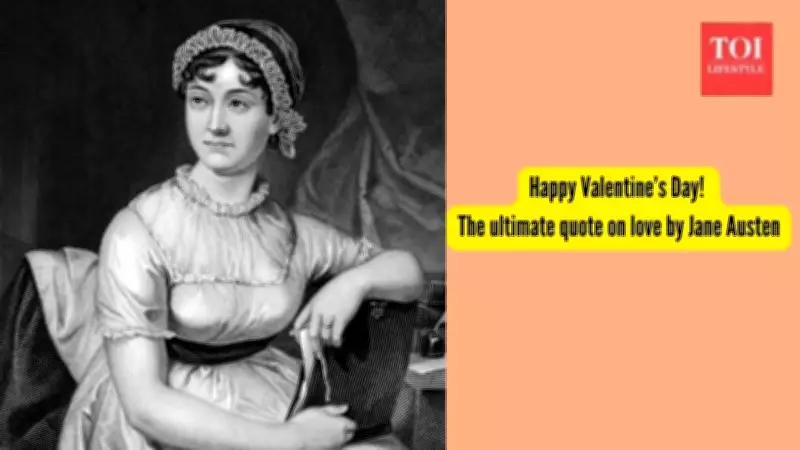
The Enduring Power of Jane Austen's Pen
Jane Austen's honest observations about the world and human nature possess a remarkable ability to penetrate the soul, while her memorable one-liners linger in the mind indefinitely. For countless generations, readers have fallen deeply in love with her masterpiece Pride and Prejudice. Her other five completed novels stand as equally magnificent examples of love—portrayed with subtlety, sharp wit, and refreshing diversity.
A Life of Quiet Determination
Jane Austen was born on December 16, 1775, in the serene village of Steventon, Hampshire, England. She was raised in a vibrant rectory alongside eight siblings, surrounded by literature. Her father, Reverend George Austen, encouraged her early writing pursuits, while her mother, Cassandra, infused family life with intelligence and humor. Austen never married, having briefly accepted a proposal from Harris Bigg-Wither only to retract it the following day—a bold decision that underscored her prioritization of personal freedom over societal expectations.
Life presented significant challenges; following her father's retirement, the family faced financial constraints and multiple relations. Austen wrote during stolen moments, often on small sheets she referred to as her tiny books, concealing her work from casual observers. She labored over manuscripts late into the night, drawing inspiration from the drawing-room conversations and matchmaking dramas of the Regency-era gentry she knew intimately.

Gradual Literary Success
During her lifetime, Austen published under the pseudonym A Lady, reflecting the period's constraints on female authors. Her brothers financed the publication of Sense and Sensibility in 1811. Pride and Prejudice, released in 1813, achieved immediate acclaim. While readers celebrated its sparkling beauties, Austen remained characteristically modest, humorously noting in correspondence that her £110 profit felt like a windfall. She subsequently published Mansfield Park (1814) and Emma (1815). Northanger Abbey and Persuasion were published posthumously in 1818.
Austen passed away on July 18, 1817, at the age of 41, likely due to Addison's disease. She left unfinished works, including Sanditon. Her identity as the author remained known only to a close circle until her brother Henry publicly revealed it after her death.
A Revolutionary Force in Literature
Jane Austen fundamentally transformed English literature through her pioneering development of the modern novel of manners. She masterfully blended irony, social critique, and psychological depth without resorting to overt moralizing. Her work exposed the hypocrisies embedded in class structures, marriage conventions, and gender roles—evident in characters like the pompous Mr. Collins and the snobbish Lady Catherine de Bourgh.
Subsequent women writers, including the Brontë sisters, George Eliot, and Virginia Woolf, acknowledged their debt to Austen, praising her economical prose where every word carries weight without superfluous ornamentation. She elevated the domestic novel from perceived silly ladies' books to incisive moral comedy, influencing generations from contemporary romantic comedy authors to filmmakers responsible for countless adaptations. In a male-dominated literary landscape, Austen carved a space for women's voices, demonstrating that everyday activities—balls, walks, letters—could reveal profound truths about human nature.
The Authenticity of Austenian Romance
What renders Austen's novels genuinely romantic? She eschewed the gothic melodramas and operatic passions prevalent in her era for something more authentic: love that develops gradually, tested by personal flaws and strengthened through self-awareness. Her narratives feature no storm-swept cliffs or fainting heroines. Instead, couples earn their happy endings through personal growth—Elizabeth Bennet learning humility, Anne Elliot rediscovering courage.

Romance thrives in the subtext: stolen glances, unspoken words, and the quiet joy of intellectual compatibility. It is both honest and hopeful; love triumphs not by ignoring societal flaws but by confronting them with integrity and humor. Her heroes are not flawless princes but proud, awkward men who evolve, making their eventual unions feel deserved rather than escapist fantasies.
A Quintessential Romantic Passage
Among Jane Austen's most profoundly romantic lines is Captain Wentworth's declaration in Persuasion: You pierce my soul. I am half agony, half hope. Tell me not that I am too late, that such precious feelings are gone forever. Written in a passionate letter to Anne Elliot after eight years of separation, this passage represents Austen's most vulnerable expression. The phrase You pierce my soul captures love's dual nature—pain intertwined with profound connection, affirming Anne's enduring hold on his heart despite years of silence.
I am half agony, half hope perfectly encapsulates the emotional limbo of despair over lost time juxtaposed with a flickering belief in reconciliation. Wentworth's plea, Tell me not that I am too late, reveals his terror of irreversible regret while clinging to hope against past disappointments. These lines articulate love in its most raw form, which is precisely why they resonate so deeply with readers across centuries.