Why Japan's Green Traffic Lights Are Called Blue: A Cultural and Linguistic Mystery
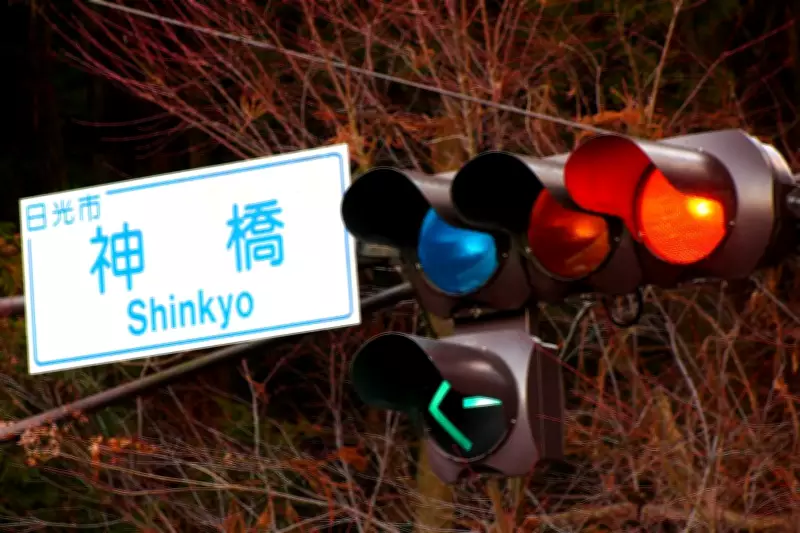
If you ever visit Japan and stand at a pedestrian crossing, you might notice something unusual: the "go" signal appears slightly blue rather than the typical bright green. This isn't just a simple design quirk or technological variation. The truth behind this phenomenon delves deep into a fascinating mix of language, culture, and history that spans centuries.
The Linguistic Roots: Why Japan Calls Green Traffic Lights "Blue"
The primary reason for Japan's so-called 'blue traffic lights' lies in the Japanese language. Historically, Japanese did not have a clear distinction between the colors blue and green. Both were described by a single word, 'ao' (青), which originally encompassed hues we now separate as blue and green. This linguistic tradition means that objects we consider green, such as leaves or vegetables, were often referred to as 'blue' in Japanese.
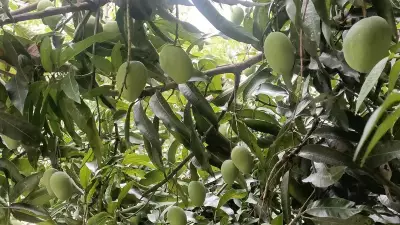
This influence persists today. For instance, green apples are called 'aoringo' (blue apples), and traffic lights are known as 'ao shingos' (blue signals). As noted by Metropolis Japan, "the clearly green traffic lights... are described as aoshingos," highlighting how language shapes perception.

The Historical Evolution of Japan's Traffic Light Colors
According to Atlas Obscura, Japan introduced traffic lights in the 1930s, adopting the standard red, yellow, and green colors. However, due to the linguistic tradition, the green light was referred to as "ao," meaning blue. This created a unique cultural artifact where the color name diverged from the actual hue.
In 1968, the Vienna Convention emphasized global standardization of traffic signals. While Japan is not technically bound by this convention, it still follows international norms. This presented a dilemma: how to adhere to global standards while respecting linguistic heritage? Japan found a clever solution by using the "bluest possible shade of green" for its traffic lights. Thus, what appears slightly blue is scientifically green, just with a different wavelength.
Japanese Culture and Color Perception
The story of Japan's traffic lights isn't merely about rules; it reflects how people perceive the world. Traditionally, Japanese color categories were broader, with fewer basic colors like black, white, red, and blue. Although a word for green, 'midori,' eventually emerged, old habits die hard. Many Japanese still use 'ao' for green objects, demonstrating that color perception is culturally constructed, not just based on physical light properties.
This cultural nuance shows that colors can vary across societies. In Japan, green can be seen as blue, illustrating how tradition influences everyday life, even in mundane activities like crossing the street.
Are Japan's Traffic Lights Really Blue?
The straightforward answer is no, not in a scientific sense. Technically, Japanese traffic lights are green, aligning with global standards. However, they have a slight blue tint, and linguistically, they are called blue. This can be summarized as:
- Scientifically: They are green.
- Visually: They appear slightly blue-green.
- Linguistically: They are referred to as blue.
This subtle color difference serves as a reminder of the interplay between history, language, and identity. In a world that often craves standardization, Japan's "blue" traffic lights stand out as a testament to how tradition and innovation can coexist harmoniously, not just in traffic flow but in our understanding of the world.