In a powerful departure from convention, a new Marathi theatrical production is making waves by refusing to sanitise the language and experiences it portrays. The play, titled 'Jikni', meaning "riddle" in the Katkari language, stands as a bold statement against long-held hierarchies within Marathi theatre that often privilege one 'pure' dialect over others.
Preserving the Soundscape of Lived Experience
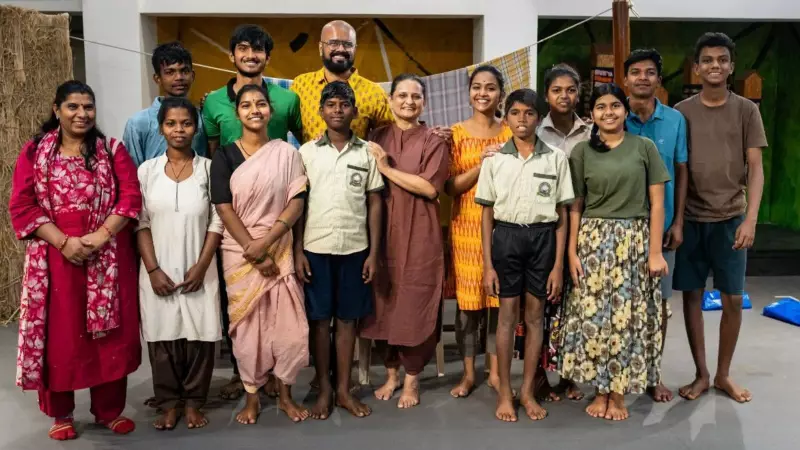
Developed collaboratively by Ruchika Khot, Geetanjali Kulkarni, and Archana Kulkarni with children from the adjacent villages of Vadavali and Sonala in Maharashtra's Palghar district, Jikni is a musical docu-drama. Its most striking feature is not a dramatic plot twist, but its commitment to authenticity. The children speak, sing, and perform exactly as they do in their daily lives, with their native dialects and pronunciations kept intact.
This conscious choice resists the traditional theatrical impulse to smooth over linguistic differences for audience clarity. "No kid knew how to pronounce 'ळ', and that is how we wanted to keep it," notes Wasimbarry Maner, Associate Professor at FTII and a Tarapa member. "They don't need to know how to say it. This is not an attempt at cultural purity." The play allows the raw soundscape of lived experience to remain uncorrected, avoiding both sanitisation and exotic spectacle.

Challenging Romanticised Rural Narratives
Jikni gently navigates the contours of village life—friendships, kinship, and the agricultural cycle that dictates time from sowing to the sale of rice. It is packed with folk songs, jingles, and tales about fishing and monsoons. However, it deliberately subverts the often-aestheticised idea of "rural charm."
The play concludes with a direct, almost Brechtian conversation with the audience, detailing periods of distress within these rural cycles. "In an era where rural life is frequently moralised or folded into a narrow national narrative, Jikni innocently challenges the romanticised idea," the production highlights, forcing a confrontation with reality.
A Process-Driven Creation at Tarapa 'Adda'
The play was born at Tarapa, a unique space that co-founder Geetanjali Kulkarni describes not as an institution, but as an "adda" (a space for casual conversation and gathering). "We never intended Jikni to be a theatrical debut," she says. "We wanted these children to learn and experience life, and to portray their lived experiences." Tarapa is a fluid space where children explore books, instruments, and workshops driven by curiosity.
Director Ruchika Khot emphasises the process-driven approach. "It was always more about the process and less about the outcome," she states. Songs emerged organically when children liked a tune, with lyrics growing from their own lives. "When they realised this was their song, they were so proud of owning something that was all theirs," Khot adds. This ensured the play never felt extractive; the children were not vessels for a pre-crafted message.
Audience and Critical Acclaim
The response from theatre veterans has been profoundly positive. Veteran actor and Sangeet Natak Akademi Award winner, Dr. Mohan Agashe, was reminded of pioneering dramatist Badal Sircar. He emphasised that education resides not only in books but also in art and music, and plays like Jikni educate in a way that stays with people.
Marathi theatre writer and director Shrirang Godbole praised the production's honesty. "What stayed with me was the authenticity," he said. "This is not a borrowed story. It is a lived experience." He insisted Jikni should be seen not just as theatre, but as a window into Sonala village.
Ultimately, Jikni leaves the audience with a poignant question: What happens when we stop asking marginalised voices to sound like us? By letting songs be sung as they were learned and words spoken as they are in life, the play, reported by Shreenija Dandavate and presented on January 7, 2026, offers a radical model of inclusion and authenticity in Indian theatre.