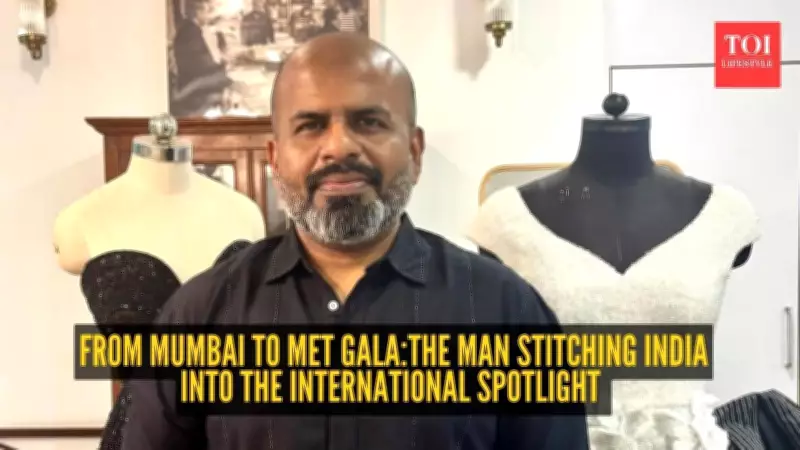
In a world obsessed with speed and mass production, Kailash Poojary has taken the slower, more intricate route - and it is paying off in the most unexpected ways. From dressing global runways to seeing his embroidered creations show up at the Met Gala, Oscars and Golden Globes, his journey feels less like a business story and more like a lesson in patience, craft and belief.
The Journey from Choreography to Couture
The founder of V V. Exports Universal Pvt. Ltd., a name to reckon with in the world of embroidered high-fashion textiles, did not start out chasing red carpets. Back in the 1990s, he was choreographing fashion shows, figuring out design one step at a time. Over the years, that curiosity turned into a deep obsession with embroidery - something that would eventually put his work on some of the biggest global platforms.
In this candid conversation, Poojary talks about why handcrafted work is finally getting its due, how Indian embroidery is being reimagined worldwide, and why slow fashion might just be the future.

1. The Quiet Revival of Embroidery
Question: Embroidery is having a quiet revival in global fashion - are you seeing more demand for handcrafted detailing over fast, machine-led production? What is driving this shift?
Kailash: A few years back, if this question had been asked, it would have been difficult to answer, as fast fashion and mass production had literally taken over the essence of fashion. But today, things are different. Consumers are more aware of what is needed. The slight details of any handmade product add a unique touch. Consumers are aware of the time, efforts and creative touch that goes into the process, and they are willing to invest in a product for the story and thought behind the idea.
2. Intricate Embroidery in the Age of Quiet Luxury
Question: With trends like 'quiet luxury' and minimalism dominating runways, where do intricate embroidered textiles fit in today's fashion narrative? Are they evolving or being redefined?
Kailash: Evolution is real. Embroidery in garments goes through evolution every season. With designers producing 8 to 10 collections a year, they tend to evolve in their creative ways of designing. For instance, in some collections, you will see 3D effects; sometimes, you will see thread work, heavily beaded work, or sometimes just plain dresses.
3. Global Designers and Indian Embroidery
Question: You have worked across international collaborations - how do global designers interpret Indian embroidery differently, and has that perception changed in recent years?
Kailash: India has been a huge market for high fashion and haute couture embroidery work. Most of the top brands use Indian artisans for their work and finishing details. We have been working in this industry for the last 24 years and have seen each designer using the typical Indian motifs and recreating them for their global market. The designer, with his or her ability, changes the way you see fashion - from the maharaja necklaces to draped saris, we have seen them on the international fashion week.
4. Sustainability and Time-Intensive Craftsmanship
Question: Sustainability is a big conversation right now. How is the embroidery and textile industry adapting, especially when craftsmanship often requires time-intensive processes?
Kailash: With haute couture, most of the dresses, gowns or saris are passed down to generations as an asset. With beautiful craftsmanship, these days, it is an asset for those who are inheriting it.
5. The Future of Embellished Fashion
Question: From red carpet looks to couture costumes, embroidery plays a key role in storytelling. What are some emerging design directions or techniques you think will shape the next phase of embellished fashion?
Kailash: With innovative minds ruling the fashion weeks, these days, the fashion shows are ruled by an experience that the designer wants to give his or her client. We can see innovation in silhouettes and placement of embroidery, and 3D effects taken to a different level. It is all about thinking out of the box.

A Legacy of Quiet Consistency
What makes Poojary's story stand out is not just the scale of his success - it is the quiet consistency behind it. For over two decades, he has stayed close to the craft, working on every stage from sampling to final production, building something that does not scream for attention but earns it anyway.
At a time when fashion often moves too fast to feel personal, his work is a reminder that detail still matters. That stories stitched by hand can travel just as far - sometimes all the way to the biggest red carpets in the world.