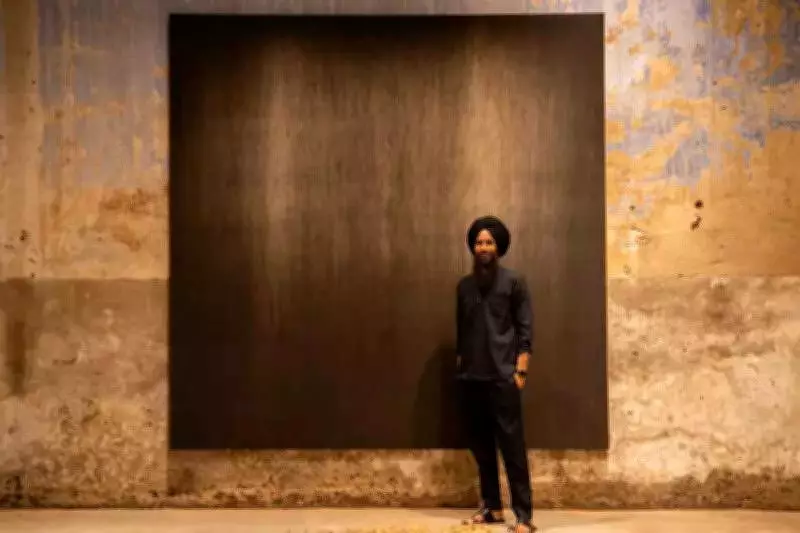
Kochi Warehouse Transforms into Immersive Art Space Exploring Punjab's Agrarian Crisis
In the historic Mattancherry district of Kochi, an atmospheric art installation has taken root at Anand Warehouse on Bazaar Road. Visitors are immediately enveloped in a dark, smoke-filled environment where a compelling film by Patiala-based artist Kulpreet Singh unfolds as a profound meditation on farming, ecology, and deep-seated social conflicts.
Indelible Black Marks Project Confronts Green Revolution Legacy
This powerful work forms part of Singh's ongoing Indelible Black Marks (2022–ongoing) project, which critically examines the far-reaching consequences of the Green Revolution and its transformative impact on Punjab's agrarian landscape. The installation creates a multisensory experience that challenges viewers to reflect on complex environmental and social realities.
Immersive Visuals and Soundscapes Create Powerful Narrative
Inside the dimly lit warehouse space, bales of paddy straw serve as seating arrangements while a large-scale film projection dominates the visual field. The footage captures Singh alongside fellow farmers and friends as they run through agricultural fields with long canvases trailing dramatically behind them.

These striking visuals are juxtaposed against scenes of stubble burning—the controversial agricultural practice used to quickly prepare fields for subsequent crop seasons. The film captures glowing sparks dancing across rows of charred stalks, creating haunting imagery that speaks to environmental degradation.
The auditory landscape proves equally compelling, layering sounds of sirens, traffic, industrial noise, protests, and explosions. This sophisticated sound design suggests the wider tensions surrounding farming communities and points to systemic pressures affecting rural livelihoods.
Symbolic Canvases Represent Cycles of Violence
In the film, Singh and his companions appear to charge across fiery fields like protesters, with the flowing canvases moving behind them resembling shrouds. According to the artist's statement, these canvases symbolise cycles of violence that affect land, farmers, air, and water resources in interconnected ways.
Singh explains that what appears as smoke or ash in the visuals actually reflects broader systems of pressure, imbalance, and societal neglect that shape contemporary ecological realities. The artistic representation moves beyond surface appearances to probe deeper structural issues.
Visual Transformation from Fire to Water to Sombre Imagery
As the narrative progresses, the film undergoes a remarkable visual transformation. Images gradually blur into watery distortions, creating a powerful juxtaposition between fire and the sound of rain and flooding. This transition suggests both destruction and potential renewal within agricultural ecosystems.
The runners eventually form shapes resembling traditional plough marks and womb-like forms before the imagery turns decidedly sombre. The film presents visuals of lifeless birds, trees, and wolves, accompanied by increasingly intense soundscapes featuring sirens and gunfire.
Artistic Conclusion and Supporting Installation Elements
The film concludes with a poignant gesture as Singh collects ashes from the fields, symbolising both reflection and the possibility of renewal. This final act creates a powerful narrative arc that moves from destruction toward potential regeneration.
The cinematic experience is complemented by an accompanying installation of soot-stained paintings created using burnt crop stalks. These additional artworks reinforce the central message that farming practices, ecological health, and societal wellbeing remain deeply interconnected in contemporary India.
Through this multilayered installation, Kulpreet Singh creates a space for meaningful dialogue about agricultural sustainability, environmental responsibility, and the human dimensions of ecological change in Punjab and beyond.