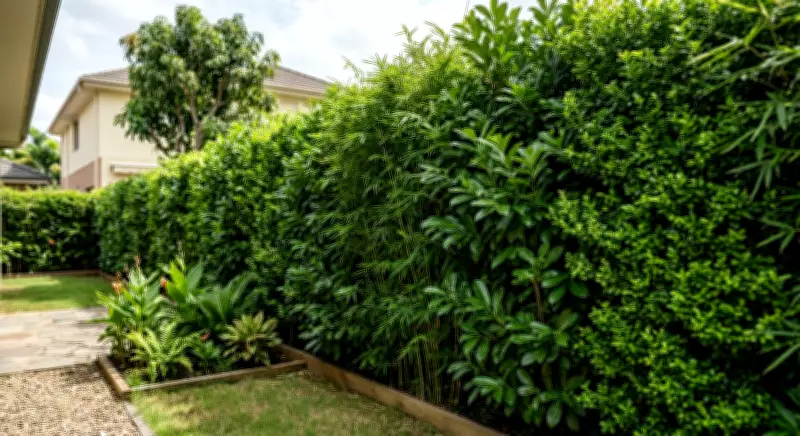
You saved for months, finally got the house, and now you are sitting on your back porch realizing you can pretty much make eye contact with your neighbor while eating breakfast. Your outdoor space should feel like yours, and here is the thing: a wooden privacy fence is not always the solution. It is expensive, it fades, it warps, and frankly, it looks like what it is: a desperate last-ditch barrier. Plants, though? They grow, they breathe in, and they make your yard look like you tried.
Science Backs Living Walls
A study in Restoration Ecology found that adding shrubs to trees greatly increases tree height for most species tested, meaning that layering your plants not only looks better but also helps everything grow faster and fuller. A wooden panel would not stand a chance against such a living wall. It is more than just about privacy. A study published in the journal Environmental Research confirms that hedge species such as laurel and pittosporum can reduce noise levels by approximately 15% and sequester significant quantities of CO2 each month. So your privacy screen is not only keeping the neighbors out, it is quietly cleaning your air and turning down the street noise while it is at it.
Why Millennials Are Trading Fences for Foliage
There is a reason so-called green walls and living fences are having such a serious moment on social media right now. Young homeowners and renters with outdoor spaces are increasingly opting for plants instead of panels, partly for the aesthetic, partly because privacy plants can actually add value to your property, and partly because nature just hits different. With smaller lot sizes and houses built closer together, privacy has never been more important. A well-placed line of shrubs or a fast-growing tree line is more than just attractive; it is a lifestyle decision.

The Plants That Actually Do the Job
Not all greenery is equal when it comes to privacy. Here is where to start:

- Laurel: If you want something that grows fast and gets down to business, laurel is it. Its rich, glossy green leaves make it equally effective as a neatly clipped formal hedge or a looser, more natural screen. It grows in most soil types and tolerates shady spots, a huge plus if your yard does not get full sun. It can get serious on its own, but most people keep it trimmed to about 10 feet, which is more than enough to block a two-story neighbor's line of sight.
- Photinia: Photinia is the plant that gets people to stop and go what is that? The new leaves appear bright, eye-catching red before maturing into rich red and green tones in spring. It is a fast grower, more manageable than laurel, and can be pruned to make a formal hedge or left to grow more naturally. Evergreen and reliable, it stays full year-round, so your privacy does not take a seasonal hit.
- Euonymus: Smaller yard or limited space to work with? The answer is Euonymus. It is a compact evergreen growing to about 6 feet and comes in several colors: deep green, green-and-white variegated, and green-and-gold variegated. The last one, in particular, is a great way to add visual interest along a boring boundary line without going full-on statement plant.
- Pittosporum: If your aesthetic is more clean lines and contemporary than lush and cottage-y, pittosporum fits right in. It has a refined, almost delicate texture, with small, soft leaves, yet still pulls its weight as a privacy screen. It is low maintenance and versatile, making it a good option for anyone who wants structure without a lot of fuss.
- Fargesia: Bamboo has a reputation problem, and honestly, it is a deserved one. The running types spread like wildfire and have been the cause of more than a few neighborly squabbles. But Fargesia is different. It is a clump-forming bamboo, so it will not spread and invade the yard next door. It adds movement and softness to a garden and is blessed with lush, green foliage and elegant stems which come in a range of colors, depending on the variety - black, red, green, and gold. Great for adding some texture and life without all the mess.
- Leylandii: It is one of the fastest-growing hedging plants you can get your hands on and can put on up to 3 feet of growth per year. Use this if you want to establish a tall, dense privacy screen quickly. That said, it does need regular trimming to keep it in check, so factor in some maintenance time if you go this route. Consider it a high-reward, moderate-effort investment.
- Green Giant: If you have the room and want to go big, go with Green Giant arborvitae. It grows quickly into a tall, dense screen that provides good privacy and stays green year-round. Plant a row of these along your property line, and you will have a living wall that makes wooden fences look like an afterthought.
Your Backyard, Your Rules
At the end of the day, carving out privacy in your outdoor space is less about keeping people out and more about creating a place where you can actually breathe. Whether that is a Sunday morning with coffee and a book, or a backyard hangout, you deserve that. Plus, with a living, growing, blooming green wall? That is a whole lot more satisfying than a fence that will need replacing in ten years anyway.
About the Author: The TOI Lifestyle Desk is a dynamic team of dedicated journalists who, with unwavering passion and commitment, sift through the pulse of the nation to curate a vibrant tapestry of lifestyle news for The Times of India readers. At the TOI Lifestyle Desk, we go beyond the obvious, delving into the extraordinary. Consider us your lifestyle companion, providing a daily dose of inspiration and information. Whether you are seeking the latest fashion trends, travel escapades, culinary delights, or wellness tips, the TOI Lifestyle Desk is your one-stop destination for an enriching lifestyle experience.