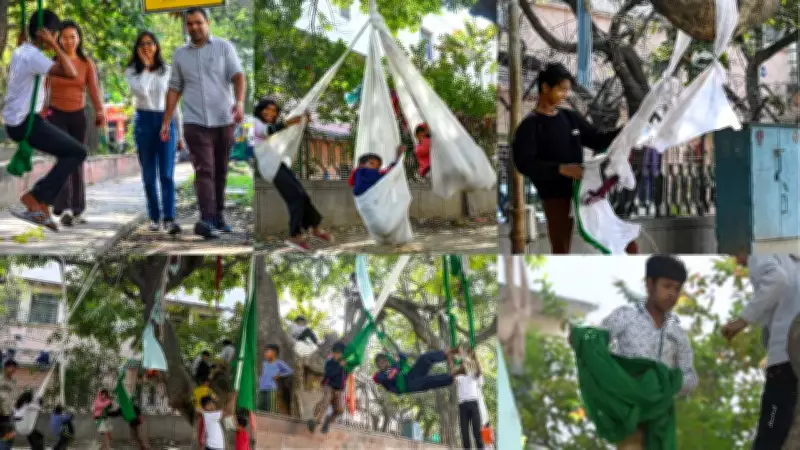
Lodhi Road's Beloved 'Jhula Ped' Tree Transforms into Children's Playground
In the heart of Delhi, on Lodhi Road, a majestic Sap-taparni tree, affectionately known as the "jhula ped" or swing tree, has become a vibrant hub of happiness for young students from Haji Colony. These children, who attend the nearby Atal Adarsh Vidyalaya, flock to this natural landmark after their school hours, turning it into an impromptu playground that echoes with their cheerful laughter well into the evening.
Makeshift Swings Crafted from Low Branches
Using simple cloth ties, the kids ingeniously create makeshift swings from the tree's low-hanging branches. This creative activity not only provides endless fun but also fosters a sense of community and outdoor play, offering a refreshing break from urban routines. The tree's sturdy limbs gently sway under the weight of their joy, symbolizing a sanctuary where childhood dreams are nurtured amidst the city's hustle.
From 50 Swings to 15: A Shift in Play Patterns
One of the children, Raunak, shared a poignant insight into their evolving interactions with the tree. "We once aimed for 50 swings under this tree; now, we make only 15," he remarked softly. This reduction highlights changing play habits or perhaps environmental considerations, yet the tree continues to serve as a cherished cradle for their aspirations, demonstrating its enduring role in their daily lives.

Background on the Tree and Its Significance
The Sap-taparni tree, native to the region, stands as a testament to Delhi's green heritage, offering shade and solace in an urban setting. Its transformation into a playground underscores the importance of accessible natural spaces for children's development and well-being. This story resonates with themes of urban ecology, community bonding, and the simple pleasures that define childhood in metropolitan areas.
Key Takeaways:
- The 'jhula ped' on Lodhi Road is a Sap-taparni tree used by local children for swing-making.
- Children from Haji Colony, students of Atal Adarsh Vidyalaya, engage in this post-school activity.
- Raunak notes a decrease from 50 to 15 swings, reflecting shifts in play or environmental awareness.
- The tree symbolizes joy, community, and the preservation of childhood dreams in urban Delhi.
This heartwarming narrative not only celebrates the tree's role but also prompts reflection on the need for more such green spaces in cities, ensuring that future generations can enjoy similar moments of uninhibited play and connection with nature.