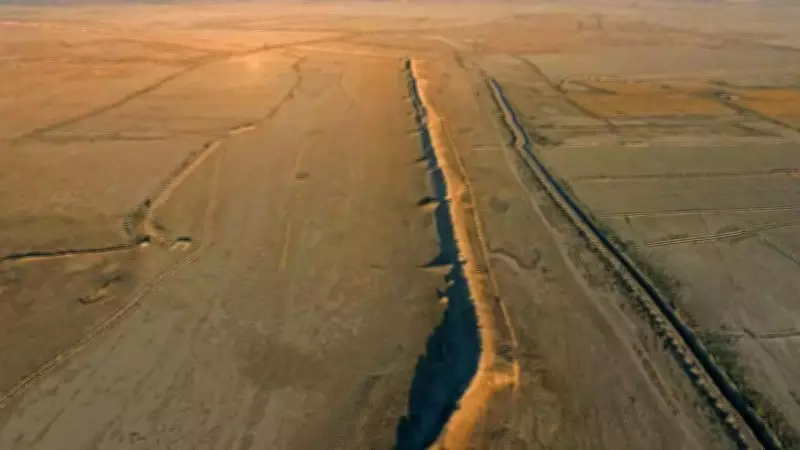
Ancient Mesopotamian City of Charax Spasinou Revealed by Modern Technology
Deep within the arid deserts of Iraq, the long-lost city of Charax Spasinou has finally been located after more than a millennium hidden beneath the Earth's surface. Archaeological experts confirm this settlement was one of Alexander the Great's final ambitious projects, established to solidify his control over the strategic Mesopotamian region.
A City Born from Imperial Ambition
Historical records indicate Charax Spasinou was originally founded in 324 BCE, just a few years before Alexander's death. The city was reportedly first named Alexandria before being rebuilt and renamed Charax Spasinou by a later monarch after destructive floods and regional conflicts damaged the original settlement. This fascinating history demonstrates how even the mightiest conquerors couldn't prevent natural disasters and human disputes from erasing their urban achievements.
The city occupied a perfect strategic position for ancient trade networks, situated at a crucial river junction where merchants could transport goods throughout Mesopotamia and beyond to distant markets. Its location along the Tigris River made it a bustling commercial hub during its operational period.

Digital Archaeology Uncovers Urban Layout
Modern archaeologists employed cutting-edge technology rather than traditional excavation methods to reveal the city's secrets. Teams deployed drones to capture thousands of detailed aerial images while magnetometers scanned beneath the soil to detect buried structures and architectural remains.
By combining these technological approaches, researchers have constructed a comprehensive digital map of Charax Spasinou without disturbing the actual archaeological site. The resulting visualization reveals a city far larger than previously imagined, featuring wide streets, expansive housing blocks, multiple temples, and industrial workshops containing kilns for various manufacturing processes.
Hidden Streets and Temples of Charax Spasinou
Archaeological teams conducted extensive surveys covering over 500 square kilometers, documenting scattered pottery fragments, ancient bricks, and industrial debris that provide clues about daily life in the ancient city. These material remains help paint a vivid picture of urban existence in this significant Mesopotamian settlement.
The discovery of Charax Spasinou represents more than just an archaeological thrill—it has the potential to reshape historical understanding of Alexander's vast empire and the specific roles played by different urban centers within his territorial control. Each city served particular functions within the imperial framework, and Charax Spasinou's emergence from beneath digital maps provides new insights into this complex network.
While physical visitation remains challenging due to the remote desert location, the city is no longer shrouded in mystery. Its digitally reconstructed streets, workshops, and temples now whisper stories from over a thousand years ago, offering scholars and history enthusiasts unprecedented access to a previously lost chapter of ancient civilization.