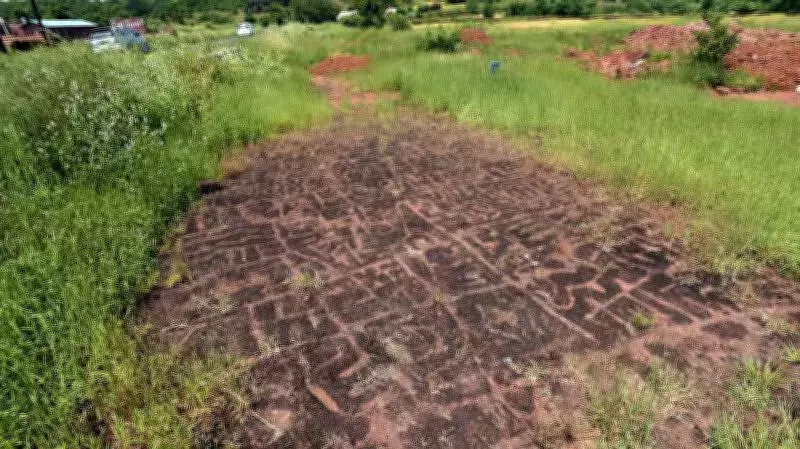
The Maharashtra government has approved a substantial allocation of Rs14.62 crore for a comprehensive research and documentation initiative focused on the prehistoric rock art sites located throughout the Konkan region. This significant funding will support efforts to study and preserve over 2,000 ancient rock engravings spread across 175 villages, as confirmed by officials from the state directorate of archaeology and museums.
Project Overview and Objectives
The state directorate of archaeology and museums will take charge of overseeing this ambitious project. The primary goals include unraveling the mysteries surrounding these ancient carvings and strengthening initiatives to secure global recognition for these invaluable heritage sites. To facilitate this, dedicated 'world heritage cells' will be established in Mumbai and Ratnagiri, each with distinct responsibilities.
Mumbai Cell: Academic and Digital Focus
The Mumbai-based cell will concentrate on academic research and comparative studies of rock art both within India and internationally. It will involve detailed analysis of historical maps, satellite imagery, and archival records. A key outcome will be the creation of a comprehensive digital encyclopaedia dedicated to Konkan rock art, serving as a resource for scholars and the public alike.

Ratnagiri Cell: Field Surveys and Conservation
In contrast, the Ratnagiri cell will carry out extensive field surveys and site verification across the coastal belt where the rock engravings are found. This will involve deploying advanced methodologies such as drone-based surveys, GPS mapping, high-resolution photography, and digital documentation. Additionally, this cell will study the geographical and cultural context of the sites, assess threats and deterioration, and recommend conservation and protection measures to safeguard these ancient artworks.
Historical Significance and Age Estimates
Anthropologists estimate that the rock art, which includes petroglyphs and geoglyphs, dates from approximately 10,000 to 24,000 years old. For instance, the group of petroglyphs at Deud in Ratnagiri is believed to originate from the Mesolithic era, roughly 10,000 to 20,000 years ago, according to the state culture department.
Geoglyphs and petroglyphs represent different types of ancient art forms. Geoglyphs are often enormous, stretching for hundreds of meters or even kilometers, while petroglyphs are typically smaller, human-scale carvings. In the Konkan region, petroglyphs depict various animals such as rhinos, deer, monkeys, donkeys, and footprints, whereas geoglyphs tend towards more abstract forms.
Current Status and UNESCO Aspirations
Several rock art sites, including Barsu Group No 2, Chave, Devihasol, and Kasheli in Ratnagiri district, have already been declared state-protected monuments. The government is actively pursuing the nomination of the Konkan rock art sites to the tentative World Heritage Site list of the United Nations Educational, Scientific and Cultural Organization (UNESCO).
Clusters of these prehistoric rock art carvings are estimated to be spread along 900 kilometers of the Konkan coast, spanning Maharashtra and Goa. Although locals have long been aware of some of these sites as cultural relics from their ancestors, formal recognition of their discovery occurred in 2012. Ratnagiri alone hosts more than 1,500 such artworks across 70 sites, with seven of these already on UNESCO's tentative World Heritage Site list.
Future Implications and Conservation Efforts
Officials emphasize that this fresh research will provide deeper insights into prehistoric human life in the Konkan region. It aims to build a strong scientific case for the long-term conservation and international recognition of Maharashtra's unique rock art heritage. By leveraging modern technology and thorough documentation, the project seeks to preserve these ancient treasures for future generations while enhancing their global significance.