Kamalabai Ogale: The Unlikely Author of a Marathi Culinary Masterpiece
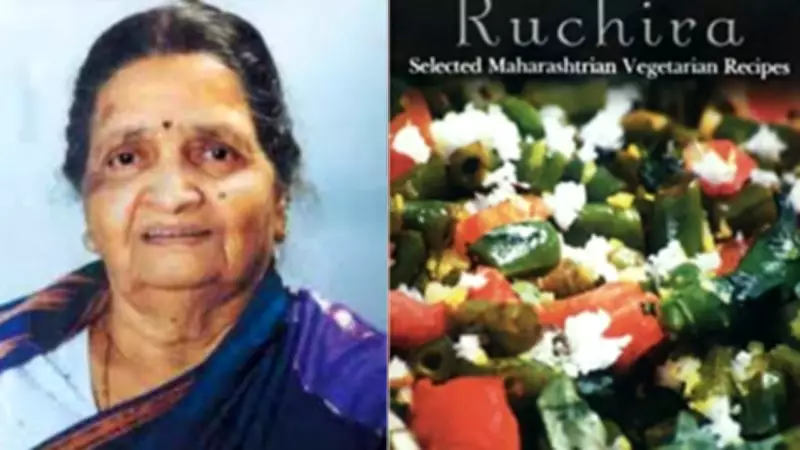
Kamalabai Ogale's extraordinary journey serves as a powerful reminder that profound cultural influence often emerges from humble beginnings, far removed from elite institutions. According to records from Mehta Publishing House and Google Books, Ogale's formal education ended at the 4th standard. Born in Kundal, she later married into the Ogale family in Sangli. Despite this modest start, she authored Ruchira, a Marathi cookbook that has become an enduring and indispensable reference for home cooking across Maharashtra.
A Phenomenon in Domestic Life
The scale of her success is staggering. The book sold in such vast numbers that she was affectionately likened to a "mother-in-law" to 125,000 daughters-in-law, a vivid metaphor illustrating how deeply Ruchira embedded itself into the fabric of everyday domestic life. What makes Ogale's story truly remarkable is the immense distance she traveled from her origins. In a publishing industry that often prioritizes polish and prestige, Ruchira earned unwavering trust solely through its sheer usefulness and practicality.
Mehta's listing details that Ogale learned cookery under the guidance of her mother-in-law. She later moved to Mumbai, where she expanded her influence by teaching cooking through classes, competitions, radio, television, and public recognition, laying the groundwork for her literary contribution.

Ruchira: The Kitchen Companion That Endures
Ruchira first appeared in 1970, a pivotal year that placed the book at a time when countless household recipes existed primarily in memory and oral tradition, vulnerable to being lost. This first edition established a gold standard for Marathi cuisine that persists today, especially in Maharashtrian homes. An English translation arrived in 2013, successfully extending the book's reach far beyond Marathi-reading kitchens.
The book's lasting, widespread appeal stems fundamentally from its tone and approach. Ruchira is celebrated as a best-selling work built on sheer simplicity and an absence of jargon. It deliberately avoids reliance on fancy measurements or complicated terminology. Instead, it instructs cooks to use everyday utensils like steel bowls and glasses, making recipes feel less like rigid instructions from a distant authority and more like warm, practical advice from a trusted friend standing beside the stove.
Written in clear, lucid language with simple and accurate weights and measures, it continues to be regarded as the definitive guide to Maharashtra's rich cooking traditions. This practical clarity was instrumental in building its massive audience. Ruchira sold more than 150,000 copies in the two decades following its publication and is noted as a rare Marathi title to surpass 125,000 copies, a claim firmly supported by its publishing history.
Preserving a Living Food Culture
The reason Ruchira retains its significance extends far beyond mere recipes. It acted as a vital preservation tool for a living food culture at a moment when that knowledge was acutely vulnerable to fading away. The book contains easy-to-follow recipes for Marathi classics such as:
- Thalipeeth
- Pithle
- Misal
- Karanji
- Chakali
- Shankarpali
Largely dedicated to vegetarian Maharashtrian Brahmin fare, these details show the book was doing more than teaching dishes; it was meticulously documenting a household vocabulary of taste, ritual, and season.
This preservation carried a profound social dimension. Ruchira became a collector's copy, ceremoniously passed from mother to daughter and mother-in-law to daughter-in-law. It has been described as the book that "turned newly married girls into expert cooks". Whether viewed as praise, personal memory, or marketing language, the core point remains identical: the book entered the intimate, sacred space where Indian cooking is traditionally inherited, corrected, and quietly perfected over generations.

In this sense, Kamalabai Ogale's achievement was not merely culinary; it was archival and sociological. She took a vast body of domestic knowledge that could easily have remained scattered across countless homes and generations and gave it a cohesive, durable form that could travel and endure. This is why Ruchira is still described as a staple, a benchmark, and a definitive guide rather than just an old cookbook. It did not freeze Marathi food in time; it gave it a clear, enduring voice.
A Personal Legacy Forged from Experience
There is something deeply moving about the fact that Ogale accomplished all this with minimal formal education, having studied only until class 4. This detail should never be misinterpreted as a limitation. In her case, it seems to have heightened the magnitude of her achievement. She transformed lived experience, keen observation, discipline, and repetition into a textual legacy that has outlasted fleeting culinary trends and outlived the very kitchens that first welcomed it.
This is why Ruchira continues to resonate powerfully today. It is a cookbook, yes, but it is also a precious record of how a community cooked, celebrated, fasted, hosted, and nourished itself. It is practical without being dry, deeply rooted without being overly nostalgic, and authoritative without ever feeling cold or impersonal. Descriptions of it as a boon to both experienced cooks and novices capture this perfect balance well.
Ogale's work speaks to something larger about the nature of expertise. She demonstrated that one does not need a formal degree to understand food profoundly. She required attention, repetition, and the patience to record what truly mattered. In doing so, she preserved not just recipes, but memory itself—the kind of cultural memory that survives long after the first copy of a book turns yellow with age and the last family meal of the day is washed clean from the plate.