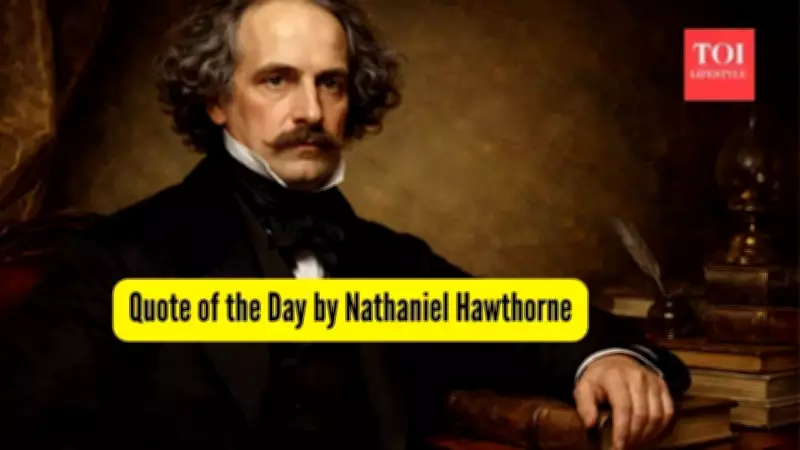
Nathaniel Hawthorne and His Timeless Impact on Literature
Nathaniel Hawthorne and his seminal novel The Scarlet Letter remain indelible in literary history. Hawthorne was a prominent American writer of the 1800s, renowned for his profound explorations of sin, guilt, and human imperfection. Born in Salem, Massachusetts, he drew deeply from his Puritan heritage to craft narratives that resonate with authenticity and psychological depth to this day.
Early Life and Formative Years
Hawthorne entered the world on July 4, 1804, in Salem, a town steeped in the dark legacy of Puritanism. His family lineage traced back to judges involved in the infamous Salem witch trials, including John Hathorne, a figure whose shadow haunted Hawthorne throughout his life. In a symbolic act of distancing, he altered his surname by adding a "w" to soften its association with this past. Tragedy struck early when his father, a sea captain, succumbed to yellow fever when Nathaniel was merely four years old. Raised by his mother with support from affluent uncles, he pursued higher education at Bowdoin College in Maine at age 17, graduating in 1825 despite an undistinguished academic record. It was here that he forged lifelong connections with future president Franklin Pierce and poet Henry Wadsworth Longfellow. Following college, Hawthorne spent twelve introspective years in Salem, immersing himself in extensive reading and writing within what he affectionately termed his "owl's nest."
The Arduous Journey to Literary Recognition
Hawthorne's literary career began inauspiciously with the 1828 publication of Fanshawe, a novel so poorly received that he attempted to destroy all copies. To sustain himself, he took on various odd jobs, including magazine editing, weighing goods at Boston's Custom House, and even shoveling manure at the utopian Brook Farm commune in 1841—an experience he later satirized in The Blithedale Romance. After a prolonged courtship, he married Sophia Peabody, whom he endearingly called his "Dove," in 1842. The couple relocated to Concord's Old Manse, residing near literary luminaries like Emerson and Thoreau, though Hawthorne maintained a reserved demeanor around them. His 1837 collection Twice-Told Tales garnered critical acclaim but provided little financial stability. A turning point came in 1846 with Mosses from an Old Manse, which solidified his distinctive literary style. Family life expanded with the births of three children: Una, Julian, and Rose. Political shifts proved fortuitous when the Whig Party's victory secured him a surveyor position at the Salem Custom House in 1846, enabling him to dedicate himself fully to writing.

Major Literary Works and Achievements
In 1850, Hawthorne achieved monumental success with The Scarlet Letter, which sold thousands of copies rapidly. Set in Puritan Boston, the novel delves into the shame and redemption of Hester Prynne following an act of adultery, masterfully examining how sin permeates the soul. Hawthorne prefaced the story with reflections on his Custom House experiences, transforming personal adversity into artistic triumph. This was followed by The House of the Seven Gables in 1851, a tale intertwining generational curses with historical and supernatural elements. The Blithedale Romance in 1852 offered a critique of utopian ideals, drawing from his time at Brook Farm. During this period, he formed a significant friendship with Herman Melville in the Berkshires, who dedicated Moby-Dick to him. Later works included A Wonder-Book (1851) and Tanglewood Tales (1853), retellings of classical myths for children, and The Marble Faun (1860), inspired by his European travels. Appointed as consul in Liverpool by Franklin Pierce from 1853 to 1857, this role funded extensive journeys to Italy. As his health declined in later years, he left several novels unfinished. Hawthorne passed away in 1864 at age 59 during a trip with Pierce and was laid to rest in Concord.

Literary Style and Philosophical Underpinnings
Hawthorne is celebrated as a pioneer of dark romanticism, a subset of the Romantic movement characterized by a somber, introspective tone distinct from the optimism of contemporaries like Wordsworth. His writing is rich with symbolism and allegory; for instance, the scarlet letter "A" in his most famous novel serves as a potent symbol of guilt and societal judgment. His narratives often function as moral parables, delving into hidden sins and psychological complexities. The prose combines lush, evocative descriptions of nature with formal dialogue that subtly reveals inner turmoil. Rather than adhering strictly to historical accuracy, Hawthorne creatively adapted the past to explore grand themes such as ancestral guilt and the allure of evil. He held a stringent worldview, portraying humanity as inherently flawed yet striving for redemption. Critical of Transcendentalism's idealism, he highlighted its shortcomings through his works. Hawthorne defined his "romances" not by realistic probability but by their capacity to evoke "deepening shadows," emphasizing moral and emotional depth. His influence is profound, shaping the moral core of American literature and inspiring later writers from Melville to modern psychological thrillers.
Iconic Reflections on Love and Humanity
Among Hawthorne's most memorable quotes is: "Love, whether newly born or aroused from a deathlike slumber, must always create sunshine, filling the heart so full of radiance, that it overflows upon the outward world." This passage eloquently depicts love as an internal luminescence that illuminates and transforms individuals, spreading warmth and joy externally. It suggests that even in his typically somber explorations of sin, Hawthorne acknowledged love's power to transcend despair, offering a rare beacon of hope in his literary universe.