From Conservative Roots to Cultural Revolution
Born as Zorawar Singh in the conservative village of Chari in Punjab's Fatehgarh Sahib district, a man now in his late 50s has achieved what once seemed unimaginable. He is the founder of an immensely popular Giddha troupe composed of gender-fluid artists—a group that performs a dance traditionally reserved exclusively for women and has become one of the most sought-after Giddha ensembles across India.
A Journey Fraught with Challenges
When Zorawar Singh first began performing Giddha professionally three decades ago, the path was anything but smooth. In his community, men were neither expected to wear women's attire nor participate in a dance form deeply associated with femininity. "My father served in the army, and my mother was a homemaker," Zorawar Singh recalls. "My father was a man far ahead of his time. While he may not have openly encouraged me, he never created obstacles and, in his own way, offered silent support."
The Essence of Giddha Dance
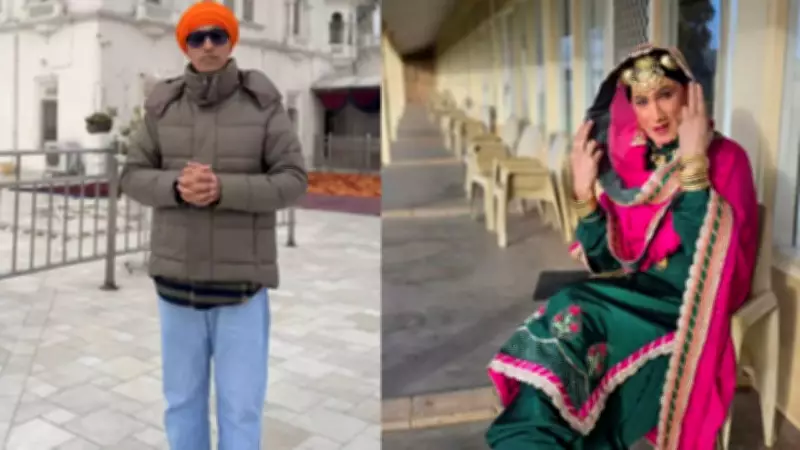
Giddha is a vibrant dance that celebrates femininity, traditionally performed by women during weddings and festive occasions. The beauty of this art form lies in its stunning, colorful costumes crafted from shimmering fabrics adorned with golden laces, vibrant salwar kameez, flowing dupattas, intricate embroidery, and artistic parandas woven into braided hair. The performance itself combines rhythmic clapping, expressive singing, and energetic footwork, embodying strength, resilience, and the emotional expressiveness of women within Punjabi culture.

"As I grew up, I fell deeply in love with Giddha," Zora reminisces. "My affection for the dance was so profound that I would sneak out to watch performances at local weddings and sometimes even join in." Although his family did not prevent him, villagers frequently reminded him that this dance was "not meant for boys."
The Turning Point
His passion for Giddha continued to flourish. It was in his late thirties that Zorawar Singh, now known as Noor Zora, gradually began considering performing Giddha openly and professionally. He made a bold decision to attend a friend's traditional Indian wedding dressed in a colorful salwar kameez embellished with sequins and beads. He shaved, dressed as a woman, and performed Giddha—a moment from which there was no turning back.
Regarding his chosen name, Noor Zora explains, "The name merges my original name, Zorawar, with Noor, inspired by the legendary Punjabi singer Noor Jehan from the 1940s and 1950s."
Building a Community and Gaining Recognition
He formed a small group of dancers, and opportunities gradually began to emerge. Around 2010, he created a social media account under the name Noor Zora and was astonished by the overwhelming response. Today, he boasts approximately 405,000 followers on Instagram.
In 2015, he founded the Lok Rang Noor Art troupe, which comprises around 40 queer individuals, most assigned male at birth but who no longer identify as male. While many members are Punjabi, others from across India have connected with Zora online, drawn by the prospect that dance could offer them dignity, visibility, and social recognition.
Global Impact and Social Mission
The popularity of Lok Rang Noor Art continues to surge daily. They are in high demand for weddings, anniversaries, festivals, and birthdays not only across India but also in the United States, Canada, and the United Kingdom. Their performances feature traditional attire, including tikkas and parandas, often performed without instruments—relying instead on breath, stamping, clapping, and folk poetry.
These performances inject new vitality into a dance long confined as "women's art." Beyond mere entertainment, the troupe actively supports social causes, such as women's rights and gender equality.
Balancing Multiple Roles
Noor Zora serves as a government schoolteacher in Punjab and is currently pursuing a PhD in folklore. Alongside his academic commitments, he continues to perform Giddha with the troupe he established.
In the heart of Punjab, where tradition runs deep, Noor Zora has not only carved out a space for himself but has also reshaped the boundaries of a cherished cultural art form. His journey proves that sometimes, what is deemed impossible merely requires someone courageous enough to take the first step.