Nowruz 2026: The Timeless Festival of Spring Arrives Amidst Global Turmoil
At 14:46 GMT on Friday, March 20, 2026, the earth performs its ancient celestial dance, as the sun crosses the celestial equator, bringing the vernal equinox. Day and night achieve perfect balance, and spring arrives on schedule, indifferent to the wars and political regimes unfolding below. This astronomical event heralds Nowruz, the Persian New Year, a festival that has endured for over 3,000 years, uniting diverse cultures across the globe.
The Essence of Nowruz: A Celebration Rooted in Astronomy
Nowruz, meaning "New Day" in Persian, is fundamentally anchored to the vernal equinox, a planetary occurrence determined solely by the earth's orbit. Unlike moveable feasts tied to lunar calendars, this festival celebrates the precise moment when light triumphs over darkness after winter. Its centerpiece is the Haft-Sin table, a ceremonial spread featuring seven items starting with the Persian letter "sin," each symbolizing virtues like rebirth, love, and wisdom. This tradition, along with elements like mirrors, candles, and colored eggs, has been observed for millennia, reflecting a deep cultural heritage.
Zoroastrian Origins: The Birth of a Festival in Fire
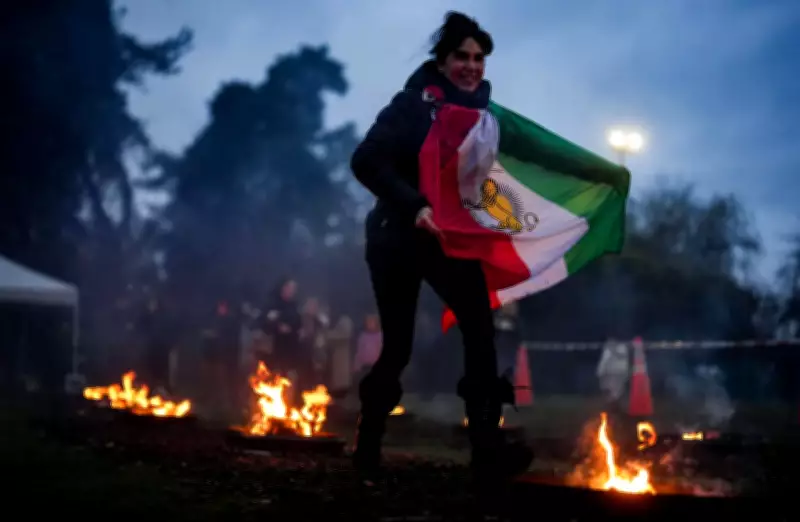
To fully grasp Nowruz, one must delve into its Zoroastrian roots, dating back to the prophet Zoroaster around 1500-1000 BCE. This ancient religion, predating Buddhism and Judaism, centered on a cosmic struggle between light and darkness, with fire as a sacred symbol. The spring equinox, marking the victory of light, became the most spiritually charged moment, celebrated as Nowruz. Under the Achaemenid Empire, it evolved into a formal imperial occasion, with grand receptions at Persepolis, as documented by historians like Pierre Briant, asserting Persian civilizational identity.

Survival Through Conquest and Dispersal
The Arab conquest of Persia in 637 CE threatened Nowruz, as Islam replaced Zoroastrianism and Zoroastrians faced persecution. Many fled to India, becoming the Parsi community, who preserved the festival as Navroz. Despite this dispersal, Nowruz did not vanish in Persia. Persian Muslims continued the traditions, and poets like Hafez and Ferdowsi celebrated it in their works, as noted by scholar Ervand Abrahamian. This cultural resilience allowed the festival to thrive even under Islamic rule, showcasing its enduring power.
Modern Challenges: The Islamic Republic's Failed Suppression
In 1979, Ayatollah Khomeini's regime condemned Nowruz as pagan, attempting to suppress it through state measures like reduced holidays and fatwas. However, as journalist Robin Wright observed, Iranians resisted privately, keeping traditions alive behind closed doors. By the late 1980s, the Islamic Republic retreated, and Nowruz was reinstated on the official calendar. This failure highlighted the limits of theocratic power, proving that cultural identity, nurtured by ordinary people, cannot be easily erased.
Nowruz 2026: A Festival Amidst Unprecedented Conflict
This year, Nowruz arrives amidst heightened tensions, following US-Israeli military operations against Iran and reports of Supreme Leader Ali Khamenei's death. In Iran, families set Haft-Sin tables under skies still marked by conflict, with some, like office worker Kamran in Hamedan, struggling to maintain traditions. Meanwhile, Parsi communities in Mumbai, London, and Toronto observe Navroz with deep emotion, watching from afar as their ancestral land faces uncertainty. Despite the turmoil, the equinox brings a reminder of continuity and hope.
As empires rise and fall, Nowruz stands as a testament to cultural endurance, kept alive by generations who refuse to forget their heritage. At 14:46 GMT, spring arrives once more, affirming that this ancient festival will persist, no matter the challenges ahead.