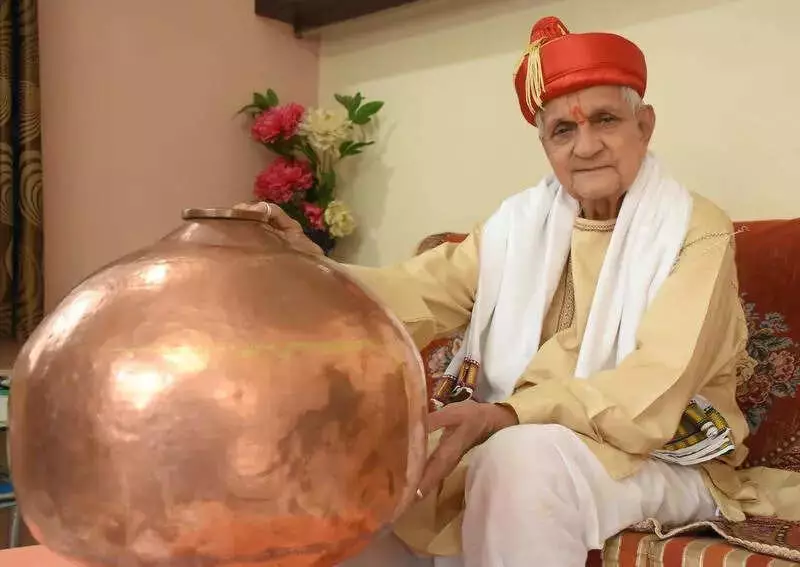
In a momentous recognition of India's intangible cultural heritage, Vadodara-based nonagenarian Dharmiklal Chunilal Pandya, aged 94, has been selected for the prestigious Padma Shri award. Pandya is celebrated as the nation's sole surviving practitioner of the ancient Manbhatt form of storytelling, a centuries-old tradition deeply rooted in Gujarat's artistic legacy.
A Lifetime Dedicated to Akhyan: The Rhythmic Narrative Art
The Padma Shri announcement, made on the eve of Republic Day, honors Pandya's extraordinary contribution to music and folk arts. Reacting to this distinguished accolade, the venerable artist humbly stated, "This honour belongs to my guru Premanand, my father Chunilal, and to Gujarati art." He passionately advocated for the inclusion of 'Akhyan' in school curricula, emphasizing that language, culture, and music must be nurtured collectively to prevent such traditional art forms from fading into oblivion.
Preserving a Rare Legacy for Over Seven Decades
A lifelong resident of Vadodara, Pandya has devoted more than seventy years to preserving and propagating Akhyan. This rare Gujarati folk narrative tradition involves singing stories from epics like the Ramayana, Mahabharata, and the Puranas in a rhythmic, poetic form. The performance is uniquely accompanied by striking an earthen pot, known as a 'mann', with ringed fingers to maintain a captivating cadence.

Pandya stands as the only artist actively carrying forward the Manbhatt legacy, a tradition historically associated with Brahmin storytellers of Gujarat. He inherited this exquisite art from his father, the noted Manbhatt Chunilal Govindram, whose legacy is so revered that a lane in Vadodara's old city is dedicated in his name.
From Livelihood to Legacy: A Journey of Artistic Mastery
After losing his father during his school years, Pandya turned to storytelling as a means of livelihood. Trained extensively in classical music, he ingeniously blended melody, rhythm, and narration to imbue his 'Akhyan' performances with a distinctive musical depth. His early recitals in Vadodara's neighborhoods gradually gained wider recognition through broadcasts on All India Radio, bringing this traditional art to a national audience.
Over the decades, Pandya has presented more than 2,500 'Akhyan' performances across India and internationally, including in the United States, the United Kingdom, and Canada. His notable works encompass epic narratives such as Shri Harivansh Puran, Shri Shiv Mahapuran, and Shri Sangeet Shrimad Bhagwat. Beyond religious themes, he has adeptly used the Akhyan medium for social awareness programs, addressing critical issues like water conservation, literacy, prohibition, and environmental protection.
Educational Initiatives and Literary Contributions
Pandya currently heads the Shri Mann Akhyan Kala Shikshan Kendra, where he diligently trains young artists to ensure the continuity of this traditional art form. As an author, he has penned two significant books: Gujarati Akhyan and Govindgun Sagar. Remarkably, he continues to write and contribute to literature even at the age of 94. His earlier accolades include the Sangeet Natak Akademi Award, which he received in 1983.
Understanding Akhyan and the Manbhatt Tradition
Akhyan is a traditional Gujarati folk narrative art form that seamlessly integrates poetry, music, and storytelling. Performed in a rhythmic, sung style, Akhyans narrate episodes from Hindu epics such as the Ramayana, Mahabharata, and various Puranas, utilizing simple and accessible language to connect with diverse audiences.
This tradition is intrinsically linked to Manbhatts – Brahmin storytellers who perform while striking an earthen pot (mann) or a copper vessel with ringed fingers and clapping hands to maintain rhythm. The performance relies solely on the artist's voice, rhythmic precision, and expressive delivery, without any instrumental accompaniment, highlighting the raw, organic essence of the art.

Historically, Akhyan finds mention as early as the 12th century in Kavyanushasan by Acharya Hemchandra. Its golden period spanned the 15th to 17th centuries, when poet-saints like Premanand Bhatt, Bhalan, Shamal Bhatt, and Bhoja Bhagat enriched Gujarati bhakti literature through their profound Akhyan compositions.
Once a popular medium for religious instruction and social communication, Akhyan has faced a steady decline due to shifting cultural practices and modern entertainment alternatives. Pandya's Padma Shri recognition shines a vital spotlight on the urgent need to revive and sustain such invaluable cultural treasures for future generations.